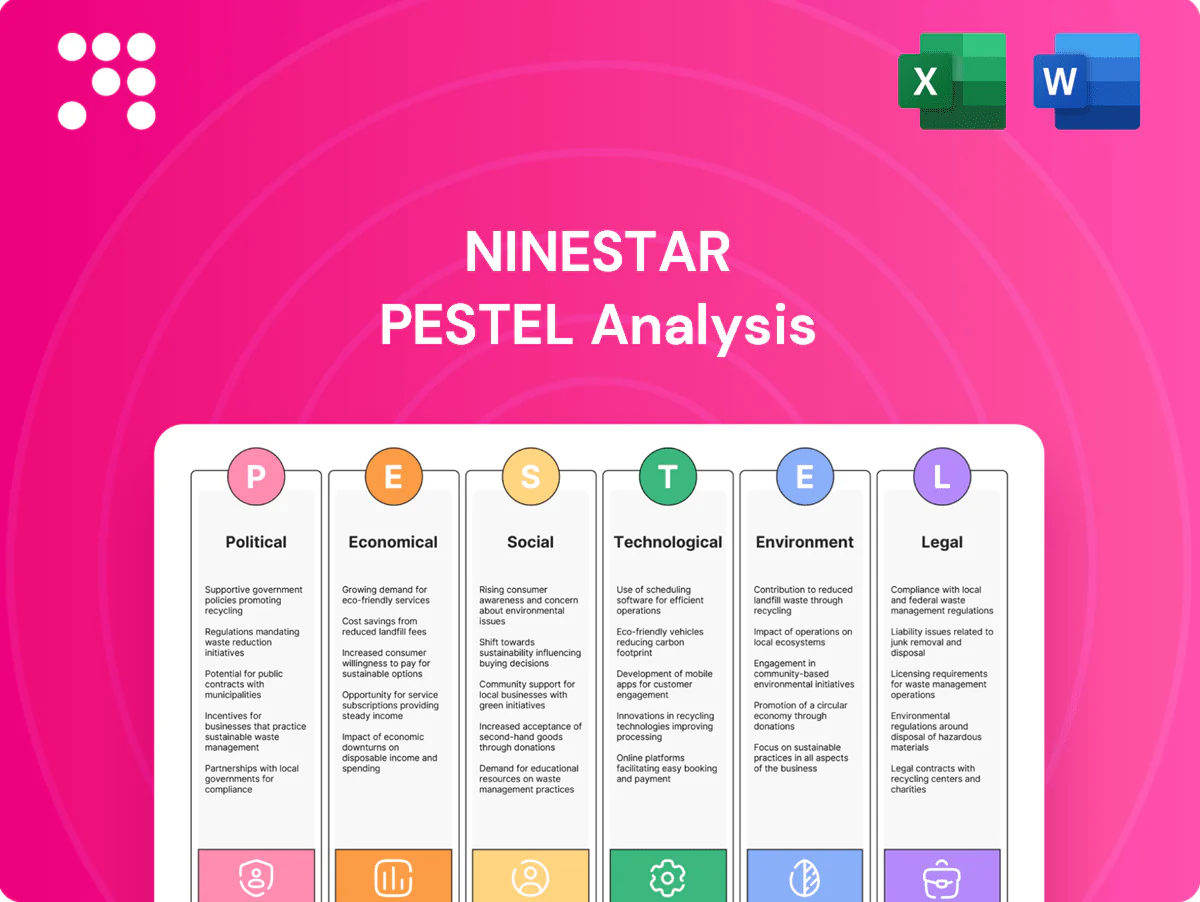
Ninestar PESTLE Analysis

Make Smarter Strategic Decisions with a Complete PESTEL View
Ninestar operates within a dynamic global arena, influenced by a complex interplay of political stability, economic fluctuations, and technological advancements. Understanding these external forces is crucial for any stakeholder looking to navigate the competitive landscape. Our comprehensive PESTLE analysis dives deep into these factors, providing actionable intelligence to inform your strategic decisions. Gain a significant competitive advantage by unlocking the full version of our Ninestar PESTLE analysis today.
Political factors

Geopolitical Tensions and Trade Policies
Ongoing geopolitical tensions, particularly between the United States and China, significantly shape the global electronics and printing sectors. These dynamics directly affect companies like Ninestar, which has substantial operations in both regions.
The imposition of potential tariffs and trade restrictions poses a direct threat to Ninestar's supply chain efficiency and cost structure. For instance, increased tariffs on components manufactured in China could raise production expenses for Ninestar's products, including those under its Lexmark brand.
Ninestar's reliance on China for manufacturing, coupled with its ownership of Lexmark, makes it particularly vulnerable to shifts in international trade policies. In 2023, US-China trade volume saw fluctuations, highlighting the sensitivity of such relationships to geopolitical events, impacting market access and profitability.
Government Procurement and Market Access
Government procurement policies significantly shape market access for printing solutions, potentially favoring domestic brands or specific technologies. For Ninestar, this means its Lexmark brand might face varied competitive landscapes depending on a country's purchasing preferences. For instance, while some nations might offer incentives for technology imports, others could implement nationalistic purchasing mandates, impacting Ninestar's global sales strategies.

Regulatory Scrutiny and Sanctions
Ninestar's global operations face significant headwinds from heightened regulatory scrutiny, particularly from the U.S. government. Reports emerged in late 2023 and early 2024 detailing potential import bans on Ninestar products by the U.S. Department of Homeland Security due to concerns over forced labor, impacting an estimated $1.1 billion in U.S. imports from the company in 2023.
These regulatory pressures have tangible financial and strategic implications. The potential U.S. ban could severely curtail Ninestar's access to a key market, forcing a substantial re-evaluation of its supply chain and sales strategies. This scrutiny also fuels speculation, such as Ninestar’s reported consideration of divesting its stake in Lexmark, a move aimed at mitigating risks associated with its U.S. exposure.

Intellectual Property Enforcement Regimes
The effectiveness of intellectual property (IP) enforcement varies significantly across different countries, directly impacting Ninestar's compatible and remanufactured printer cartridge operations. Regions with robust IP protection can present legal hurdles for Ninestar, whereas jurisdictions with weaker enforcement may offer more favorable conditions for its aftermarket products.
For instance, Canon's recent patent infringement resolutions in China underscore the dynamic legal environment within the printer consumables market. These cases can influence Ninestar's market access and operational strategies in key territories.
- Jurisdictional IP Strength: Ninestar's business model relies on navigating diverse IP landscapes, where strong enforcement can lead to litigation, while lax enforcement may enable market entry.
- Canon's Legal Actions: Recent patent infringement settlements involving Canon in China demonstrate the active legal challenges faced by companies in the printer consumables sector.
- Market Access Impact: The varying IP enforcement regimes directly affect Ninestar's ability to sell its compatible and remanufactured cartridges in different global markets.
Evolving Environmental Legislation
Governments globally are tightening environmental rules, especially concerning electronic waste and producers taking responsibility for their products. These new regulations, like the Basel Convention amendments effective in 2025, mean companies such as Ninestar must oversee their products from creation through to recycling.
This evolving legal landscape presents a major political and operational challenge for Ninestar. For instance, the European Union's upcoming Ecodesign for Sustainable Products Regulation (ESPR), expected to be fully implemented by 2025, will impose stringent requirements on product durability, repairability, and recyclability, directly impacting Ninestar's product design and supply chain management.
- Stricter E-waste Regulations: Increased focus on responsible disposal and recycling of electronic components.
- Extended Producer Responsibility (EPR): Mandates for manufacturers to manage product lifecycles, including end-of-life treatment.
- Basel Convention Amendments (2025): International agreements governing transboundary movements of hazardous wastes, impacting global supply chains.
- Ecodesign for Sustainable Products Regulation (ESPR): EU initiative promoting product longevity, repair, and recyclability.
Geopolitical, Regulatory, IP, and Environmental Challenges
Geopolitical tensions, particularly between the US and China, significantly impact Ninestar's global operations, influencing trade policies and market access. For instance, potential tariffs on Chinese-made components could increase production costs for Ninestar's products, including those under the Lexmark brand, affecting its overall profitability.
Heightened regulatory scrutiny, especially from the U.S. government, poses a substantial risk. Reports in late 2023 and early 2024 indicated potential import bans on Ninestar products due to forced labor concerns, which could impact billions in U.S. imports, forcing strategic re-evaluations.
Varying intellectual property (IP) enforcement across countries directly affects Ninestar's compatible and remanufactured printer cartridge business. While strong IP protection can lead to legal challenges, weaker enforcement may offer more favorable market conditions, as seen in recent patent infringement cases involving Canon in China.
Stricter environmental regulations, such as the EU's Ecodesign for Sustainable Products Regulation (ESPR) expected by 2025, are compelling companies like Ninestar to focus on product durability, repairability, and recyclability, necessitating adjustments in product design and supply chain management.
What is included in the product
 Detailed Word Document
This Ninestar PESTLE analysis comprehensively examines the Political, Economic, Social, Technological, Environmental, and Legal factors impacting the company, providing actionable insights for strategic decision-making.

 Customizable Excel Spreadsheet
Provides a concise version that can be dropped into PowerPoints or used in group planning sessions, simplifying complex external factors into actionable insights for Ninestar.
Helps support discussions on external risk and market positioning during planning sessions, enabling Ninestar to proactively address challenges and leverage opportunities.
Economic factors

Global Economic Growth and Consumer Spending
Global economic growth is expected to be modest but varied in 2025, with inflation and geopolitical issues still presenting challenges. Ninestar's sales, especially for printers and related supplies, are directly tied to how much consumers and businesses spend on technology and office necessities. The electronics sector, bolstered by ongoing digital transformation, provides a degree of steadiness.
Raw Material Costs and Inflation
Inflationary pressures and the fluctuating costs of essential raw materials like plastics, chemicals for ink and toner, and semiconductors directly impact Ninestar's production expenses. For instance, semiconductor prices saw significant volatility in 2024, with some components experiencing price increases due to ongoing supply chain adjustments.
Ninestar's profitability is closely tied to its effectiveness in managing these rising costs, particularly given its broad manufacturing base for consumables and IC chips. The company's ability to absorb or pass on these increased input costs will be a key determinant of its financial performance in the coming fiscal year.
Building robust supply chain resilience is therefore paramount for Ninestar to effectively mitigate these economic volatilities and maintain stable operations amidst fluctuating raw material markets.

Currency Exchange Rate Volatility
Ninestar, as a global entity with operations spanning multiple countries, faces significant exposure to currency exchange rate volatility. Fluctuations in major currency pairs, particularly between the US Dollar (USD) and the Chinese Yuan (CNY), directly impact its reported financial results. For instance, a stronger USD against the CNY could reduce the reported value of Ninestar's overseas earnings when translated back into its reporting currency, and vice-versa.
These currency shifts can materially affect Ninestar's cost of goods sold and its overall profitability. If Ninestar sources raw materials or components priced in a strengthening currency, its production costs will rise. Conversely, if its finished products are sold in a weakening currency market, the revenue generated will be less when converted to its home currency. For example, in 2024, the USD experienced periods of strength against several emerging market currencies, a trend that would have required careful management for companies like Ninestar with extensive international sales.
To mitigate these economic risks, Ninestar must employ robust hedging strategies. These can include forward contracts, options, or other derivative instruments to lock in exchange rates for future transactions. Effective currency risk management is crucial for maintaining stable financial performance and predictable earnings, especially in a global economic climate where currency markets can be highly unpredictable.

Market Competition and Pricing Pressures
The printer and consumables market is intensely competitive, featuring dominant original equipment manufacturers (OEMs) alongside a robust aftermarket sector. Ninestar navigates this landscape, experiencing persistent pricing pressures, especially with its compatible and remanufactured cartridges that vie against both OEM offerings and other aftermarket brands.
This dynamic market necessitates continuous innovation and operational cost efficiency for Ninestar to secure and grow its market share. For instance, in 2023, the global printer consumables market was valued at approximately USD 45 billion, with aftermarket products capturing a significant portion due to their cost-effectiveness.
- Intense Competition: The presence of major OEMs like HP, Canon, and Epson, coupled with numerous aftermarket suppliers, intensifies competition.
- Pricing Pressures: Compatible and remanufactured cartridges often sell at a substantial discount compared to OEM products, forcing Ninestar to manage its pricing carefully.
- Market Share Dynamics: In 2024, the aftermarket segment for printer cartridges is estimated to account for over 30% of the total market value, highlighting the importance of cost-competitive offerings.
- Innovation Imperative: Ninestar must continually invest in product development and supply chain optimization to maintain its competitive edge against both established players and emerging threats.
Shifting Demand in Printer Market Segments
The printer market is seeing a nuanced evolution, with overall growth being modest. However, specific segments are really taking off. Think about home office printers, which have become essential for many, and multifunction devices that offer versatility. Industrial printers are also experiencing a surge, driven by manufacturing and logistics needs.
Ninestar's dual approach, integrating Lexmark's strength in enterprise solutions with its own consumer-oriented products, is well-positioned to navigate these changes. The company needs to be agile, capitalizing on the rising demand in these key areas. This includes tapping into the growing e-commerce channels for consumer sales and developing specialized printing solutions for industrial clients.
- Home office printer demand: Expected to grow at a CAGR of 4.5% through 2027, according to market research.
- Multifunction printers (MFPs): Account for over 60% of the global printer market share, indicating strong consumer and business preference for integrated solutions.
- Industrial printing growth: The industrial inkjet printing market alone was valued at approximately $11.5 billion in 2023 and is projected to expand significantly.
- E-commerce printer sales: Online sales channels now represent a substantial portion of consumer printer purchases, highlighting the importance of digital retail strategies.
Navigating 2025: Economic Volatility and Printer Market Challenges
Global economic growth is expected to be modest but varied in 2025, with inflation and geopolitical issues still presenting challenges. Ninestar's sales, especially for printers and related supplies, are directly tied to how much consumers and businesses spend on technology and office necessities. The electronics sector, bolstered by ongoing digital transformation, provides a degree of steadiness.
Inflationary pressures and the fluctuating costs of essential raw materials like plastics, chemicals for ink and toner, and semiconductors directly impact Ninestar's production expenses. For instance, semiconductor prices saw significant volatility in 2024, with some components experiencing price increases due to ongoing supply chain adjustments.
Ninestar's profitability is closely tied to its effectiveness in managing these rising costs, particularly given its broad manufacturing base for consumables and IC chips. The company's ability to absorb or pass on these increased input costs will be a key determinant of its financial performance in the coming fiscal year.
Building robust supply chain resilience is therefore paramount for Ninestar to effectively mitigate these economic volatilities and maintain stable operations amidst fluctuating raw material markets.
Ninestar, as a global entity with operations spanning multiple countries, faces significant exposure to currency exchange rate volatility. Fluctuations in major currency pairs, particularly between the US Dollar (USD) and the Chinese Yuan (CNY), directly impact its reported financial results. For instance, a stronger USD against the CNY could reduce the reported value of Ninestar's overseas earnings when translated back into its reporting currency, and vice-versa.
These currency shifts can materially affect Ninestar's cost of goods sold and its overall profitability. If Ninestar sources raw materials or components priced in a strengthening currency, its production costs will rise. Conversely, if its finished products are sold in a weakening currency market, the revenue generated will be less when converted to its home currency. For example, in 2024, the USD experienced periods of strength against several emerging market currencies, a trend that would have required careful management for companies like Ninestar with extensive international sales.
To mitigate these economic risks, Ninestar must employ robust hedging strategies. These can include forward contracts, options, or other derivative instruments to lock in exchange rates for future transactions. Effective currency risk management is crucial for maintaining stable financial performance and predictable earnings, especially in a global economic climate where currency markets can be highly unpredictable.
The printer and consumables market is intensely competitive, featuring dominant original equipment manufacturers (OEMs) alongside a robust aftermarket sector. Ninestar navigates this landscape, experiencing persistent pricing pressures, especially with its compatible and remanufactured cartridges that vie against both OEM offerings and other aftermarket brands.
This dynamic market necessitates continuous innovation and operational cost efficiency for Ninestar to secure and grow its market share. For instance, in 2023, the global printer consumables market was valued at approximately USD 45 billion, with aftermarket products capturing a significant portion due to their cost-effectiveness.
- Intense Competition: The presence of major OEMs like HP, Canon, and Epson, coupled with numerous aftermarket suppliers, intensifies competition.
- Pricing Pressures: Compatible and remanufactured cartridges often sell at a substantial discount compared to OEM products, forcing Ninestar to manage its pricing carefully.
- Market Share Dynamics: In 2024, the aftermarket segment for printer cartridges is estimated to account for over 30% of the total market value, highlighting the importance of cost-competitive offerings.
- Innovation Imperative: Ninestar must continually invest in product development and supply chain optimization to maintain its competitive edge against both established players and emerging threats.
The printer market is seeing a nuanced evolution, with overall growth being modest. However, specific segments are really taking off. Think about home office printers, which have become essential for many, and multifunction devices that offer versatility. Industrial printers are also experiencing a surge, driven by manufacturing and logistics needs.
Ninestar's dual approach, integrating Lexmark's strength in enterprise solutions with its own consumer-oriented products, is well-positioned to navigate these changes. The company needs to be agile, capitalizing on the rising demand in these key areas. This includes tapping into the growing e-commerce channels for consumer sales and developing specialized printing solutions for industrial clients.
- Home office printer demand: Expected to grow at a CAGR of 4.5% through 2027, according to market research.
- Multifunction printers (MFPs): Account for over 60% of the global printer market share, indicating strong consumer and business preference for integrated solutions.
- Industrial printing growth: The industrial inkjet printing market alone was valued at approximately $11.5 billion in 2023 and is projected to expand significantly.
- E-commerce printer sales: Online sales channels now represent a substantial portion of consumer printer purchases, highlighting the importance of digital retail strategies.
Global economic growth is projected to be around 2.7% in 2025, a slight slowdown from 2024, according to IMF forecasts. Inflation, while moderating, remains a concern, impacting consumer spending and business investment. Ninestar's revenue is directly linked to these macroeconomic trends, as demand for printers and consumables often correlates with economic activity.
Raw material costs, particularly for semiconductors and chemicals used in ink and toner, are subject to global supply chain dynamics and geopolitical events. For instance, the average price of DRAM chips saw a notable increase in early 2024, affecting electronics manufacturing costs worldwide.
Ninestar's ability to manage input costs and currency fluctuations, such as the USD/CNY exchange rate which saw significant movement in 2024, will be critical for maintaining profitability. Hedging strategies are essential for mitigating these economic volatilities.
| Economic Factor | 2024/2025 Outlook | Impact on Ninestar | Key Data Point |
| Global GDP Growth | Modest, ~2.7% in 2025 (IMF) | Directly influences consumer and business spending on printers and supplies. | Projected global GDP growth of 2.7% for 2025. |
| Inflation Rates | Moderating but persistent | Affects production costs and consumer purchasing power. | Inflation remains a key consideration for input costs. |
| Raw Material Costs | Volatile due to supply chain and geopolitics | Increases production expenses for consumables and components. | DRAM chip prices increased in early 2024. |
| Currency Exchange Rates | Fluctuating (e.g., USD/CNY) | Impacts reported earnings and cost of goods sold. | Significant USD/CNY volatility observed in 2024. |
Preview Before You Purchase
Ninestar PESTLE Analysis
The preview shown here is the exact document you’ll receive after purchase—fully formatted and ready to use. This Ninestar PESTLE analysis provides a comprehensive overview of the external factors influencing the company's operations and strategic decisions.
This is a real screenshot of the product you’re buying—delivered exactly as shown, no surprises. You'll gain insights into Political, Economic, Social, Technological, Legal, and Environmental aspects impacting Ninestar.
The content and structure shown in the preview is the same document you’ll download after payment. It's designed to offer actionable intelligence for strategic planning and risk assessment.

Make Smarter Strategic Decisions with a Complete PESTEL View
Ninestar operates within a dynamic global arena, influenced by a complex interplay of political stability, economic fluctuations, and technological advancements. Understanding these external forces is crucial for any stakeholder looking to navigate the competitive landscape. Our comprehensive PESTLE analysis dives deep into these factors, providing actionable intelligence to inform your strategic decisions. Gain a significant competitive advantage by unlocking the full version of our Ninestar PESTLE analysis today.
Political factors
Geopolitical Tensions and Trade Policies
Ongoing geopolitical tensions, particularly between the United States and China, significantly shape the global electronics and printing sectors. These dynamics directly affect companies like Ninestar, which has substantial operations in both regions.
The imposition of potential tariffs and trade restrictions poses a direct threat to Ninestar's supply chain efficiency and cost structure. For instance, increased tariffs on components manufactured in China could raise production expenses for Ninestar's products, including those under its Lexmark brand.
Ninestar's reliance on China for manufacturing, coupled with its ownership of Lexmark, makes it particularly vulnerable to shifts in international trade policies. In 2023, US-China trade volume saw fluctuations, highlighting the sensitivity of such relationships to geopolitical events, impacting market access and profitability.
Government Procurement and Market Access
Government procurement policies significantly shape market access for printing solutions, potentially favoring domestic brands or specific technologies. For Ninestar, this means its Lexmark brand might face varied competitive landscapes depending on a country's purchasing preferences. For instance, while some nations might offer incentives for technology imports, others could implement nationalistic purchasing mandates, impacting Ninestar's global sales strategies.
Regulatory Scrutiny and Sanctions
Ninestar's global operations face significant headwinds from heightened regulatory scrutiny, particularly from the U.S. government. Reports emerged in late 2023 and early 2024 detailing potential import bans on Ninestar products by the U.S. Department of Homeland Security due to concerns over forced labor, impacting an estimated $1.1 billion in U.S. imports from the company in 2023.
These regulatory pressures have tangible financial and strategic implications. The potential U.S. ban could severely curtail Ninestar's access to a key market, forcing a substantial re-evaluation of its supply chain and sales strategies. This scrutiny also fuels speculation, such as Ninestar’s reported consideration of divesting its stake in Lexmark, a move aimed at mitigating risks associated with its U.S. exposure.
Intellectual Property Enforcement Regimes
The effectiveness of intellectual property (IP) enforcement varies significantly across different countries, directly impacting Ninestar's compatible and remanufactured printer cartridge operations. Regions with robust IP protection can present legal hurdles for Ninestar, whereas jurisdictions with weaker enforcement may offer more favorable conditions for its aftermarket products.
For instance, Canon's recent patent infringement resolutions in China underscore the dynamic legal environment within the printer consumables market. These cases can influence Ninestar's market access and operational strategies in key territories.
- Jurisdictional IP Strength: Ninestar's business model relies on navigating diverse IP landscapes, where strong enforcement can lead to litigation, while lax enforcement may enable market entry.
- Canon's Legal Actions: Recent patent infringement settlements involving Canon in China demonstrate the active legal challenges faced by companies in the printer consumables sector.
- Market Access Impact: The varying IP enforcement regimes directly affect Ninestar's ability to sell its compatible and remanufactured cartridges in different global markets.
Evolving Environmental Legislation
Governments globally are tightening environmental rules, especially concerning electronic waste and producers taking responsibility for their products. These new regulations, like the Basel Convention amendments effective in 2025, mean companies such as Ninestar must oversee their products from creation through to recycling.
This evolving legal landscape presents a major political and operational challenge for Ninestar. For instance, the European Union's upcoming Ecodesign for Sustainable Products Regulation (ESPR), expected to be fully implemented by 2025, will impose stringent requirements on product durability, repairability, and recyclability, directly impacting Ninestar's product design and supply chain management.
- Stricter E-waste Regulations: Increased focus on responsible disposal and recycling of electronic components.
- Extended Producer Responsibility (EPR): Mandates for manufacturers to manage product lifecycles, including end-of-life treatment.
- Basel Convention Amendments (2025): International agreements governing transboundary movements of hazardous wastes, impacting global supply chains.
- Ecodesign for Sustainable Products Regulation (ESPR): EU initiative promoting product longevity, repair, and recyclability.
Geopolitical, Regulatory, IP, and Environmental Challenges
Geopolitical tensions, particularly between the US and China, significantly impact Ninestar's global operations, influencing trade policies and market access. For instance, potential tariffs on Chinese-made components could increase production costs for Ninestar's products, including those under the Lexmark brand, affecting its overall profitability.
Heightened regulatory scrutiny, especially from the U.S. government, poses a substantial risk. Reports in late 2023 and early 2024 indicated potential import bans on Ninestar products due to forced labor concerns, which could impact billions in U.S. imports, forcing strategic re-evaluations.
Varying intellectual property (IP) enforcement across countries directly affects Ninestar's compatible and remanufactured printer cartridge business. While strong IP protection can lead to legal challenges, weaker enforcement may offer more favorable market conditions, as seen in recent patent infringement cases involving Canon in China.
Stricter environmental regulations, such as the EU's Ecodesign for Sustainable Products Regulation (ESPR) expected by 2025, are compelling companies like Ninestar to focus on product durability, repairability, and recyclability, necessitating adjustments in product design and supply chain management.
What is included in the product
Detailed Word Document
This Ninestar PESTLE analysis comprehensively examines the Political, Economic, Social, Technological, Environmental, and Legal factors impacting the company, providing actionable insights for strategic decision-making.
Customizable Excel Spreadsheet
Provides a concise version that can be dropped into PowerPoints or used in group planning sessions, simplifying complex external factors into actionable insights for Ninestar.
Helps support discussions on external risk and market positioning during planning sessions, enabling Ninestar to proactively address challenges and leverage opportunities.
Economic factors
Global Economic Growth and Consumer Spending
Global economic growth is expected to be modest but varied in 2025, with inflation and geopolitical issues still presenting challenges. Ninestar's sales, especially for printers and related supplies, are directly tied to how much consumers and businesses spend on technology and office necessities. The electronics sector, bolstered by ongoing digital transformation, provides a degree of steadiness.
Raw Material Costs and Inflation
Inflationary pressures and the fluctuating costs of essential raw materials like plastics, chemicals for ink and toner, and semiconductors directly impact Ninestar's production expenses. For instance, semiconductor prices saw significant volatility in 2024, with some components experiencing price increases due to ongoing supply chain adjustments.
Ninestar's profitability is closely tied to its effectiveness in managing these rising costs, particularly given its broad manufacturing base for consumables and IC chips. The company's ability to absorb or pass on these increased input costs will be a key determinant of its financial performance in the coming fiscal year.
Building robust supply chain resilience is therefore paramount for Ninestar to effectively mitigate these economic volatilities and maintain stable operations amidst fluctuating raw material markets.
Currency Exchange Rate Volatility
Ninestar, as a global entity with operations spanning multiple countries, faces significant exposure to currency exchange rate volatility. Fluctuations in major currency pairs, particularly between the US Dollar (USD) and the Chinese Yuan (CNY), directly impact its reported financial results. For instance, a stronger USD against the CNY could reduce the reported value of Ninestar's overseas earnings when translated back into its reporting currency, and vice-versa.
These currency shifts can materially affect Ninestar's cost of goods sold and its overall profitability. If Ninestar sources raw materials or components priced in a strengthening currency, its production costs will rise. Conversely, if its finished products are sold in a weakening currency market, the revenue generated will be less when converted to its home currency. For example, in 2024, the USD experienced periods of strength against several emerging market currencies, a trend that would have required careful management for companies like Ninestar with extensive international sales.
To mitigate these economic risks, Ninestar must employ robust hedging strategies. These can include forward contracts, options, or other derivative instruments to lock in exchange rates for future transactions. Effective currency risk management is crucial for maintaining stable financial performance and predictable earnings, especially in a global economic climate where currency markets can be highly unpredictable.
Market Competition and Pricing Pressures
The printer and consumables market is intensely competitive, featuring dominant original equipment manufacturers (OEMs) alongside a robust aftermarket sector. Ninestar navigates this landscape, experiencing persistent pricing pressures, especially with its compatible and remanufactured cartridges that vie against both OEM offerings and other aftermarket brands.
This dynamic market necessitates continuous innovation and operational cost efficiency for Ninestar to secure and grow its market share. For instance, in 2023, the global printer consumables market was valued at approximately USD 45 billion, with aftermarket products capturing a significant portion due to their cost-effectiveness.
- Intense Competition: The presence of major OEMs like HP, Canon, and Epson, coupled with numerous aftermarket suppliers, intensifies competition.
- Pricing Pressures: Compatible and remanufactured cartridges often sell at a substantial discount compared to OEM products, forcing Ninestar to manage its pricing carefully.
- Market Share Dynamics: In 2024, the aftermarket segment for printer cartridges is estimated to account for over 30% of the total market value, highlighting the importance of cost-competitive offerings.
- Innovation Imperative: Ninestar must continually invest in product development and supply chain optimization to maintain its competitive edge against both established players and emerging threats.
Shifting Demand in Printer Market Segments
The printer market is seeing a nuanced evolution, with overall growth being modest. However, specific segments are really taking off. Think about home office printers, which have become essential for many, and multifunction devices that offer versatility. Industrial printers are also experiencing a surge, driven by manufacturing and logistics needs.
Ninestar's dual approach, integrating Lexmark's strength in enterprise solutions with its own consumer-oriented products, is well-positioned to navigate these changes. The company needs to be agile, capitalizing on the rising demand in these key areas. This includes tapping into the growing e-commerce channels for consumer sales and developing specialized printing solutions for industrial clients.
- Home office printer demand: Expected to grow at a CAGR of 4.5% through 2027, according to market research.
- Multifunction printers (MFPs): Account for over 60% of the global printer market share, indicating strong consumer and business preference for integrated solutions.
- Industrial printing growth: The industrial inkjet printing market alone was valued at approximately $11.5 billion in 2023 and is projected to expand significantly.
- E-commerce printer sales: Online sales channels now represent a substantial portion of consumer printer purchases, highlighting the importance of digital retail strategies.
Navigating 2025: Economic Volatility and Printer Market Challenges
Global economic growth is expected to be modest but varied in 2025, with inflation and geopolitical issues still presenting challenges. Ninestar's sales, especially for printers and related supplies, are directly tied to how much consumers and businesses spend on technology and office necessities. The electronics sector, bolstered by ongoing digital transformation, provides a degree of steadiness.
Inflationary pressures and the fluctuating costs of essential raw materials like plastics, chemicals for ink and toner, and semiconductors directly impact Ninestar's production expenses. For instance, semiconductor prices saw significant volatility in 2024, with some components experiencing price increases due to ongoing supply chain adjustments.
Ninestar's profitability is closely tied to its effectiveness in managing these rising costs, particularly given its broad manufacturing base for consumables and IC chips. The company's ability to absorb or pass on these increased input costs will be a key determinant of its financial performance in the coming fiscal year.
Building robust supply chain resilience is therefore paramount for Ninestar to effectively mitigate these economic volatilities and maintain stable operations amidst fluctuating raw material markets.
Ninestar, as a global entity with operations spanning multiple countries, faces significant exposure to currency exchange rate volatility. Fluctuations in major currency pairs, particularly between the US Dollar (USD) and the Chinese Yuan (CNY), directly impact its reported financial results. For instance, a stronger USD against the CNY could reduce the reported value of Ninestar's overseas earnings when translated back into its reporting currency, and vice-versa.
These currency shifts can materially affect Ninestar's cost of goods sold and its overall profitability. If Ninestar sources raw materials or components priced in a strengthening currency, its production costs will rise. Conversely, if its finished products are sold in a weakening currency market, the revenue generated will be less when converted to its home currency. For example, in 2024, the USD experienced periods of strength against several emerging market currencies, a trend that would have required careful management for companies like Ninestar with extensive international sales.
To mitigate these economic risks, Ninestar must employ robust hedging strategies. These can include forward contracts, options, or other derivative instruments to lock in exchange rates for future transactions. Effective currency risk management is crucial for maintaining stable financial performance and predictable earnings, especially in a global economic climate where currency markets can be highly unpredictable.
The printer and consumables market is intensely competitive, featuring dominant original equipment manufacturers (OEMs) alongside a robust aftermarket sector. Ninestar navigates this landscape, experiencing persistent pricing pressures, especially with its compatible and remanufactured cartridges that vie against both OEM offerings and other aftermarket brands.
This dynamic market necessitates continuous innovation and operational cost efficiency for Ninestar to secure and grow its market share. For instance, in 2023, the global printer consumables market was valued at approximately USD 45 billion, with aftermarket products capturing a significant portion due to their cost-effectiveness.
- Intense Competition: The presence of major OEMs like HP, Canon, and Epson, coupled with numerous aftermarket suppliers, intensifies competition.
- Pricing Pressures: Compatible and remanufactured cartridges often sell at a substantial discount compared to OEM products, forcing Ninestar to manage its pricing carefully.
- Market Share Dynamics: In 2024, the aftermarket segment for printer cartridges is estimated to account for over 30% of the total market value, highlighting the importance of cost-competitive offerings.
- Innovation Imperative: Ninestar must continually invest in product development and supply chain optimization to maintain its competitive edge against both established players and emerging threats.
The printer market is seeing a nuanced evolution, with overall growth being modest. However, specific segments are really taking off. Think about home office printers, which have become essential for many, and multifunction devices that offer versatility. Industrial printers are also experiencing a surge, driven by manufacturing and logistics needs.
Ninestar's dual approach, integrating Lexmark's strength in enterprise solutions with its own consumer-oriented products, is well-positioned to navigate these changes. The company needs to be agile, capitalizing on the rising demand in these key areas. This includes tapping into the growing e-commerce channels for consumer sales and developing specialized printing solutions for industrial clients.
- Home office printer demand: Expected to grow at a CAGR of 4.5% through 2027, according to market research.
- Multifunction printers (MFPs): Account for over 60% of the global printer market share, indicating strong consumer and business preference for integrated solutions.
- Industrial printing growth: The industrial inkjet printing market alone was valued at approximately $11.5 billion in 2023 and is projected to expand significantly.
- E-commerce printer sales: Online sales channels now represent a substantial portion of consumer printer purchases, highlighting the importance of digital retail strategies.
Global economic growth is projected to be around 2.7% in 2025, a slight slowdown from 2024, according to IMF forecasts. Inflation, while moderating, remains a concern, impacting consumer spending and business investment. Ninestar's revenue is directly linked to these macroeconomic trends, as demand for printers and consumables often correlates with economic activity.
Raw material costs, particularly for semiconductors and chemicals used in ink and toner, are subject to global supply chain dynamics and geopolitical events. For instance, the average price of DRAM chips saw a notable increase in early 2024, affecting electronics manufacturing costs worldwide.
Ninestar's ability to manage input costs and currency fluctuations, such as the USD/CNY exchange rate which saw significant movement in 2024, will be critical for maintaining profitability. Hedging strategies are essential for mitigating these economic volatilities.
| Economic Factor | 2024/2025 Outlook | Impact on Ninestar | Key Data Point |
| Global GDP Growth | Modest, ~2.7% in 2025 (IMF) | Directly influences consumer and business spending on printers and supplies. | Projected global GDP growth of 2.7% for 2025. |
| Inflation Rates | Moderating but persistent | Affects production costs and consumer purchasing power. | Inflation remains a key consideration for input costs. |
| Raw Material Costs | Volatile due to supply chain and geopolitics | Increases production expenses for consumables and components. | DRAM chip prices increased in early 2024. |
| Currency Exchange Rates | Fluctuating (e.g., USD/CNY) | Impacts reported earnings and cost of goods sold. | Significant USD/CNY volatility observed in 2024. |
Preview Before You Purchase
Ninestar PESTLE Analysis
The preview shown here is the exact document you’ll receive after purchase—fully formatted and ready to use. This Ninestar PESTLE analysis provides a comprehensive overview of the external factors influencing the company's operations and strategic decisions.
This is a real screenshot of the product you’re buying—delivered exactly as shown, no surprises. You'll gain insights into Political, Economic, Social, Technological, Legal, and Environmental aspects impacting Ninestar.
The content and structure shown in the preview is the same document you’ll download after payment. It's designed to offer actionable intelligence for strategic planning and risk assessment.
Original: $10.00
-65%$10.00
$3.50Description
Make Smarter Strategic Decisions with a Complete PESTEL View
Ninestar operates within a dynamic global arena, influenced by a complex interplay of political stability, economic fluctuations, and technological advancements. Understanding these external forces is crucial for any stakeholder looking to navigate the competitive landscape. Our comprehensive PESTLE analysis dives deep into these factors, providing actionable intelligence to inform your strategic decisions. Gain a significant competitive advantage by unlocking the full version of our Ninestar PESTLE analysis today.
Political factors
Geopolitical Tensions and Trade Policies
Ongoing geopolitical tensions, particularly between the United States and China, significantly shape the global electronics and printing sectors. These dynamics directly affect companies like Ninestar, which has substantial operations in both regions.
The imposition of potential tariffs and trade restrictions poses a direct threat to Ninestar's supply chain efficiency and cost structure. For instance, increased tariffs on components manufactured in China could raise production expenses for Ninestar's products, including those under its Lexmark brand.
Ninestar's reliance on China for manufacturing, coupled with its ownership of Lexmark, makes it particularly vulnerable to shifts in international trade policies. In 2023, US-China trade volume saw fluctuations, highlighting the sensitivity of such relationships to geopolitical events, impacting market access and profitability.
Government Procurement and Market Access
Government procurement policies significantly shape market access for printing solutions, potentially favoring domestic brands or specific technologies. For Ninestar, this means its Lexmark brand might face varied competitive landscapes depending on a country's purchasing preferences. For instance, while some nations might offer incentives for technology imports, others could implement nationalistic purchasing mandates, impacting Ninestar's global sales strategies.
Regulatory Scrutiny and Sanctions
Ninestar's global operations face significant headwinds from heightened regulatory scrutiny, particularly from the U.S. government. Reports emerged in late 2023 and early 2024 detailing potential import bans on Ninestar products by the U.S. Department of Homeland Security due to concerns over forced labor, impacting an estimated $1.1 billion in U.S. imports from the company in 2023.
These regulatory pressures have tangible financial and strategic implications. The potential U.S. ban could severely curtail Ninestar's access to a key market, forcing a substantial re-evaluation of its supply chain and sales strategies. This scrutiny also fuels speculation, such as Ninestar’s reported consideration of divesting its stake in Lexmark, a move aimed at mitigating risks associated with its U.S. exposure.
Intellectual Property Enforcement Regimes
The effectiveness of intellectual property (IP) enforcement varies significantly across different countries, directly impacting Ninestar's compatible and remanufactured printer cartridge operations. Regions with robust IP protection can present legal hurdles for Ninestar, whereas jurisdictions with weaker enforcement may offer more favorable conditions for its aftermarket products.
For instance, Canon's recent patent infringement resolutions in China underscore the dynamic legal environment within the printer consumables market. These cases can influence Ninestar's market access and operational strategies in key territories.
- Jurisdictional IP Strength: Ninestar's business model relies on navigating diverse IP landscapes, where strong enforcement can lead to litigation, while lax enforcement may enable market entry.
- Canon's Legal Actions: Recent patent infringement settlements involving Canon in China demonstrate the active legal challenges faced by companies in the printer consumables sector.
- Market Access Impact: The varying IP enforcement regimes directly affect Ninestar's ability to sell its compatible and remanufactured cartridges in different global markets.
Evolving Environmental Legislation
Governments globally are tightening environmental rules, especially concerning electronic waste and producers taking responsibility for their products. These new regulations, like the Basel Convention amendments effective in 2025, mean companies such as Ninestar must oversee their products from creation through to recycling.
This evolving legal landscape presents a major political and operational challenge for Ninestar. For instance, the European Union's upcoming Ecodesign for Sustainable Products Regulation (ESPR), expected to be fully implemented by 2025, will impose stringent requirements on product durability, repairability, and recyclability, directly impacting Ninestar's product design and supply chain management.
- Stricter E-waste Regulations: Increased focus on responsible disposal and recycling of electronic components.
- Extended Producer Responsibility (EPR): Mandates for manufacturers to manage product lifecycles, including end-of-life treatment.
- Basel Convention Amendments (2025): International agreements governing transboundary movements of hazardous wastes, impacting global supply chains.
- Ecodesign for Sustainable Products Regulation (ESPR): EU initiative promoting product longevity, repair, and recyclability.
Geopolitical, Regulatory, IP, and Environmental Challenges
Geopolitical tensions, particularly between the US and China, significantly impact Ninestar's global operations, influencing trade policies and market access. For instance, potential tariffs on Chinese-made components could increase production costs for Ninestar's products, including those under the Lexmark brand, affecting its overall profitability.
Heightened regulatory scrutiny, especially from the U.S. government, poses a substantial risk. Reports in late 2023 and early 2024 indicated potential import bans on Ninestar products due to forced labor concerns, which could impact billions in U.S. imports, forcing strategic re-evaluations.
Varying intellectual property (IP) enforcement across countries directly affects Ninestar's compatible and remanufactured printer cartridge business. While strong IP protection can lead to legal challenges, weaker enforcement may offer more favorable market conditions, as seen in recent patent infringement cases involving Canon in China.
Stricter environmental regulations, such as the EU's Ecodesign for Sustainable Products Regulation (ESPR) expected by 2025, are compelling companies like Ninestar to focus on product durability, repairability, and recyclability, necessitating adjustments in product design and supply chain management.
What is included in the product
Detailed Word Document
This Ninestar PESTLE analysis comprehensively examines the Political, Economic, Social, Technological, Environmental, and Legal factors impacting the company, providing actionable insights for strategic decision-making.
Customizable Excel Spreadsheet
Provides a concise version that can be dropped into PowerPoints or used in group planning sessions, simplifying complex external factors into actionable insights for Ninestar.
Helps support discussions on external risk and market positioning during planning sessions, enabling Ninestar to proactively address challenges and leverage opportunities.
Economic factors
Global Economic Growth and Consumer Spending
Global economic growth is expected to be modest but varied in 2025, with inflation and geopolitical issues still presenting challenges. Ninestar's sales, especially for printers and related supplies, are directly tied to how much consumers and businesses spend on technology and office necessities. The electronics sector, bolstered by ongoing digital transformation, provides a degree of steadiness.
Raw Material Costs and Inflation
Inflationary pressures and the fluctuating costs of essential raw materials like plastics, chemicals for ink and toner, and semiconductors directly impact Ninestar's production expenses. For instance, semiconductor prices saw significant volatility in 2024, with some components experiencing price increases due to ongoing supply chain adjustments.
Ninestar's profitability is closely tied to its effectiveness in managing these rising costs, particularly given its broad manufacturing base for consumables and IC chips. The company's ability to absorb or pass on these increased input costs will be a key determinant of its financial performance in the coming fiscal year.
Building robust supply chain resilience is therefore paramount for Ninestar to effectively mitigate these economic volatilities and maintain stable operations amidst fluctuating raw material markets.
Currency Exchange Rate Volatility
Ninestar, as a global entity with operations spanning multiple countries, faces significant exposure to currency exchange rate volatility. Fluctuations in major currency pairs, particularly between the US Dollar (USD) and the Chinese Yuan (CNY), directly impact its reported financial results. For instance, a stronger USD against the CNY could reduce the reported value of Ninestar's overseas earnings when translated back into its reporting currency, and vice-versa.
These currency shifts can materially affect Ninestar's cost of goods sold and its overall profitability. If Ninestar sources raw materials or components priced in a strengthening currency, its production costs will rise. Conversely, if its finished products are sold in a weakening currency market, the revenue generated will be less when converted to its home currency. For example, in 2024, the USD experienced periods of strength against several emerging market currencies, a trend that would have required careful management for companies like Ninestar with extensive international sales.
To mitigate these economic risks, Ninestar must employ robust hedging strategies. These can include forward contracts, options, or other derivative instruments to lock in exchange rates for future transactions. Effective currency risk management is crucial for maintaining stable financial performance and predictable earnings, especially in a global economic climate where currency markets can be highly unpredictable.
Market Competition and Pricing Pressures
The printer and consumables market is intensely competitive, featuring dominant original equipment manufacturers (OEMs) alongside a robust aftermarket sector. Ninestar navigates this landscape, experiencing persistent pricing pressures, especially with its compatible and remanufactured cartridges that vie against both OEM offerings and other aftermarket brands.
This dynamic market necessitates continuous innovation and operational cost efficiency for Ninestar to secure and grow its market share. For instance, in 2023, the global printer consumables market was valued at approximately USD 45 billion, with aftermarket products capturing a significant portion due to their cost-effectiveness.
- Intense Competition: The presence of major OEMs like HP, Canon, and Epson, coupled with numerous aftermarket suppliers, intensifies competition.
- Pricing Pressures: Compatible and remanufactured cartridges often sell at a substantial discount compared to OEM products, forcing Ninestar to manage its pricing carefully.
- Market Share Dynamics: In 2024, the aftermarket segment for printer cartridges is estimated to account for over 30% of the total market value, highlighting the importance of cost-competitive offerings.
- Innovation Imperative: Ninestar must continually invest in product development and supply chain optimization to maintain its competitive edge against both established players and emerging threats.
Shifting Demand in Printer Market Segments
The printer market is seeing a nuanced evolution, with overall growth being modest. However, specific segments are really taking off. Think about home office printers, which have become essential for many, and multifunction devices that offer versatility. Industrial printers are also experiencing a surge, driven by manufacturing and logistics needs.
Ninestar's dual approach, integrating Lexmark's strength in enterprise solutions with its own consumer-oriented products, is well-positioned to navigate these changes. The company needs to be agile, capitalizing on the rising demand in these key areas. This includes tapping into the growing e-commerce channels for consumer sales and developing specialized printing solutions for industrial clients.
- Home office printer demand: Expected to grow at a CAGR of 4.5% through 2027, according to market research.
- Multifunction printers (MFPs): Account for over 60% of the global printer market share, indicating strong consumer and business preference for integrated solutions.
- Industrial printing growth: The industrial inkjet printing market alone was valued at approximately $11.5 billion in 2023 and is projected to expand significantly.
- E-commerce printer sales: Online sales channels now represent a substantial portion of consumer printer purchases, highlighting the importance of digital retail strategies.
Navigating 2025: Economic Volatility and Printer Market Challenges
Global economic growth is expected to be modest but varied in 2025, with inflation and geopolitical issues still presenting challenges. Ninestar's sales, especially for printers and related supplies, are directly tied to how much consumers and businesses spend on technology and office necessities. The electronics sector, bolstered by ongoing digital transformation, provides a degree of steadiness.
Inflationary pressures and the fluctuating costs of essential raw materials like plastics, chemicals for ink and toner, and semiconductors directly impact Ninestar's production expenses. For instance, semiconductor prices saw significant volatility in 2024, with some components experiencing price increases due to ongoing supply chain adjustments.
Ninestar's profitability is closely tied to its effectiveness in managing these rising costs, particularly given its broad manufacturing base for consumables and IC chips. The company's ability to absorb or pass on these increased input costs will be a key determinant of its financial performance in the coming fiscal year.
Building robust supply chain resilience is therefore paramount for Ninestar to effectively mitigate these economic volatilities and maintain stable operations amidst fluctuating raw material markets.
Ninestar, as a global entity with operations spanning multiple countries, faces significant exposure to currency exchange rate volatility. Fluctuations in major currency pairs, particularly between the US Dollar (USD) and the Chinese Yuan (CNY), directly impact its reported financial results. For instance, a stronger USD against the CNY could reduce the reported value of Ninestar's overseas earnings when translated back into its reporting currency, and vice-versa.
These currency shifts can materially affect Ninestar's cost of goods sold and its overall profitability. If Ninestar sources raw materials or components priced in a strengthening currency, its production costs will rise. Conversely, if its finished products are sold in a weakening currency market, the revenue generated will be less when converted to its home currency. For example, in 2024, the USD experienced periods of strength against several emerging market currencies, a trend that would have required careful management for companies like Ninestar with extensive international sales.
To mitigate these economic risks, Ninestar must employ robust hedging strategies. These can include forward contracts, options, or other derivative instruments to lock in exchange rates for future transactions. Effective currency risk management is crucial for maintaining stable financial performance and predictable earnings, especially in a global economic climate where currency markets can be highly unpredictable.
The printer and consumables market is intensely competitive, featuring dominant original equipment manufacturers (OEMs) alongside a robust aftermarket sector. Ninestar navigates this landscape, experiencing persistent pricing pressures, especially with its compatible and remanufactured cartridges that vie against both OEM offerings and other aftermarket brands.
This dynamic market necessitates continuous innovation and operational cost efficiency for Ninestar to secure and grow its market share. For instance, in 2023, the global printer consumables market was valued at approximately USD 45 billion, with aftermarket products capturing a significant portion due to their cost-effectiveness.
- Intense Competition: The presence of major OEMs like HP, Canon, and Epson, coupled with numerous aftermarket suppliers, intensifies competition.
- Pricing Pressures: Compatible and remanufactured cartridges often sell at a substantial discount compared to OEM products, forcing Ninestar to manage its pricing carefully.
- Market Share Dynamics: In 2024, the aftermarket segment for printer cartridges is estimated to account for over 30% of the total market value, highlighting the importance of cost-competitive offerings.
- Innovation Imperative: Ninestar must continually invest in product development and supply chain optimization to maintain its competitive edge against both established players and emerging threats.
The printer market is seeing a nuanced evolution, with overall growth being modest. However, specific segments are really taking off. Think about home office printers, which have become essential for many, and multifunction devices that offer versatility. Industrial printers are also experiencing a surge, driven by manufacturing and logistics needs.
Ninestar's dual approach, integrating Lexmark's strength in enterprise solutions with its own consumer-oriented products, is well-positioned to navigate these changes. The company needs to be agile, capitalizing on the rising demand in these key areas. This includes tapping into the growing e-commerce channels for consumer sales and developing specialized printing solutions for industrial clients.
- Home office printer demand: Expected to grow at a CAGR of 4.5% through 2027, according to market research.
- Multifunction printers (MFPs): Account for over 60% of the global printer market share, indicating strong consumer and business preference for integrated solutions.
- Industrial printing growth: The industrial inkjet printing market alone was valued at approximately $11.5 billion in 2023 and is projected to expand significantly.
- E-commerce printer sales: Online sales channels now represent a substantial portion of consumer printer purchases, highlighting the importance of digital retail strategies.
Global economic growth is projected to be around 2.7% in 2025, a slight slowdown from 2024, according to IMF forecasts. Inflation, while moderating, remains a concern, impacting consumer spending and business investment. Ninestar's revenue is directly linked to these macroeconomic trends, as demand for printers and consumables often correlates with economic activity.
Raw material costs, particularly for semiconductors and chemicals used in ink and toner, are subject to global supply chain dynamics and geopolitical events. For instance, the average price of DRAM chips saw a notable increase in early 2024, affecting electronics manufacturing costs worldwide.
Ninestar's ability to manage input costs and currency fluctuations, such as the USD/CNY exchange rate which saw significant movement in 2024, will be critical for maintaining profitability. Hedging strategies are essential for mitigating these economic volatilities.
| Economic Factor | 2024/2025 Outlook | Impact on Ninestar | Key Data Point |
| Global GDP Growth | Modest, ~2.7% in 2025 (IMF) | Directly influences consumer and business spending on printers and supplies. | Projected global GDP growth of 2.7% for 2025. |
| Inflation Rates | Moderating but persistent | Affects production costs and consumer purchasing power. | Inflation remains a key consideration for input costs. |
| Raw Material Costs | Volatile due to supply chain and geopolitics | Increases production expenses for consumables and components. | DRAM chip prices increased in early 2024. |
| Currency Exchange Rates | Fluctuating (e.g., USD/CNY) | Impacts reported earnings and cost of goods sold. | Significant USD/CNY volatility observed in 2024. |
Preview Before You Purchase
Ninestar PESTLE Analysis
The preview shown here is the exact document you’ll receive after purchase—fully formatted and ready to use. This Ninestar PESTLE analysis provides a comprehensive overview of the external factors influencing the company's operations and strategic decisions.
This is a real screenshot of the product you’re buying—delivered exactly as shown, no surprises. You'll gain insights into Political, Economic, Social, Technological, Legal, and Environmental aspects impacting Ninestar.
The content and structure shown in the preview is the same document you’ll download after payment. It's designed to offer actionable intelligence for strategic planning and risk assessment.











