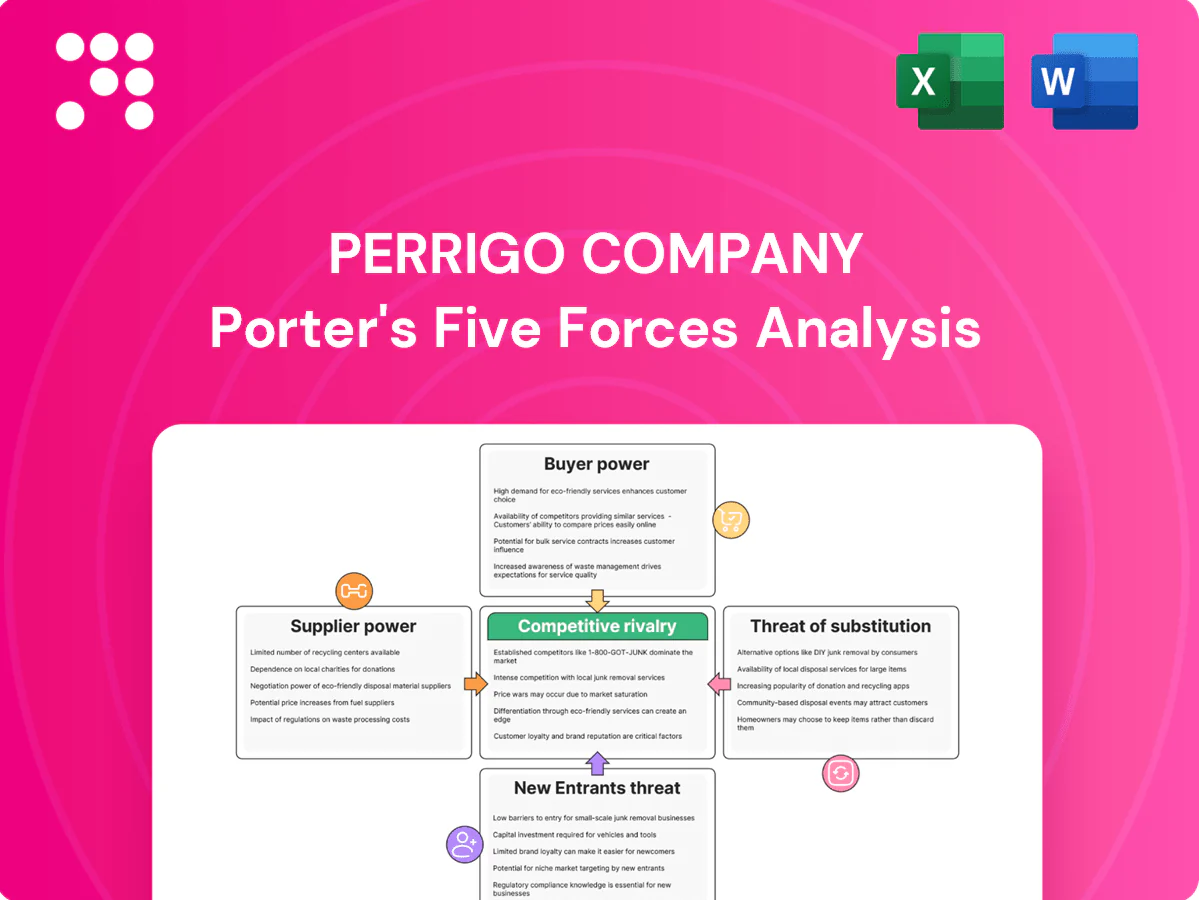
Perrigo Company Porter's Five Forces Analysis

From Overview to Strategy Blueprint
Perrigo Company operates in a dynamic landscape shaped by intense rivalry, the significant bargaining power of buyers, and the constant threat of new entrants. Understanding these forces is crucial for navigating its competitive environment.
The complete report reveals the real forces shaping Perrigo Company’s industry—from supplier influence to threat of new entrants. Gain actionable insights to drive smarter decision-making.
Suppliers Bargaining Power

Supplier Concentration
Perrigo's reliance on a select group of specialized suppliers for crucial active pharmaceutical ingredients (APIs) or unique raw materials can significantly enhance supplier bargaining power. For instance, if a particular API is only produced by a handful of firms, those suppliers gain leverage. This concentration means Perrigo has fewer alternatives, potentially leading to higher costs or supply disruptions.
However, Perrigo's diversified product portfolio, spanning various consumer healthcare categories, offers some counterbalance. The company's significant in-house manufacturing capabilities, particularly for products like infant formula, reduce its dependence on external suppliers for these key items. This internal capacity provides a degree of control over its supply chain for these specific product lines.
Furthermore, Perrigo's strategic initiative, the 'Supply Chain Reinvention' program, directly addresses external dependencies. This program is designed to optimize sourcing strategies, build stronger supplier relationships, and potentially diversify its supplier base where feasible, thereby aiming to mitigate the bargaining power of concentrated suppliers. In 2023, Perrigo reported that its supply chain initiatives were on track to deliver approximately $100 million in savings, underscoring the financial impact of managing supplier relationships and dependencies.
Switching Costs for Perrigo
The costs Perrigo faces when switching raw material suppliers are substantial. These include the expense and time involved in qualifying new materials, revalidating existing manufacturing processes, and obtaining necessary regulatory approvals, all of which can be quite burdensome.
These high switching costs effectively bolster the bargaining power of Perrigo's current suppliers, as the effort and expense to change can be prohibitive for Perrigo.
However, Perrigo is actively working to mitigate this by investing in its own U.S.-based manufacturing capabilities for key product lines like over-the-counter medications, infant formula, and oral care. This strategic move aims to lessen its dependence on external suppliers and the complexities tied to switching them.

Availability of Substitute Inputs
The availability of alternative raw materials or the ability for Perrigo Company to produce key components internally significantly curtails the leverage individual suppliers hold. Perrigo’s broad product portfolio necessitates sourcing a wide array of inputs; some inputs likely possess numerous substitutes, whereas others, particularly specialized Active Pharmaceutical Ingredients (APIs), may have limited alternatives.
For instance, if Perrigo can switch to different excipients or packaging materials without compromising product quality or incurring substantial costs, the bargaining power of those specific suppliers is diminished. This flexibility is crucial in managing input costs and ensuring supply continuity.
Perrigo’s ongoing emphasis on supply chain optimization likely includes strategies to broaden its supplier base and explore in-house manufacturing capabilities for critical components. This proactive approach aims to mitigate risks associated with single-source dependencies and enhance its negotiating position.

Importance of Perrigo to Suppliers
Perrigo's significance to its suppliers varies. For smaller, specialized suppliers, Perrigo often represents a substantial portion of their business, which can limit their bargaining power. However, for larger, diversified manufacturers of chemicals or pharmaceutical ingredients, Perrigo is just one client among many, granting these larger suppliers more leverage in negotiations.
Perrigo's considerable scale as a global self-care company allows it to negotiate favorable terms with many suppliers due to the sheer volume of its purchases. This purchasing power is a key factor in managing supplier relationships and costs.
- Supplier Dependence: Smaller, specialized suppliers often rely heavily on Perrigo, reducing their ability to dictate terms.
- Market Diversification: Larger suppliers, serving multiple clients, have less dependence on Perrigo, increasing their leverage.
- Volume Purchasing: Perrigo's global reach and substantial order volumes enable it to secure competitive pricing and favorable contract conditions.
Threat of Forward Integration by Suppliers
The threat of suppliers integrating forward into manufacturing or distributing finished over-the-counter (OTC) products is generally low for Perrigo. This is primarily due to the significant capital investment and stringent regulatory hurdles associated with pharmaceutical-grade inputs, which are critical for Perrigo's complex product lines.
While the threat is somewhat elevated for more commoditized components or packaging materials, Perrigo's established brand recognition and extensive distribution channels present substantial barriers to entry for potential supplier competitors.
Furthermore, Perrigo's robust in-house manufacturing capabilities provide a significant counter-leverage against suppliers, reducing their ability to exert undue influence through forward integration.
- High Barriers for Complex Inputs: The specialized nature and regulatory compliance required for pharmaceutical-grade ingredients create significant capital and expertise demands, deterring suppliers from forward integration into finished goods.
- Perrigo's Brand and Distribution Strength: Perrigo's established market presence and distribution networks act as a strong deterrent, making it difficult for suppliers to compete directly in the finished product market.
- In-house Manufacturing as a Deterrent: Perrigo's own manufacturing capacity allows it to control production and maintain leverage over suppliers, diminishing the latter's incentive or ability to pursue forward integration strategies.
Optimizing Supply Chains: Countering Supplier Leverage
Perrigo's bargaining power with suppliers is influenced by its purchasing volume and the availability of alternative inputs. While the company's scale allows for negotiation advantages, reliance on specialized APIs can concentrate power with a few key suppliers. Perrigo's strategic investments in U.S.-based manufacturing for products like infant formula aim to reduce this external dependence.
The high costs associated with switching raw material suppliers, including qualification and regulatory approvals, strengthen the hand of existing suppliers. Perrigo's 'Supply Chain Reinvention' program, targeting $100 million in savings in 2023 through optimized sourcing, demonstrates efforts to manage these dependencies and mitigate supplier leverage.
While smaller suppliers may be highly dependent on Perrigo, larger, diversified suppliers serving many clients hold more negotiation power. Perrigo's global purchasing volume is a significant factor in securing favorable terms, balancing the leverage held by larger suppliers.
The threat of suppliers integrating forward into finished goods is generally low due to the high capital and regulatory barriers for pharmaceutical-grade inputs. Perrigo's established brands and distribution channels further deter such moves.
| Factor | Perrigo's Position | Impact on Supplier Bargaining Power |
|---|---|---|
| Supplier Concentration | High for specialized APIs, lower for commoditized inputs | Increases power for specialized suppliers, decreases for commoditized ones |
| Switching Costs | High due to qualification, regulatory, and process validation | Significantly increases supplier bargaining power |
| Perrigo's Scale & Purchasing Volume | Substantial global purchasing power | Decreases supplier bargaining power through negotiation leverage |
| In-house Manufacturing Capabilities | Growing, particularly for infant formula and OTCs | Reduces dependence and supplier leverage |
| Forward Integration Threat | Low for complex inputs, moderate for commoditized items | Minimal threat for critical inputs, potential for packaging/commodities |
What is included in the product
 Detailed Word Document
This analysis unpacks the competitive forces impacting Perrigo Company, detailing buyer and supplier power, the threat of new entrants and substitutes, and the intensity of rivalry within the consumer self-care market.

 Customizable Excel Spreadsheet
Effortlessly assess competitive intensity across all five forces to proactively address potential market disruptions for Perrigo.
Customers Bargaining Power

Customer Concentration
Perrigo's customer base is quite varied, encompassing major retail chains, pharmacies, and individual shoppers. A significant portion of its U.S. revenue is generated from supplying private label goods to large retailers.
These major retail partners, due to their sheer size and ability to consolidate purchases, wield considerable bargaining power. This concentrated buying power can indeed put pressure on Perrigo's pricing strategies and overall profit margins.
Price Sensitivity of Customers
Customers, especially those opting for private label or generic over-the-counter (OTC) products, exhibit significant price sensitivity. They actively seek out cost-effective self-care options, making price a primary driver in their purchasing decisions. This is particularly evident in the OTC health and wellness market, where consumers often compare prices across numerous brands and retailers.
Perrigo's strategy of offering both branded products and more affordable store-brand alternatives allows it to appeal to a broader customer base. However, the intense competition within the generic OTC segment means that maintaining competitive pricing is crucial for market share. For instance, in 2024, the private label segment of the US OTC market continued to grow, driven by consumers looking for value, putting pressure on all players to manage costs and pricing effectively.
Economic fluctuations and inflation can amplify consumer price sensitivity. When household budgets tighten, consumers are more likely to trade down to less expensive alternatives, even for health-related products. This trend was observed in late 2023 and continued into 2024, with reports indicating a noticeable shift towards private label brands in various consumer goods categories, including health and personal care.

Availability of Substitutes for Customers
The availability of numerous substitutes significantly bolsters customer bargaining power in the over-the-counter (OTC) market. Consumers can readily choose between competing branded products, other private label options, and a wide array of generic alternatives, making switching easy if dissatisfied with price, quality, or brand perception.
Perrigo's strong position in U.S. private label, which saw net sales of $3.5 billion in 2023, helps retain customers, but the constant influx of new generic entries and aggressive pricing by competitors necessitates ongoing innovation and competitive strategies to maintain market share.

Information Asymmetry
In the over-the-counter (OTC) market, consumers are becoming significantly more informed about product effectiveness and pricing. This is largely due to the proliferation of digital channels, which offer easy access to reviews, comparisons, and scientific data. This increased transparency directly combats information asymmetry, empowering customers to make more discerning choices and consequently pressuring companies like Perrigo to clearly articulate the value and competitive pricing of their products.
Retailers, acting as direct customers for Perrigo, also wield considerable bargaining power. They gather extensive market data, including sales figures, competitor pricing, and consumer preferences. This data allows them to negotiate more effectively with manufacturers, demanding favorable terms and pricing that reflect their understanding of market dynamics. For instance, major retail chains often have significant leverage due to their volume of sales, which can influence Perrigo's distribution and pricing strategies.
- Informed Consumers: Digital channels provide consumers with easy access to product efficacy and pricing information, reducing information asymmetry.
- Retailer Leverage: Retailers possess extensive market data, enabling them to negotiate favorable terms with OTC manufacturers like Perrigo.
- Pricing Pressure: Increased transparency forces companies to justify their pricing and product value propositions to both consumers and retailers.
Customer Switching Costs
For consumers, the cost of switching between over-the-counter (OTC) products is typically very low. This means a customer can easily try a competitor's product with little effort or financial commitment, which naturally strengthens their bargaining power against Perrigo.
Retailers, while facing some logistical and contractual hurdles when changing private label suppliers, often find it worthwhile. In the fragmented OTC market, retailers can leverage this willingness to switch to negotiate better terms or secure more reliable supply chains, impacting Perrigo's pricing and sales.
In 2024, the OTC market continued to see intense competition, with consumers readily trying new brands. For instance, a survey indicated that over 60% of consumers are open to switching their preferred pain relief brand if offered a significant discount or a compelling new product feature, highlighting the low switching costs.
- Low Consumer Switching Costs: Minimal effort and financial outlay for consumers to change OTC brands.
- Retailer Negotiation Leverage: Retailers can switch private label suppliers for better terms, especially in a fragmented market.
- Market Dynamics: The ease of switching empowers customers and retailers, directly influencing Perrigo's pricing strategies.
Customer Bargaining Power Dominates Self-Care Market
The bargaining power of customers for Perrigo is substantial, particularly due to the prevalence of private label products and price-sensitive consumers in the OTC market. Major retailers, acting as key customers, leverage their significant purchasing volume and market data to negotiate favorable terms, directly impacting Perrigo's pricing and margins. For instance, in 2023, Perrigo's U.S. private label segment generated $3.5 billion in net sales, underscoring the importance and leverage of these large retail partners.
Consumers exhibit high price sensitivity, actively seeking cost-effective self-care solutions, a trend amplified by economic pressures observed through late 2023 and into 2024. The ease with which consumers can switch between numerous generic and private label options, coupled with increased transparency from digital channels, further empowers them to demand competitive pricing and clear value propositions from manufacturers like Perrigo. This dynamic is evident in the 2024 market where over 60% of consumers were reportedly open to switching their preferred OTC brand for discounts or new features.
| Factor | Impact on Perrigo | Supporting Data/Trend |
| Retailer Concentration | High Bargaining Power | Major retail chains are key customers; significant private label revenue ($3.5B in US in 2023). |
| Consumer Price Sensitivity | High Bargaining Power | Consumers actively seek value; trend amplified by economic conditions in late 2023/2024. |
| Availability of Substitutes | High Bargaining Power | Numerous generic and private label OTC options; easy consumer switching (e.g., 60%+ open to switching brands in 2024). |
| Information Transparency | High Bargaining Power | Digital channels empower consumers with pricing and efficacy data, reducing information asymmetry. |
Same Document Delivered
Perrigo Company Porter's Five Forces Analysis
This preview shows the exact document you'll receive immediately after purchase—no surprises, no placeholders. It details Perrigo Company's Porter's Five Forces Analysis, thoroughly examining the bargaining power of suppliers and buyers, the threat of new entrants and substitutes, and the intensity of competitive rivalry within its industry. This comprehensive analysis provides actionable insights into the competitive landscape and strategic positioning of Perrigo.

From Overview to Strategy Blueprint
Perrigo Company operates in a dynamic landscape shaped by intense rivalry, the significant bargaining power of buyers, and the constant threat of new entrants. Understanding these forces is crucial for navigating its competitive environment.
The complete report reveals the real forces shaping Perrigo Company’s industry—from supplier influence to threat of new entrants. Gain actionable insights to drive smarter decision-making.
Suppliers Bargaining Power
Supplier Concentration
Perrigo's reliance on a select group of specialized suppliers for crucial active pharmaceutical ingredients (APIs) or unique raw materials can significantly enhance supplier bargaining power. For instance, if a particular API is only produced by a handful of firms, those suppliers gain leverage. This concentration means Perrigo has fewer alternatives, potentially leading to higher costs or supply disruptions.
However, Perrigo's diversified product portfolio, spanning various consumer healthcare categories, offers some counterbalance. The company's significant in-house manufacturing capabilities, particularly for products like infant formula, reduce its dependence on external suppliers for these key items. This internal capacity provides a degree of control over its supply chain for these specific product lines.
Furthermore, Perrigo's strategic initiative, the 'Supply Chain Reinvention' program, directly addresses external dependencies. This program is designed to optimize sourcing strategies, build stronger supplier relationships, and potentially diversify its supplier base where feasible, thereby aiming to mitigate the bargaining power of concentrated suppliers. In 2023, Perrigo reported that its supply chain initiatives were on track to deliver approximately $100 million in savings, underscoring the financial impact of managing supplier relationships and dependencies.
Switching Costs for Perrigo
The costs Perrigo faces when switching raw material suppliers are substantial. These include the expense and time involved in qualifying new materials, revalidating existing manufacturing processes, and obtaining necessary regulatory approvals, all of which can be quite burdensome.
These high switching costs effectively bolster the bargaining power of Perrigo's current suppliers, as the effort and expense to change can be prohibitive for Perrigo.
However, Perrigo is actively working to mitigate this by investing in its own U.S.-based manufacturing capabilities for key product lines like over-the-counter medications, infant formula, and oral care. This strategic move aims to lessen its dependence on external suppliers and the complexities tied to switching them.
Availability of Substitute Inputs
The availability of alternative raw materials or the ability for Perrigo Company to produce key components internally significantly curtails the leverage individual suppliers hold. Perrigo’s broad product portfolio necessitates sourcing a wide array of inputs; some inputs likely possess numerous substitutes, whereas others, particularly specialized Active Pharmaceutical Ingredients (APIs), may have limited alternatives.
For instance, if Perrigo can switch to different excipients or packaging materials without compromising product quality or incurring substantial costs, the bargaining power of those specific suppliers is diminished. This flexibility is crucial in managing input costs and ensuring supply continuity.
Perrigo’s ongoing emphasis on supply chain optimization likely includes strategies to broaden its supplier base and explore in-house manufacturing capabilities for critical components. This proactive approach aims to mitigate risks associated with single-source dependencies and enhance its negotiating position.
Importance of Perrigo to Suppliers
Perrigo's significance to its suppliers varies. For smaller, specialized suppliers, Perrigo often represents a substantial portion of their business, which can limit their bargaining power. However, for larger, diversified manufacturers of chemicals or pharmaceutical ingredients, Perrigo is just one client among many, granting these larger suppliers more leverage in negotiations.
Perrigo's considerable scale as a global self-care company allows it to negotiate favorable terms with many suppliers due to the sheer volume of its purchases. This purchasing power is a key factor in managing supplier relationships and costs.
- Supplier Dependence: Smaller, specialized suppliers often rely heavily on Perrigo, reducing their ability to dictate terms.
- Market Diversification: Larger suppliers, serving multiple clients, have less dependence on Perrigo, increasing their leverage.
- Volume Purchasing: Perrigo's global reach and substantial order volumes enable it to secure competitive pricing and favorable contract conditions.
Threat of Forward Integration by Suppliers
The threat of suppliers integrating forward into manufacturing or distributing finished over-the-counter (OTC) products is generally low for Perrigo. This is primarily due to the significant capital investment and stringent regulatory hurdles associated with pharmaceutical-grade inputs, which are critical for Perrigo's complex product lines.
While the threat is somewhat elevated for more commoditized components or packaging materials, Perrigo's established brand recognition and extensive distribution channels present substantial barriers to entry for potential supplier competitors.
Furthermore, Perrigo's robust in-house manufacturing capabilities provide a significant counter-leverage against suppliers, reducing their ability to exert undue influence through forward integration.
- High Barriers for Complex Inputs: The specialized nature and regulatory compliance required for pharmaceutical-grade ingredients create significant capital and expertise demands, deterring suppliers from forward integration into finished goods.
- Perrigo's Brand and Distribution Strength: Perrigo's established market presence and distribution networks act as a strong deterrent, making it difficult for suppliers to compete directly in the finished product market.
- In-house Manufacturing as a Deterrent: Perrigo's own manufacturing capacity allows it to control production and maintain leverage over suppliers, diminishing the latter's incentive or ability to pursue forward integration strategies.
Optimizing Supply Chains: Countering Supplier Leverage
Perrigo's bargaining power with suppliers is influenced by its purchasing volume and the availability of alternative inputs. While the company's scale allows for negotiation advantages, reliance on specialized APIs can concentrate power with a few key suppliers. Perrigo's strategic investments in U.S.-based manufacturing for products like infant formula aim to reduce this external dependence.
The high costs associated with switching raw material suppliers, including qualification and regulatory approvals, strengthen the hand of existing suppliers. Perrigo's 'Supply Chain Reinvention' program, targeting $100 million in savings in 2023 through optimized sourcing, demonstrates efforts to manage these dependencies and mitigate supplier leverage.
While smaller suppliers may be highly dependent on Perrigo, larger, diversified suppliers serving many clients hold more negotiation power. Perrigo's global purchasing volume is a significant factor in securing favorable terms, balancing the leverage held by larger suppliers.
The threat of suppliers integrating forward into finished goods is generally low due to the high capital and regulatory barriers for pharmaceutical-grade inputs. Perrigo's established brands and distribution channels further deter such moves.
| Factor | Perrigo's Position | Impact on Supplier Bargaining Power |
|---|---|---|
| Supplier Concentration | High for specialized APIs, lower for commoditized inputs | Increases power for specialized suppliers, decreases for commoditized ones |
| Switching Costs | High due to qualification, regulatory, and process validation | Significantly increases supplier bargaining power |
| Perrigo's Scale & Purchasing Volume | Substantial global purchasing power | Decreases supplier bargaining power through negotiation leverage |
| In-house Manufacturing Capabilities | Growing, particularly for infant formula and OTCs | Reduces dependence and supplier leverage |
| Forward Integration Threat | Low for complex inputs, moderate for commoditized items | Minimal threat for critical inputs, potential for packaging/commodities |
What is included in the product
Detailed Word Document
This analysis unpacks the competitive forces impacting Perrigo Company, detailing buyer and supplier power, the threat of new entrants and substitutes, and the intensity of rivalry within the consumer self-care market.
Customizable Excel Spreadsheet
Effortlessly assess competitive intensity across all five forces to proactively address potential market disruptions for Perrigo.
Customers Bargaining Power
Customer Concentration
Perrigo's customer base is quite varied, encompassing major retail chains, pharmacies, and individual shoppers. A significant portion of its U.S. revenue is generated from supplying private label goods to large retailers.
These major retail partners, due to their sheer size and ability to consolidate purchases, wield considerable bargaining power. This concentrated buying power can indeed put pressure on Perrigo's pricing strategies and overall profit margins.
Price Sensitivity of Customers
Customers, especially those opting for private label or generic over-the-counter (OTC) products, exhibit significant price sensitivity. They actively seek out cost-effective self-care options, making price a primary driver in their purchasing decisions. This is particularly evident in the OTC health and wellness market, where consumers often compare prices across numerous brands and retailers.
Perrigo's strategy of offering both branded products and more affordable store-brand alternatives allows it to appeal to a broader customer base. However, the intense competition within the generic OTC segment means that maintaining competitive pricing is crucial for market share. For instance, in 2024, the private label segment of the US OTC market continued to grow, driven by consumers looking for value, putting pressure on all players to manage costs and pricing effectively.
Economic fluctuations and inflation can amplify consumer price sensitivity. When household budgets tighten, consumers are more likely to trade down to less expensive alternatives, even for health-related products. This trend was observed in late 2023 and continued into 2024, with reports indicating a noticeable shift towards private label brands in various consumer goods categories, including health and personal care.
Availability of Substitutes for Customers
The availability of numerous substitutes significantly bolsters customer bargaining power in the over-the-counter (OTC) market. Consumers can readily choose between competing branded products, other private label options, and a wide array of generic alternatives, making switching easy if dissatisfied with price, quality, or brand perception.
Perrigo's strong position in U.S. private label, which saw net sales of $3.5 billion in 2023, helps retain customers, but the constant influx of new generic entries and aggressive pricing by competitors necessitates ongoing innovation and competitive strategies to maintain market share.
Information Asymmetry
In the over-the-counter (OTC) market, consumers are becoming significantly more informed about product effectiveness and pricing. This is largely due to the proliferation of digital channels, which offer easy access to reviews, comparisons, and scientific data. This increased transparency directly combats information asymmetry, empowering customers to make more discerning choices and consequently pressuring companies like Perrigo to clearly articulate the value and competitive pricing of their products.
Retailers, acting as direct customers for Perrigo, also wield considerable bargaining power. They gather extensive market data, including sales figures, competitor pricing, and consumer preferences. This data allows them to negotiate more effectively with manufacturers, demanding favorable terms and pricing that reflect their understanding of market dynamics. For instance, major retail chains often have significant leverage due to their volume of sales, which can influence Perrigo's distribution and pricing strategies.
- Informed Consumers: Digital channels provide consumers with easy access to product efficacy and pricing information, reducing information asymmetry.
- Retailer Leverage: Retailers possess extensive market data, enabling them to negotiate favorable terms with OTC manufacturers like Perrigo.
- Pricing Pressure: Increased transparency forces companies to justify their pricing and product value propositions to both consumers and retailers.
Customer Switching Costs
For consumers, the cost of switching between over-the-counter (OTC) products is typically very low. This means a customer can easily try a competitor's product with little effort or financial commitment, which naturally strengthens their bargaining power against Perrigo.
Retailers, while facing some logistical and contractual hurdles when changing private label suppliers, often find it worthwhile. In the fragmented OTC market, retailers can leverage this willingness to switch to negotiate better terms or secure more reliable supply chains, impacting Perrigo's pricing and sales.
In 2024, the OTC market continued to see intense competition, with consumers readily trying new brands. For instance, a survey indicated that over 60% of consumers are open to switching their preferred pain relief brand if offered a significant discount or a compelling new product feature, highlighting the low switching costs.
- Low Consumer Switching Costs: Minimal effort and financial outlay for consumers to change OTC brands.
- Retailer Negotiation Leverage: Retailers can switch private label suppliers for better terms, especially in a fragmented market.
- Market Dynamics: The ease of switching empowers customers and retailers, directly influencing Perrigo's pricing strategies.
Customer Bargaining Power Dominates Self-Care Market
The bargaining power of customers for Perrigo is substantial, particularly due to the prevalence of private label products and price-sensitive consumers in the OTC market. Major retailers, acting as key customers, leverage their significant purchasing volume and market data to negotiate favorable terms, directly impacting Perrigo's pricing and margins. For instance, in 2023, Perrigo's U.S. private label segment generated $3.5 billion in net sales, underscoring the importance and leverage of these large retail partners.
Consumers exhibit high price sensitivity, actively seeking cost-effective self-care solutions, a trend amplified by economic pressures observed through late 2023 and into 2024. The ease with which consumers can switch between numerous generic and private label options, coupled with increased transparency from digital channels, further empowers them to demand competitive pricing and clear value propositions from manufacturers like Perrigo. This dynamic is evident in the 2024 market where over 60% of consumers were reportedly open to switching their preferred OTC brand for discounts or new features.
| Factor | Impact on Perrigo | Supporting Data/Trend |
| Retailer Concentration | High Bargaining Power | Major retail chains are key customers; significant private label revenue ($3.5B in US in 2023). |
| Consumer Price Sensitivity | High Bargaining Power | Consumers actively seek value; trend amplified by economic conditions in late 2023/2024. |
| Availability of Substitutes | High Bargaining Power | Numerous generic and private label OTC options; easy consumer switching (e.g., 60%+ open to switching brands in 2024). |
| Information Transparency | High Bargaining Power | Digital channels empower consumers with pricing and efficacy data, reducing information asymmetry. |
Same Document Delivered
Perrigo Company Porter's Five Forces Analysis
This preview shows the exact document you'll receive immediately after purchase—no surprises, no placeholders. It details Perrigo Company's Porter's Five Forces Analysis, thoroughly examining the bargaining power of suppliers and buyers, the threat of new entrants and substitutes, and the intensity of competitive rivalry within its industry. This comprehensive analysis provides actionable insights into the competitive landscape and strategic positioning of Perrigo.
Original: $10.00
-65%$10.00
$3.50Description
From Overview to Strategy Blueprint
Perrigo Company operates in a dynamic landscape shaped by intense rivalry, the significant bargaining power of buyers, and the constant threat of new entrants. Understanding these forces is crucial for navigating its competitive environment.
The complete report reveals the real forces shaping Perrigo Company’s industry—from supplier influence to threat of new entrants. Gain actionable insights to drive smarter decision-making.
Suppliers Bargaining Power
Supplier Concentration
Perrigo's reliance on a select group of specialized suppliers for crucial active pharmaceutical ingredients (APIs) or unique raw materials can significantly enhance supplier bargaining power. For instance, if a particular API is only produced by a handful of firms, those suppliers gain leverage. This concentration means Perrigo has fewer alternatives, potentially leading to higher costs or supply disruptions.
However, Perrigo's diversified product portfolio, spanning various consumer healthcare categories, offers some counterbalance. The company's significant in-house manufacturing capabilities, particularly for products like infant formula, reduce its dependence on external suppliers for these key items. This internal capacity provides a degree of control over its supply chain for these specific product lines.
Furthermore, Perrigo's strategic initiative, the 'Supply Chain Reinvention' program, directly addresses external dependencies. This program is designed to optimize sourcing strategies, build stronger supplier relationships, and potentially diversify its supplier base where feasible, thereby aiming to mitigate the bargaining power of concentrated suppliers. In 2023, Perrigo reported that its supply chain initiatives were on track to deliver approximately $100 million in savings, underscoring the financial impact of managing supplier relationships and dependencies.
Switching Costs for Perrigo
The costs Perrigo faces when switching raw material suppliers are substantial. These include the expense and time involved in qualifying new materials, revalidating existing manufacturing processes, and obtaining necessary regulatory approvals, all of which can be quite burdensome.
These high switching costs effectively bolster the bargaining power of Perrigo's current suppliers, as the effort and expense to change can be prohibitive for Perrigo.
However, Perrigo is actively working to mitigate this by investing in its own U.S.-based manufacturing capabilities for key product lines like over-the-counter medications, infant formula, and oral care. This strategic move aims to lessen its dependence on external suppliers and the complexities tied to switching them.
Availability of Substitute Inputs
The availability of alternative raw materials or the ability for Perrigo Company to produce key components internally significantly curtails the leverage individual suppliers hold. Perrigo’s broad product portfolio necessitates sourcing a wide array of inputs; some inputs likely possess numerous substitutes, whereas others, particularly specialized Active Pharmaceutical Ingredients (APIs), may have limited alternatives.
For instance, if Perrigo can switch to different excipients or packaging materials without compromising product quality or incurring substantial costs, the bargaining power of those specific suppliers is diminished. This flexibility is crucial in managing input costs and ensuring supply continuity.
Perrigo’s ongoing emphasis on supply chain optimization likely includes strategies to broaden its supplier base and explore in-house manufacturing capabilities for critical components. This proactive approach aims to mitigate risks associated with single-source dependencies and enhance its negotiating position.
Importance of Perrigo to Suppliers
Perrigo's significance to its suppliers varies. For smaller, specialized suppliers, Perrigo often represents a substantial portion of their business, which can limit their bargaining power. However, for larger, diversified manufacturers of chemicals or pharmaceutical ingredients, Perrigo is just one client among many, granting these larger suppliers more leverage in negotiations.
Perrigo's considerable scale as a global self-care company allows it to negotiate favorable terms with many suppliers due to the sheer volume of its purchases. This purchasing power is a key factor in managing supplier relationships and costs.
- Supplier Dependence: Smaller, specialized suppliers often rely heavily on Perrigo, reducing their ability to dictate terms.
- Market Diversification: Larger suppliers, serving multiple clients, have less dependence on Perrigo, increasing their leverage.
- Volume Purchasing: Perrigo's global reach and substantial order volumes enable it to secure competitive pricing and favorable contract conditions.
Threat of Forward Integration by Suppliers
The threat of suppliers integrating forward into manufacturing or distributing finished over-the-counter (OTC) products is generally low for Perrigo. This is primarily due to the significant capital investment and stringent regulatory hurdles associated with pharmaceutical-grade inputs, which are critical for Perrigo's complex product lines.
While the threat is somewhat elevated for more commoditized components or packaging materials, Perrigo's established brand recognition and extensive distribution channels present substantial barriers to entry for potential supplier competitors.
Furthermore, Perrigo's robust in-house manufacturing capabilities provide a significant counter-leverage against suppliers, reducing their ability to exert undue influence through forward integration.
- High Barriers for Complex Inputs: The specialized nature and regulatory compliance required for pharmaceutical-grade ingredients create significant capital and expertise demands, deterring suppliers from forward integration into finished goods.
- Perrigo's Brand and Distribution Strength: Perrigo's established market presence and distribution networks act as a strong deterrent, making it difficult for suppliers to compete directly in the finished product market.
- In-house Manufacturing as a Deterrent: Perrigo's own manufacturing capacity allows it to control production and maintain leverage over suppliers, diminishing the latter's incentive or ability to pursue forward integration strategies.
Optimizing Supply Chains: Countering Supplier Leverage
Perrigo's bargaining power with suppliers is influenced by its purchasing volume and the availability of alternative inputs. While the company's scale allows for negotiation advantages, reliance on specialized APIs can concentrate power with a few key suppliers. Perrigo's strategic investments in U.S.-based manufacturing for products like infant formula aim to reduce this external dependence.
The high costs associated with switching raw material suppliers, including qualification and regulatory approvals, strengthen the hand of existing suppliers. Perrigo's 'Supply Chain Reinvention' program, targeting $100 million in savings in 2023 through optimized sourcing, demonstrates efforts to manage these dependencies and mitigate supplier leverage.
While smaller suppliers may be highly dependent on Perrigo, larger, diversified suppliers serving many clients hold more negotiation power. Perrigo's global purchasing volume is a significant factor in securing favorable terms, balancing the leverage held by larger suppliers.
The threat of suppliers integrating forward into finished goods is generally low due to the high capital and regulatory barriers for pharmaceutical-grade inputs. Perrigo's established brands and distribution channels further deter such moves.
| Factor | Perrigo's Position | Impact on Supplier Bargaining Power |
|---|---|---|
| Supplier Concentration | High for specialized APIs, lower for commoditized inputs | Increases power for specialized suppliers, decreases for commoditized ones |
| Switching Costs | High due to qualification, regulatory, and process validation | Significantly increases supplier bargaining power |
| Perrigo's Scale & Purchasing Volume | Substantial global purchasing power | Decreases supplier bargaining power through negotiation leverage |
| In-house Manufacturing Capabilities | Growing, particularly for infant formula and OTCs | Reduces dependence and supplier leverage |
| Forward Integration Threat | Low for complex inputs, moderate for commoditized items | Minimal threat for critical inputs, potential for packaging/commodities |
What is included in the product
Detailed Word Document
This analysis unpacks the competitive forces impacting Perrigo Company, detailing buyer and supplier power, the threat of new entrants and substitutes, and the intensity of rivalry within the consumer self-care market.
Customizable Excel Spreadsheet
Effortlessly assess competitive intensity across all five forces to proactively address potential market disruptions for Perrigo.
Customers Bargaining Power
Customer Concentration
Perrigo's customer base is quite varied, encompassing major retail chains, pharmacies, and individual shoppers. A significant portion of its U.S. revenue is generated from supplying private label goods to large retailers.
These major retail partners, due to their sheer size and ability to consolidate purchases, wield considerable bargaining power. This concentrated buying power can indeed put pressure on Perrigo's pricing strategies and overall profit margins.
Price Sensitivity of Customers
Customers, especially those opting for private label or generic over-the-counter (OTC) products, exhibit significant price sensitivity. They actively seek out cost-effective self-care options, making price a primary driver in their purchasing decisions. This is particularly evident in the OTC health and wellness market, where consumers often compare prices across numerous brands and retailers.
Perrigo's strategy of offering both branded products and more affordable store-brand alternatives allows it to appeal to a broader customer base. However, the intense competition within the generic OTC segment means that maintaining competitive pricing is crucial for market share. For instance, in 2024, the private label segment of the US OTC market continued to grow, driven by consumers looking for value, putting pressure on all players to manage costs and pricing effectively.
Economic fluctuations and inflation can amplify consumer price sensitivity. When household budgets tighten, consumers are more likely to trade down to less expensive alternatives, even for health-related products. This trend was observed in late 2023 and continued into 2024, with reports indicating a noticeable shift towards private label brands in various consumer goods categories, including health and personal care.
Availability of Substitutes for Customers
The availability of numerous substitutes significantly bolsters customer bargaining power in the over-the-counter (OTC) market. Consumers can readily choose between competing branded products, other private label options, and a wide array of generic alternatives, making switching easy if dissatisfied with price, quality, or brand perception.
Perrigo's strong position in U.S. private label, which saw net sales of $3.5 billion in 2023, helps retain customers, but the constant influx of new generic entries and aggressive pricing by competitors necessitates ongoing innovation and competitive strategies to maintain market share.
Information Asymmetry
In the over-the-counter (OTC) market, consumers are becoming significantly more informed about product effectiveness and pricing. This is largely due to the proliferation of digital channels, which offer easy access to reviews, comparisons, and scientific data. This increased transparency directly combats information asymmetry, empowering customers to make more discerning choices and consequently pressuring companies like Perrigo to clearly articulate the value and competitive pricing of their products.
Retailers, acting as direct customers for Perrigo, also wield considerable bargaining power. They gather extensive market data, including sales figures, competitor pricing, and consumer preferences. This data allows them to negotiate more effectively with manufacturers, demanding favorable terms and pricing that reflect their understanding of market dynamics. For instance, major retail chains often have significant leverage due to their volume of sales, which can influence Perrigo's distribution and pricing strategies.
- Informed Consumers: Digital channels provide consumers with easy access to product efficacy and pricing information, reducing information asymmetry.
- Retailer Leverage: Retailers possess extensive market data, enabling them to negotiate favorable terms with OTC manufacturers like Perrigo.
- Pricing Pressure: Increased transparency forces companies to justify their pricing and product value propositions to both consumers and retailers.
Customer Switching Costs
For consumers, the cost of switching between over-the-counter (OTC) products is typically very low. This means a customer can easily try a competitor's product with little effort or financial commitment, which naturally strengthens their bargaining power against Perrigo.
Retailers, while facing some logistical and contractual hurdles when changing private label suppliers, often find it worthwhile. In the fragmented OTC market, retailers can leverage this willingness to switch to negotiate better terms or secure more reliable supply chains, impacting Perrigo's pricing and sales.
In 2024, the OTC market continued to see intense competition, with consumers readily trying new brands. For instance, a survey indicated that over 60% of consumers are open to switching their preferred pain relief brand if offered a significant discount or a compelling new product feature, highlighting the low switching costs.
- Low Consumer Switching Costs: Minimal effort and financial outlay for consumers to change OTC brands.
- Retailer Negotiation Leverage: Retailers can switch private label suppliers for better terms, especially in a fragmented market.
- Market Dynamics: The ease of switching empowers customers and retailers, directly influencing Perrigo's pricing strategies.
Customer Bargaining Power Dominates Self-Care Market
The bargaining power of customers for Perrigo is substantial, particularly due to the prevalence of private label products and price-sensitive consumers in the OTC market. Major retailers, acting as key customers, leverage their significant purchasing volume and market data to negotiate favorable terms, directly impacting Perrigo's pricing and margins. For instance, in 2023, Perrigo's U.S. private label segment generated $3.5 billion in net sales, underscoring the importance and leverage of these large retail partners.
Consumers exhibit high price sensitivity, actively seeking cost-effective self-care solutions, a trend amplified by economic pressures observed through late 2023 and into 2024. The ease with which consumers can switch between numerous generic and private label options, coupled with increased transparency from digital channels, further empowers them to demand competitive pricing and clear value propositions from manufacturers like Perrigo. This dynamic is evident in the 2024 market where over 60% of consumers were reportedly open to switching their preferred OTC brand for discounts or new features.
| Factor | Impact on Perrigo | Supporting Data/Trend |
| Retailer Concentration | High Bargaining Power | Major retail chains are key customers; significant private label revenue ($3.5B in US in 2023). |
| Consumer Price Sensitivity | High Bargaining Power | Consumers actively seek value; trend amplified by economic conditions in late 2023/2024. |
| Availability of Substitutes | High Bargaining Power | Numerous generic and private label OTC options; easy consumer switching (e.g., 60%+ open to switching brands in 2024). |
| Information Transparency | High Bargaining Power | Digital channels empower consumers with pricing and efficacy data, reducing information asymmetry. |
Same Document Delivered
Perrigo Company Porter's Five Forces Analysis
This preview shows the exact document you'll receive immediately after purchase—no surprises, no placeholders. It details Perrigo Company's Porter's Five Forces Analysis, thoroughly examining the bargaining power of suppliers and buyers, the threat of new entrants and substitutes, and the intensity of competitive rivalry within its industry. This comprehensive analysis provides actionable insights into the competitive landscape and strategic positioning of Perrigo.











