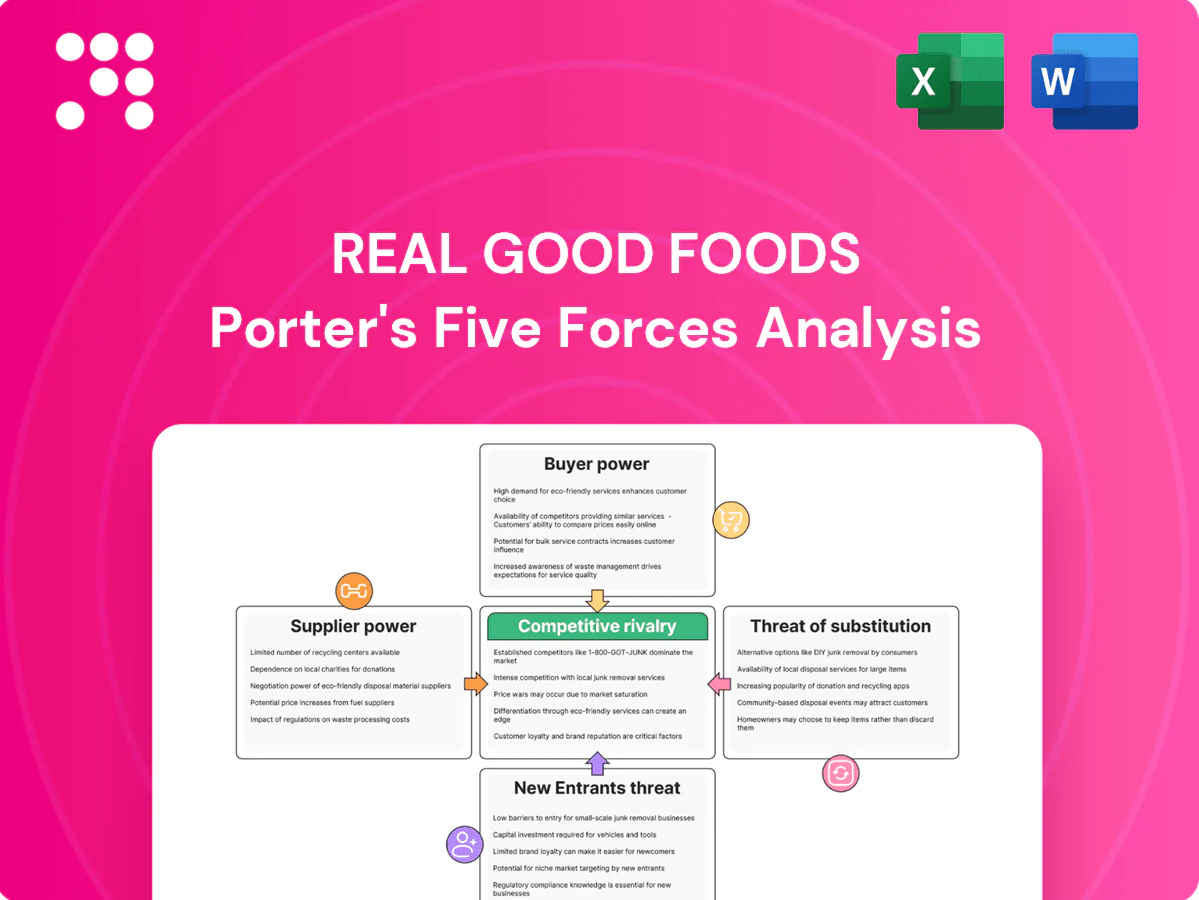
Real Good Foods Porter's Five Forces Analysis

Don't Miss the Bigger Picture
Real Good Foods navigates a competitive landscape shaped by intense rivalry and evolving consumer preferences. Understanding the power of buyers and the threat of substitutes is crucial for their sustained growth.
The complete report reveals the real forces shaping Real Good Foods’s industry—from supplier influence to threat of new entrants. Gain actionable insights to drive smarter decision-making.
Suppliers Bargaining Power

Limited Availability of Specialized Ingredients
The Real Good Food Company's commitment to specialized 'real ingredients' for its low-carb, high-protein, gluten-free, and grain-free offerings means it depends on a select group of suppliers. If these specific ingredients are hard to come by or are patented by a few companies, those suppliers gain significant leverage.
Furthermore, Real Good Food's emphasis on clean labels means suppliers must adhere to rigorous quality and sourcing standards, which not all can meet. This further constricts the supplier base, potentially enhancing the bargaining power of those who can consistently deliver on these strict requirements.
Rising Raw Material Costs
The frozen food sector, encompassing Real Good Foods' niche, is grappling with escalating raw material expenses and persistent supply chain disruptions. These widespread industry challenges directly translate to increased leverage for suppliers, enabling them to dictate higher prices to food manufacturers.
For instance, the cost of key ingredients like vegetables and dairy saw significant increases throughout 2023 and into early 2024, impacting overall production costs for companies in this space. Real Good Foods' own focus on supply chain optimization, as evidenced by their strategic initiatives, underscores the continuous effort required to mitigate these supplier-driven cost escalations.

Supplier Concentration in Niche Markets
While the broader food ingredient market offers many choices, the landscape for highly specialized components, such as those for low-carb or gluten-free products, can be considerably more concentrated. This means Real Good Foods might rely on a limited number of suppliers for crucial, unique inputs.
When a company like Real Good Foods depends heavily on a few key suppliers for specialized ingredients, those suppliers gain significant leverage. They can potentially dictate pricing, impose stricter terms, or even limit availability, directly impacting Real Good Foods' operational costs and product development.
The switching costs for these specialized inputs can be substantial. Developing new supplier relationships, ensuring consistent quality, and revalidating processes for niche ingredients can be both time-consuming and expensive, further entrenching the bargaining power of existing suppliers.

Company's Supply Chain Optimization Efforts
Real Good Foods has made significant strides in optimizing its supply chain, a key factor in managing supplier bargaining power. By closing a facility and consolidating production, the company has streamlined operations, aiming to enhance efficiency and lower fixed overhead expenses. These actions reflect a strategic effort to gain greater command over their cost structure.
This optimization directly addresses the bargaining power of suppliers by potentially reducing the company's dependence on external parties for critical processes. For instance, by internalizing certain production steps or securing more favorable terms through consolidated purchasing power, Real Good Foods can lessen the leverage suppliers hold. This proactive approach is crucial for maintaining competitive pricing and ensuring consistent quality.
- Supply Chain Consolidation: Real Good Foods closed one facility and consolidated production to improve efficiency.
- Cost Structure Control: Strategic moves aim to gain more control over the company's cost structure.
- Reduced Supplier Reliance: Efforts to mitigate supplier power by potentially reducing reliance on external suppliers for certain processes.
Impact of Supplier Reliability on Production
The bargaining power of suppliers for Real Good Foods is significantly influenced by their reliability. For a frozen food producer, consistent access to high-quality ingredients is paramount. Disruptions in this supply chain can halt production and compromise the final product's integrity, thereby amplifying supplier leverage.
Any instance of unreliability or quality concerns from key ingredient providers directly impacts Real Good Foods' production timelines and the overall standard of their offerings. This vulnerability is further highlighted by the company's recent emphasis on enhancing its supply chain operations, indicating a strategic effort to mitigate these risks and rebalance supplier power.
- Supplier Reliability: Essential for frozen food production continuity.
- Impact of Disruption: Production delays and compromised product quality.
- Indirect Power Increase: Supplier unreliability elevates their bargaining strength.
- Strategic Focus: Real Good Foods' supply chain improvements address this vulnerability.
Supplier Leverage in Specialized Food Markets
The bargaining power of suppliers for Real Good Foods is substantial due to the specialized nature of its ingredients, often catering to low-carb, high-protein, and gluten-free markets. This specialization can lead to a concentrated supplier base, giving those few providers significant leverage. For instance, the increasing cost of essential ingredients like vegetables and dairy throughout 2023 and into early 2024 directly impacted food manufacturers, including Real Good Foods, as suppliers could dictate higher prices. The company's own supply chain optimization efforts, such as facility consolidation, aim to mitigate this by potentially reducing reliance on external parties and gaining more control over costs.
| Factor | Impact on Real Good Foods | Supplier Leverage |
|---|---|---|
| Specialized Ingredients | Reliance on a limited number of suppliers for unique components. | High |
| Rigorous Standards | Suppliers must meet strict quality and sourcing requirements, narrowing the pool. | High |
| Switching Costs | High costs and time involved in finding and validating new suppliers for niche ingredients. | High |
| Industry Cost Pressures | Rising raw material costs (e.g., vegetables, dairy) in 2023-2024 increase supplier pricing power. | High |
What is included in the product
 Detailed Word Document
This analysis uncovers the key competitive forces impacting Real Good Foods, including the threat of new entrants, the bargaining power of buyers and suppliers, the threat of substitutes, and the intensity of rivalry within the frozen food industry.

 Customizable Excel Spreadsheet
Instantly visualize competitive pressures with a dynamic Porter's Five Forces chart, simplifying complex market dynamics for Real Good Foods.
Customers Bargaining Power

Price Sensitivity and Availability of Alternatives
Customers in the frozen food sector, even those seeking healthier options like Real Good Foods, are often swayed by price and ease of access. The rise of private label frozen foods, which frequently offer a more budget-friendly choice, highlights this consumer tendency towards affordability.
Real Good Foods faces a significant challenge from the sheer volume of alternatives available to consumers. With a wide array of health-focused brands and a broad spectrum of general frozen meal providers, customers possess substantial bargaining power due to the ease with which they can switch suppliers.
Retailer Dominance and Volume Purchases
Real Good Foods relies heavily on major retailers like Walmart and Kroger, which represent significant sales channels. In 2023, these large retailers accounted for a substantial portion of Real Good Foods' revenue, giving them considerable leverage. Their ability to purchase in massive volumes means they can negotiate aggressively on price and terms, directly influencing Real Good Foods' profitability.

Consumer Demand for Specific Dietary Attributes
Consumers are increasingly focused on specific dietary attributes, like low-carb, high-protein, gut health, or portion control. This trend is amplified by factors such as the growing influence of GLP-1 medications, which encourage mindful eating and specific nutritional profiles. In 2024, the global health and wellness market reached an estimated $5.6 trillion, with functional foods and beverages a significant driver, highlighting the market's responsiveness to these precise demands.
This heightened consumer awareness grants them considerable bargaining power. They can readily switch to brands that effectively align with their evolving health objectives and dietary requirements. For instance, a significant portion of consumers actively seek out products with clear nutritional labeling and specific functional benefits, as reported in numerous 2024 consumer surveys.
Real Good Foods, therefore, faces the imperative to continuously innovate and adapt its product offerings. Staying ahead means precisely matching these granular consumer preferences, ensuring that the company’s portfolio resonates with the health-conscious demographic that is driving market growth.

Ease of Switching Between Brands
The frozen food aisle is packed with options, giving consumers a lot of flexibility. If Real Good Foods doesn't hit the mark on price, a specific diet trend, or taste, customers can easily pivot to another brand. This low barrier to switching significantly boosts their influence.
In 2024, the frozen food market continued to be highly competitive. For example, the U.S. frozen food market was valued at approximately $75 billion, with numerous brands vying for consumer attention. This abundance directly translates to increased customer leverage as they can readily explore alternatives.
- High Availability of Substitutes: The frozen food sector is characterized by a vast number of competing products, from established giants to emerging niche brands.
- Low Switching Costs: Consumers face minimal financial or practical hurdles when moving from one frozen food brand to another.
- Price Sensitivity: Many consumers in the frozen food category are price-conscious, making them more likely to switch for a better deal.
- Dietary Trend Responsiveness: Brands that quickly adapt to evolving dietary preferences, such as plant-based or low-carb options, can attract customers away from less agile competitors.
Direct-to-Consumer Channel Influence
Real Good Foods' direct-to-consumer (DTC) channel offers a unique avenue for customer engagement, fostering loyalty and providing direct feedback. This channel allows for a more personalized experience, potentially increasing customer satisfaction and reducing price sensitivity for individual buyers.
Despite the DTC efforts, a substantial portion of Real Good Foods' revenue still originates from traditional retail partnerships. This dual approach means that while individual customers in the DTC channel can voice preferences, their collective power to influence pricing or product terms is somewhat diluted by the larger retail relationships.
The collective voice of customers, amplified through social media and online reviews, can still exert significant pressure on brands like Real Good Foods. In 2024, consumer sentiment, particularly regarding product quality and value, played a crucial role in shaping purchasing decisions across the frozen food sector.
- Direct Interaction: DTC allows Real Good Foods to gather direct customer feedback, influencing product development and marketing.
- Retail Dependence: A significant portion of sales still occurs through traditional retailers, moderating the direct bargaining power of individual DTC customers.
- Social Media Influence: Collective customer opinions shared online can impact brand perception and sales, even for those not directly purchasing through the DTC channel.
- 2024 Market Trends: Consumer demand for transparency and value continued to rise in 2024, empowering buyers across all sales channels.
Customer Bargaining Power: A Force in Frozen Foods
The bargaining power of customers in the frozen food market, including those seeking healthier options like Real Good Foods, is substantial. This is driven by the wide availability of substitutes, low switching costs, and increasing price sensitivity among consumers. In 2024, the global health and wellness market, valued at an estimated $5.6 trillion, saw functional foods as a key driver, indicating consumers' ability to find alternatives that meet specific dietary needs.
Real Good Foods' reliance on major retailers like Walmart and Kroger, which accounted for a significant portion of its revenue in 2023, further amplifies customer power. These large buyers can negotiate aggressively on price and terms due to their massive purchasing volumes, directly impacting Real Good Foods' profitability.
While Real Good Foods' direct-to-consumer (DTC) channel allows for direct feedback and potentially builds loyalty, a considerable amount of sales still goes through traditional retail. This means that while individual DTC customers can voice preferences, their collective power to influence pricing is somewhat moderated by these larger retail relationships.
| Factor | Impact on Real Good Foods | 2024 Data/Trend |
|---|---|---|
| Availability of Substitutes | High, customers can easily switch to other brands. | U.S. frozen food market valued at approx. $75 billion, with numerous brands. |
| Switching Costs | Low for consumers. | Minimal financial or practical hurdles to change brands. |
| Price Sensitivity | Significant, customers seek better deals. | Consumers increasingly look for value and clear nutritional labeling. |
| Dietary Trend Responsiveness | Crucial for attracting customers. | Growing demand for specific attributes (low-carb, high-protein) driven by wellness market. |
Full Version Awaits
Real Good Foods Porter's Five Forces Analysis
This comprehensive Real Good Foods Porter's Five Forces Analysis is the exact document you will receive immediately after purchase, offering a detailed examination of competitive forces within the industry. You're looking at the actual, professionally formatted analysis, ensuring no surprises or placeholders, and it's ready for your immediate use. Once you complete your purchase, you’ll get instant access to this complete file, providing valuable strategic insights for Real Good Foods.

Don't Miss the Bigger Picture
Real Good Foods navigates a competitive landscape shaped by intense rivalry and evolving consumer preferences. Understanding the power of buyers and the threat of substitutes is crucial for their sustained growth.
The complete report reveals the real forces shaping Real Good Foods’s industry—from supplier influence to threat of new entrants. Gain actionable insights to drive smarter decision-making.
Suppliers Bargaining Power
Limited Availability of Specialized Ingredients
The Real Good Food Company's commitment to specialized 'real ingredients' for its low-carb, high-protein, gluten-free, and grain-free offerings means it depends on a select group of suppliers. If these specific ingredients are hard to come by or are patented by a few companies, those suppliers gain significant leverage.
Furthermore, Real Good Food's emphasis on clean labels means suppliers must adhere to rigorous quality and sourcing standards, which not all can meet. This further constricts the supplier base, potentially enhancing the bargaining power of those who can consistently deliver on these strict requirements.
Rising Raw Material Costs
The frozen food sector, encompassing Real Good Foods' niche, is grappling with escalating raw material expenses and persistent supply chain disruptions. These widespread industry challenges directly translate to increased leverage for suppliers, enabling them to dictate higher prices to food manufacturers.
For instance, the cost of key ingredients like vegetables and dairy saw significant increases throughout 2023 and into early 2024, impacting overall production costs for companies in this space. Real Good Foods' own focus on supply chain optimization, as evidenced by their strategic initiatives, underscores the continuous effort required to mitigate these supplier-driven cost escalations.
Supplier Concentration in Niche Markets
While the broader food ingredient market offers many choices, the landscape for highly specialized components, such as those for low-carb or gluten-free products, can be considerably more concentrated. This means Real Good Foods might rely on a limited number of suppliers for crucial, unique inputs.
When a company like Real Good Foods depends heavily on a few key suppliers for specialized ingredients, those suppliers gain significant leverage. They can potentially dictate pricing, impose stricter terms, or even limit availability, directly impacting Real Good Foods' operational costs and product development.
The switching costs for these specialized inputs can be substantial. Developing new supplier relationships, ensuring consistent quality, and revalidating processes for niche ingredients can be both time-consuming and expensive, further entrenching the bargaining power of existing suppliers.
Company's Supply Chain Optimization Efforts
Real Good Foods has made significant strides in optimizing its supply chain, a key factor in managing supplier bargaining power. By closing a facility and consolidating production, the company has streamlined operations, aiming to enhance efficiency and lower fixed overhead expenses. These actions reflect a strategic effort to gain greater command over their cost structure.
This optimization directly addresses the bargaining power of suppliers by potentially reducing the company's dependence on external parties for critical processes. For instance, by internalizing certain production steps or securing more favorable terms through consolidated purchasing power, Real Good Foods can lessen the leverage suppliers hold. This proactive approach is crucial for maintaining competitive pricing and ensuring consistent quality.
- Supply Chain Consolidation: Real Good Foods closed one facility and consolidated production to improve efficiency.
- Cost Structure Control: Strategic moves aim to gain more control over the company's cost structure.
- Reduced Supplier Reliance: Efforts to mitigate supplier power by potentially reducing reliance on external suppliers for certain processes.
Impact of Supplier Reliability on Production
The bargaining power of suppliers for Real Good Foods is significantly influenced by their reliability. For a frozen food producer, consistent access to high-quality ingredients is paramount. Disruptions in this supply chain can halt production and compromise the final product's integrity, thereby amplifying supplier leverage.
Any instance of unreliability or quality concerns from key ingredient providers directly impacts Real Good Foods' production timelines and the overall standard of their offerings. This vulnerability is further highlighted by the company's recent emphasis on enhancing its supply chain operations, indicating a strategic effort to mitigate these risks and rebalance supplier power.
- Supplier Reliability: Essential for frozen food production continuity.
- Impact of Disruption: Production delays and compromised product quality.
- Indirect Power Increase: Supplier unreliability elevates their bargaining strength.
- Strategic Focus: Real Good Foods' supply chain improvements address this vulnerability.
Supplier Leverage in Specialized Food Markets
The bargaining power of suppliers for Real Good Foods is substantial due to the specialized nature of its ingredients, often catering to low-carb, high-protein, and gluten-free markets. This specialization can lead to a concentrated supplier base, giving those few providers significant leverage. For instance, the increasing cost of essential ingredients like vegetables and dairy throughout 2023 and into early 2024 directly impacted food manufacturers, including Real Good Foods, as suppliers could dictate higher prices. The company's own supply chain optimization efforts, such as facility consolidation, aim to mitigate this by potentially reducing reliance on external parties and gaining more control over costs.
| Factor | Impact on Real Good Foods | Supplier Leverage |
|---|---|---|
| Specialized Ingredients | Reliance on a limited number of suppliers for unique components. | High |
| Rigorous Standards | Suppliers must meet strict quality and sourcing requirements, narrowing the pool. | High |
| Switching Costs | High costs and time involved in finding and validating new suppliers for niche ingredients. | High |
| Industry Cost Pressures | Rising raw material costs (e.g., vegetables, dairy) in 2023-2024 increase supplier pricing power. | High |
What is included in the product
Detailed Word Document
This analysis uncovers the key competitive forces impacting Real Good Foods, including the threat of new entrants, the bargaining power of buyers and suppliers, the threat of substitutes, and the intensity of rivalry within the frozen food industry.
Customizable Excel Spreadsheet
Instantly visualize competitive pressures with a dynamic Porter's Five Forces chart, simplifying complex market dynamics for Real Good Foods.
Customers Bargaining Power
Price Sensitivity and Availability of Alternatives
Customers in the frozen food sector, even those seeking healthier options like Real Good Foods, are often swayed by price and ease of access. The rise of private label frozen foods, which frequently offer a more budget-friendly choice, highlights this consumer tendency towards affordability.
Real Good Foods faces a significant challenge from the sheer volume of alternatives available to consumers. With a wide array of health-focused brands and a broad spectrum of general frozen meal providers, customers possess substantial bargaining power due to the ease with which they can switch suppliers.
Retailer Dominance and Volume Purchases
Real Good Foods relies heavily on major retailers like Walmart and Kroger, which represent significant sales channels. In 2023, these large retailers accounted for a substantial portion of Real Good Foods' revenue, giving them considerable leverage. Their ability to purchase in massive volumes means they can negotiate aggressively on price and terms, directly influencing Real Good Foods' profitability.
Consumer Demand for Specific Dietary Attributes
Consumers are increasingly focused on specific dietary attributes, like low-carb, high-protein, gut health, or portion control. This trend is amplified by factors such as the growing influence of GLP-1 medications, which encourage mindful eating and specific nutritional profiles. In 2024, the global health and wellness market reached an estimated $5.6 trillion, with functional foods and beverages a significant driver, highlighting the market's responsiveness to these precise demands.
This heightened consumer awareness grants them considerable bargaining power. They can readily switch to brands that effectively align with their evolving health objectives and dietary requirements. For instance, a significant portion of consumers actively seek out products with clear nutritional labeling and specific functional benefits, as reported in numerous 2024 consumer surveys.
Real Good Foods, therefore, faces the imperative to continuously innovate and adapt its product offerings. Staying ahead means precisely matching these granular consumer preferences, ensuring that the company’s portfolio resonates with the health-conscious demographic that is driving market growth.
Ease of Switching Between Brands
The frozen food aisle is packed with options, giving consumers a lot of flexibility. If Real Good Foods doesn't hit the mark on price, a specific diet trend, or taste, customers can easily pivot to another brand. This low barrier to switching significantly boosts their influence.
In 2024, the frozen food market continued to be highly competitive. For example, the U.S. frozen food market was valued at approximately $75 billion, with numerous brands vying for consumer attention. This abundance directly translates to increased customer leverage as they can readily explore alternatives.
- High Availability of Substitutes: The frozen food sector is characterized by a vast number of competing products, from established giants to emerging niche brands.
- Low Switching Costs: Consumers face minimal financial or practical hurdles when moving from one frozen food brand to another.
- Price Sensitivity: Many consumers in the frozen food category are price-conscious, making them more likely to switch for a better deal.
- Dietary Trend Responsiveness: Brands that quickly adapt to evolving dietary preferences, such as plant-based or low-carb options, can attract customers away from less agile competitors.
Direct-to-Consumer Channel Influence
Real Good Foods' direct-to-consumer (DTC) channel offers a unique avenue for customer engagement, fostering loyalty and providing direct feedback. This channel allows for a more personalized experience, potentially increasing customer satisfaction and reducing price sensitivity for individual buyers.
Despite the DTC efforts, a substantial portion of Real Good Foods' revenue still originates from traditional retail partnerships. This dual approach means that while individual customers in the DTC channel can voice preferences, their collective power to influence pricing or product terms is somewhat diluted by the larger retail relationships.
The collective voice of customers, amplified through social media and online reviews, can still exert significant pressure on brands like Real Good Foods. In 2024, consumer sentiment, particularly regarding product quality and value, played a crucial role in shaping purchasing decisions across the frozen food sector.
- Direct Interaction: DTC allows Real Good Foods to gather direct customer feedback, influencing product development and marketing.
- Retail Dependence: A significant portion of sales still occurs through traditional retailers, moderating the direct bargaining power of individual DTC customers.
- Social Media Influence: Collective customer opinions shared online can impact brand perception and sales, even for those not directly purchasing through the DTC channel.
- 2024 Market Trends: Consumer demand for transparency and value continued to rise in 2024, empowering buyers across all sales channels.
Customer Bargaining Power: A Force in Frozen Foods
The bargaining power of customers in the frozen food market, including those seeking healthier options like Real Good Foods, is substantial. This is driven by the wide availability of substitutes, low switching costs, and increasing price sensitivity among consumers. In 2024, the global health and wellness market, valued at an estimated $5.6 trillion, saw functional foods as a key driver, indicating consumers' ability to find alternatives that meet specific dietary needs.
Real Good Foods' reliance on major retailers like Walmart and Kroger, which accounted for a significant portion of its revenue in 2023, further amplifies customer power. These large buyers can negotiate aggressively on price and terms due to their massive purchasing volumes, directly impacting Real Good Foods' profitability.
While Real Good Foods' direct-to-consumer (DTC) channel allows for direct feedback and potentially builds loyalty, a considerable amount of sales still goes through traditional retail. This means that while individual DTC customers can voice preferences, their collective power to influence pricing is somewhat moderated by these larger retail relationships.
| Factor | Impact on Real Good Foods | 2024 Data/Trend |
|---|---|---|
| Availability of Substitutes | High, customers can easily switch to other brands. | U.S. frozen food market valued at approx. $75 billion, with numerous brands. |
| Switching Costs | Low for consumers. | Minimal financial or practical hurdles to change brands. |
| Price Sensitivity | Significant, customers seek better deals. | Consumers increasingly look for value and clear nutritional labeling. |
| Dietary Trend Responsiveness | Crucial for attracting customers. | Growing demand for specific attributes (low-carb, high-protein) driven by wellness market. |
Full Version Awaits
Real Good Foods Porter's Five Forces Analysis
This comprehensive Real Good Foods Porter's Five Forces Analysis is the exact document you will receive immediately after purchase, offering a detailed examination of competitive forces within the industry. You're looking at the actual, professionally formatted analysis, ensuring no surprises or placeholders, and it's ready for your immediate use. Once you complete your purchase, you’ll get instant access to this complete file, providing valuable strategic insights for Real Good Foods.
Original: $10.00
-65%$10.00
$3.50Description
Don't Miss the Bigger Picture
Real Good Foods navigates a competitive landscape shaped by intense rivalry and evolving consumer preferences. Understanding the power of buyers and the threat of substitutes is crucial for their sustained growth.
The complete report reveals the real forces shaping Real Good Foods’s industry—from supplier influence to threat of new entrants. Gain actionable insights to drive smarter decision-making.
Suppliers Bargaining Power
Limited Availability of Specialized Ingredients
The Real Good Food Company's commitment to specialized 'real ingredients' for its low-carb, high-protein, gluten-free, and grain-free offerings means it depends on a select group of suppliers. If these specific ingredients are hard to come by or are patented by a few companies, those suppliers gain significant leverage.
Furthermore, Real Good Food's emphasis on clean labels means suppliers must adhere to rigorous quality and sourcing standards, which not all can meet. This further constricts the supplier base, potentially enhancing the bargaining power of those who can consistently deliver on these strict requirements.
Rising Raw Material Costs
The frozen food sector, encompassing Real Good Foods' niche, is grappling with escalating raw material expenses and persistent supply chain disruptions. These widespread industry challenges directly translate to increased leverage for suppliers, enabling them to dictate higher prices to food manufacturers.
For instance, the cost of key ingredients like vegetables and dairy saw significant increases throughout 2023 and into early 2024, impacting overall production costs for companies in this space. Real Good Foods' own focus on supply chain optimization, as evidenced by their strategic initiatives, underscores the continuous effort required to mitigate these supplier-driven cost escalations.
Supplier Concentration in Niche Markets
While the broader food ingredient market offers many choices, the landscape for highly specialized components, such as those for low-carb or gluten-free products, can be considerably more concentrated. This means Real Good Foods might rely on a limited number of suppliers for crucial, unique inputs.
When a company like Real Good Foods depends heavily on a few key suppliers for specialized ingredients, those suppliers gain significant leverage. They can potentially dictate pricing, impose stricter terms, or even limit availability, directly impacting Real Good Foods' operational costs and product development.
The switching costs for these specialized inputs can be substantial. Developing new supplier relationships, ensuring consistent quality, and revalidating processes for niche ingredients can be both time-consuming and expensive, further entrenching the bargaining power of existing suppliers.
Company's Supply Chain Optimization Efforts
Real Good Foods has made significant strides in optimizing its supply chain, a key factor in managing supplier bargaining power. By closing a facility and consolidating production, the company has streamlined operations, aiming to enhance efficiency and lower fixed overhead expenses. These actions reflect a strategic effort to gain greater command over their cost structure.
This optimization directly addresses the bargaining power of suppliers by potentially reducing the company's dependence on external parties for critical processes. For instance, by internalizing certain production steps or securing more favorable terms through consolidated purchasing power, Real Good Foods can lessen the leverage suppliers hold. This proactive approach is crucial for maintaining competitive pricing and ensuring consistent quality.
- Supply Chain Consolidation: Real Good Foods closed one facility and consolidated production to improve efficiency.
- Cost Structure Control: Strategic moves aim to gain more control over the company's cost structure.
- Reduced Supplier Reliance: Efforts to mitigate supplier power by potentially reducing reliance on external suppliers for certain processes.
Impact of Supplier Reliability on Production
The bargaining power of suppliers for Real Good Foods is significantly influenced by their reliability. For a frozen food producer, consistent access to high-quality ingredients is paramount. Disruptions in this supply chain can halt production and compromise the final product's integrity, thereby amplifying supplier leverage.
Any instance of unreliability or quality concerns from key ingredient providers directly impacts Real Good Foods' production timelines and the overall standard of their offerings. This vulnerability is further highlighted by the company's recent emphasis on enhancing its supply chain operations, indicating a strategic effort to mitigate these risks and rebalance supplier power.
- Supplier Reliability: Essential for frozen food production continuity.
- Impact of Disruption: Production delays and compromised product quality.
- Indirect Power Increase: Supplier unreliability elevates their bargaining strength.
- Strategic Focus: Real Good Foods' supply chain improvements address this vulnerability.
Supplier Leverage in Specialized Food Markets
The bargaining power of suppliers for Real Good Foods is substantial due to the specialized nature of its ingredients, often catering to low-carb, high-protein, and gluten-free markets. This specialization can lead to a concentrated supplier base, giving those few providers significant leverage. For instance, the increasing cost of essential ingredients like vegetables and dairy throughout 2023 and into early 2024 directly impacted food manufacturers, including Real Good Foods, as suppliers could dictate higher prices. The company's own supply chain optimization efforts, such as facility consolidation, aim to mitigate this by potentially reducing reliance on external parties and gaining more control over costs.
| Factor | Impact on Real Good Foods | Supplier Leverage |
|---|---|---|
| Specialized Ingredients | Reliance on a limited number of suppliers for unique components. | High |
| Rigorous Standards | Suppliers must meet strict quality and sourcing requirements, narrowing the pool. | High |
| Switching Costs | High costs and time involved in finding and validating new suppliers for niche ingredients. | High |
| Industry Cost Pressures | Rising raw material costs (e.g., vegetables, dairy) in 2023-2024 increase supplier pricing power. | High |
What is included in the product
Detailed Word Document
This analysis uncovers the key competitive forces impacting Real Good Foods, including the threat of new entrants, the bargaining power of buyers and suppliers, the threat of substitutes, and the intensity of rivalry within the frozen food industry.
Customizable Excel Spreadsheet
Instantly visualize competitive pressures with a dynamic Porter's Five Forces chart, simplifying complex market dynamics for Real Good Foods.
Customers Bargaining Power
Price Sensitivity and Availability of Alternatives
Customers in the frozen food sector, even those seeking healthier options like Real Good Foods, are often swayed by price and ease of access. The rise of private label frozen foods, which frequently offer a more budget-friendly choice, highlights this consumer tendency towards affordability.
Real Good Foods faces a significant challenge from the sheer volume of alternatives available to consumers. With a wide array of health-focused brands and a broad spectrum of general frozen meal providers, customers possess substantial bargaining power due to the ease with which they can switch suppliers.
Retailer Dominance and Volume Purchases
Real Good Foods relies heavily on major retailers like Walmart and Kroger, which represent significant sales channels. In 2023, these large retailers accounted for a substantial portion of Real Good Foods' revenue, giving them considerable leverage. Their ability to purchase in massive volumes means they can negotiate aggressively on price and terms, directly influencing Real Good Foods' profitability.
Consumer Demand for Specific Dietary Attributes
Consumers are increasingly focused on specific dietary attributes, like low-carb, high-protein, gut health, or portion control. This trend is amplified by factors such as the growing influence of GLP-1 medications, which encourage mindful eating and specific nutritional profiles. In 2024, the global health and wellness market reached an estimated $5.6 trillion, with functional foods and beverages a significant driver, highlighting the market's responsiveness to these precise demands.
This heightened consumer awareness grants them considerable bargaining power. They can readily switch to brands that effectively align with their evolving health objectives and dietary requirements. For instance, a significant portion of consumers actively seek out products with clear nutritional labeling and specific functional benefits, as reported in numerous 2024 consumer surveys.
Real Good Foods, therefore, faces the imperative to continuously innovate and adapt its product offerings. Staying ahead means precisely matching these granular consumer preferences, ensuring that the company’s portfolio resonates with the health-conscious demographic that is driving market growth.
Ease of Switching Between Brands
The frozen food aisle is packed with options, giving consumers a lot of flexibility. If Real Good Foods doesn't hit the mark on price, a specific diet trend, or taste, customers can easily pivot to another brand. This low barrier to switching significantly boosts their influence.
In 2024, the frozen food market continued to be highly competitive. For example, the U.S. frozen food market was valued at approximately $75 billion, with numerous brands vying for consumer attention. This abundance directly translates to increased customer leverage as they can readily explore alternatives.
- High Availability of Substitutes: The frozen food sector is characterized by a vast number of competing products, from established giants to emerging niche brands.
- Low Switching Costs: Consumers face minimal financial or practical hurdles when moving from one frozen food brand to another.
- Price Sensitivity: Many consumers in the frozen food category are price-conscious, making them more likely to switch for a better deal.
- Dietary Trend Responsiveness: Brands that quickly adapt to evolving dietary preferences, such as plant-based or low-carb options, can attract customers away from less agile competitors.
Direct-to-Consumer Channel Influence
Real Good Foods' direct-to-consumer (DTC) channel offers a unique avenue for customer engagement, fostering loyalty and providing direct feedback. This channel allows for a more personalized experience, potentially increasing customer satisfaction and reducing price sensitivity for individual buyers.
Despite the DTC efforts, a substantial portion of Real Good Foods' revenue still originates from traditional retail partnerships. This dual approach means that while individual customers in the DTC channel can voice preferences, their collective power to influence pricing or product terms is somewhat diluted by the larger retail relationships.
The collective voice of customers, amplified through social media and online reviews, can still exert significant pressure on brands like Real Good Foods. In 2024, consumer sentiment, particularly regarding product quality and value, played a crucial role in shaping purchasing decisions across the frozen food sector.
- Direct Interaction: DTC allows Real Good Foods to gather direct customer feedback, influencing product development and marketing.
- Retail Dependence: A significant portion of sales still occurs through traditional retailers, moderating the direct bargaining power of individual DTC customers.
- Social Media Influence: Collective customer opinions shared online can impact brand perception and sales, even for those not directly purchasing through the DTC channel.
- 2024 Market Trends: Consumer demand for transparency and value continued to rise in 2024, empowering buyers across all sales channels.
Customer Bargaining Power: A Force in Frozen Foods
The bargaining power of customers in the frozen food market, including those seeking healthier options like Real Good Foods, is substantial. This is driven by the wide availability of substitutes, low switching costs, and increasing price sensitivity among consumers. In 2024, the global health and wellness market, valued at an estimated $5.6 trillion, saw functional foods as a key driver, indicating consumers' ability to find alternatives that meet specific dietary needs.
Real Good Foods' reliance on major retailers like Walmart and Kroger, which accounted for a significant portion of its revenue in 2023, further amplifies customer power. These large buyers can negotiate aggressively on price and terms due to their massive purchasing volumes, directly impacting Real Good Foods' profitability.
While Real Good Foods' direct-to-consumer (DTC) channel allows for direct feedback and potentially builds loyalty, a considerable amount of sales still goes through traditional retail. This means that while individual DTC customers can voice preferences, their collective power to influence pricing is somewhat moderated by these larger retail relationships.
| Factor | Impact on Real Good Foods | 2024 Data/Trend |
|---|---|---|
| Availability of Substitutes | High, customers can easily switch to other brands. | U.S. frozen food market valued at approx. $75 billion, with numerous brands. |
| Switching Costs | Low for consumers. | Minimal financial or practical hurdles to change brands. |
| Price Sensitivity | Significant, customers seek better deals. | Consumers increasingly look for value and clear nutritional labeling. |
| Dietary Trend Responsiveness | Crucial for attracting customers. | Growing demand for specific attributes (low-carb, high-protein) driven by wellness market. |
Full Version Awaits
Real Good Foods Porter's Five Forces Analysis
This comprehensive Real Good Foods Porter's Five Forces Analysis is the exact document you will receive immediately after purchase, offering a detailed examination of competitive forces within the industry. You're looking at the actual, professionally formatted analysis, ensuring no surprises or placeholders, and it's ready for your immediate use. Once you complete your purchase, you’ll get instant access to this complete file, providing valuable strategic insights for Real Good Foods.











