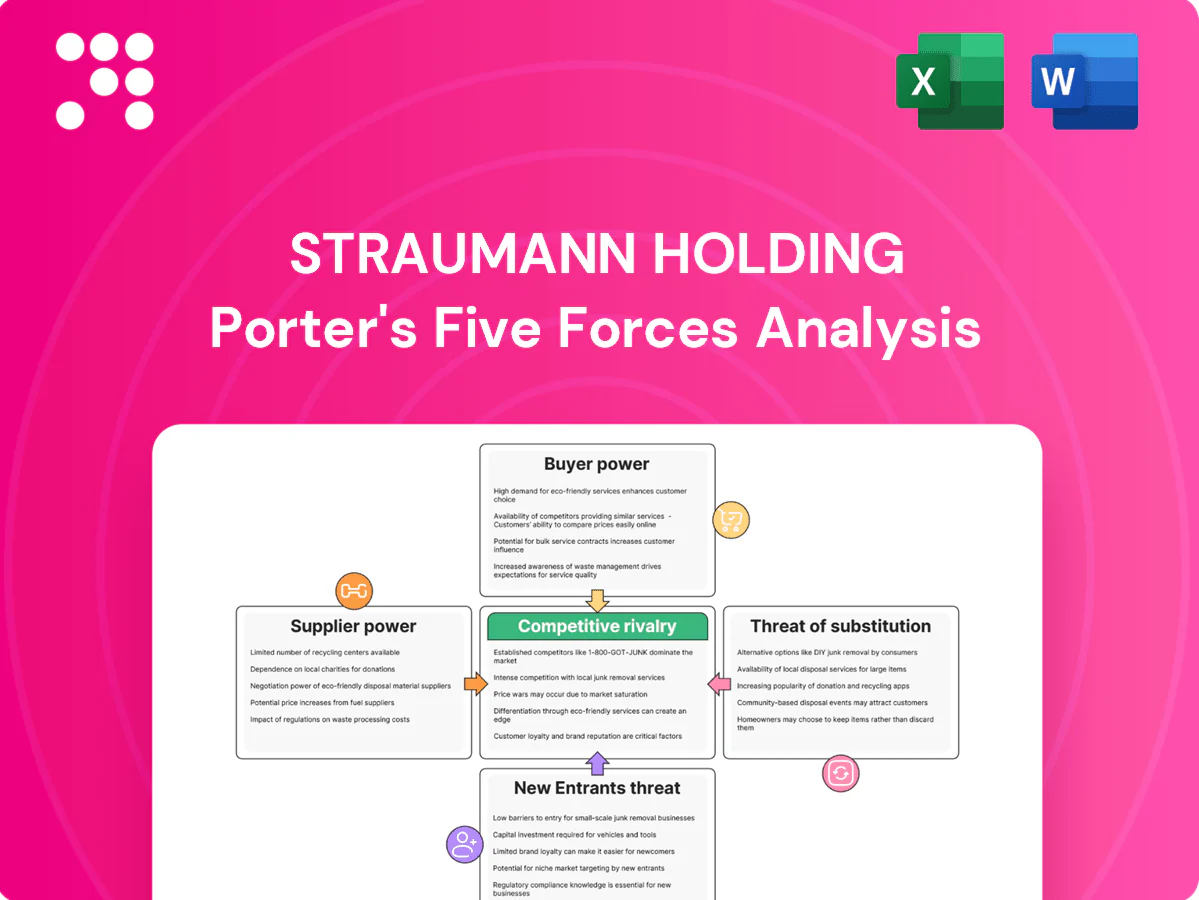
Straumann Holding Porter's Five Forces Analysis

Elevate Your Analysis with the Complete Porter's Five Forces Analysis
Straumann Holding navigates a complex competitive landscape shaped by intense rivalry and the significant bargaining power of its buyers. Understanding these forces is crucial for any stakeholder looking to grasp the company's strategic positioning.
The full Porter's Five Forces Analysis reveals the real forces shaping Straumann Holding’s industry—from supplier influence to threat of new entrants. Gain actionable insights to drive smarter decision-making.
Suppliers Bargaining Power

Specialized Materials & Components
Suppliers of specialized materials like high-grade titanium and advanced ceramics hold considerable sway over Straumann. These aren't everyday commodities; they are critical, highly regulated components essential for the precision and biocompatibility of dental implants and prosthetics. The rigorous quality standards demanded by the medical device industry mean only a select few suppliers can meet Straumann's needs.
This limited pool of certified producers, often with proprietary manufacturing processes, naturally concentrates bargaining power. Straumann's reliance on these specialized inputs, coupled with the high cost and time involved in qualifying new suppliers, means these material providers can often dictate terms, impacting Straumann's cost of goods sold and potentially its product development timelines.
Advanced Technology & R&D
Suppliers offering advanced technology, particularly in digital dentistry components like sophisticated intraoral scanner optics or specialized CAD/CAM software, possess significant bargaining power. Their substantial investments in research and development create proprietary, hard-to-replicate solutions that are crucial for Straumann's ongoing innovation in digital workflows.

Stringent Regulatory Compliance
Stringent regulatory compliance, such as FDA and CE Mark approvals, significantly impacts suppliers in the medical device sector. These requirements add substantial complexity and cost, effectively narrowing the field of qualified manufacturers, particularly for essential components. This elevated barrier to entry strengthens the negotiating position of compliant suppliers.

Proprietary Technologies/Patents
Straumann Holding's reliance on suppliers with proprietary technologies and patents significantly influences its bargaining power. Key suppliers in the dental implant industry often hold patents for unique implant surface treatments, advanced materials, or critical digital design and manufacturing technologies. This intellectual property creates a dependency for Straumann, as these specialized components or processes are not readily available from alternative sources. For instance, a supplier holding a patent for a specific biocompatible coating could command premium pricing, as Straumann cannot easily replicate or substitute this technology. This situation directly impacts Straumann's cost structure and operational flexibility, as the supplier can leverage its patent protection to dictate terms and pricing.
The presence of such patented innovations means that Straumann may face higher input costs. For example, in 2023, the global dental implant market was valued at approximately $4.7 billion, with significant portions driven by proprietary technologies that differentiate product performance and patient outcomes. Suppliers with unique, patented technologies can therefore exert considerable influence, potentially raising prices or imposing stringent supply conditions. This intellectual property barrier limits Straumann's ability to negotiate favorable terms, as switching to a different supplier might mean compromising on product quality or technological advancement.
- Supplier Patents: Suppliers may hold patents on critical implant materials or surface treatments, making their products essential and difficult to substitute.
- Pricing Power: This intellectual property allows suppliers to charge higher prices due to the lack of direct competition for their patented technologies.
- Dependency: Straumann's reliance on these patented components can limit its negotiation leverage, impacting cost and strategic sourcing.
Opportunity for Strategic Partnerships
Straumann Holding faces a significant opportunity to mitigate the bargaining power of its suppliers, which is often high due to the specialized nature of dental implant components and stringent regulatory requirements. By cultivating long-term strategic partnerships with critical suppliers, Straumann can foster a more collaborative environment. These alliances can translate into more favorable pricing structures, ensuring a consistent and reliable supply chain, and providing early access to groundbreaking innovations in materials and manufacturing processes.
For instance, in 2023, companies in the medical device sector that focused on supplier relationship management reported an average cost reduction of 5-10% on key components. Straumann can leverage this by engaging in joint development projects or long-term supply agreements. This proactive approach not only strengthens its supply chain but also positions Straumann to influence the direction of technological advancements within its supplier base, thereby solidifying its competitive edge.
- Strategic Partnerships: Building deep, collaborative relationships with key suppliers can unlock mutual benefits, including cost savings and preferential access to new technologies.
- Vertical Integration Potential: Exploring opportunities for backward integration into critical component manufacturing could provide greater control over supply and costs.
- Negotiated Pricing: Long-term agreements based on volume commitments and shared risk can lead to more predictable and potentially lower input costs.
- Innovation Access: Partnering with suppliers can grant Straumann early insights and exclusive rights to next-generation materials and manufacturing techniques, crucial in the rapidly evolving dental technology market.
Supplier Leverage: The Hidden Cost of Dental Implants
Suppliers of highly specialized materials, such as advanced ceramics and specific titanium alloys, possess significant bargaining power over Straumann. These inputs are not easily substituted due to stringent quality and regulatory demands in the medical device sector, limiting the number of qualified providers. This scarcity, combined with the high costs and time associated with supplier qualification, allows these providers to influence pricing and terms.
The dental implant market, valued at approximately $4.7 billion globally in 2023, relies heavily on suppliers with proprietary technologies. Straumann's dependence on these unique, often patented, components for product differentiation and performance means suppliers can command premium prices. This intellectual property barrier restricts Straumann's negotiation leverage and can impact its cost of goods sold.
| Supplier Characteristic | Impact on Straumann | Example Data/Context |
|---|---|---|
| Specialized Materials (e.g., high-grade titanium, advanced ceramics) | High Bargaining Power | Limited qualified suppliers due to strict medical device regulations. |
| Proprietary Technologies & Patents (e.g., unique surface treatments, digital workflow solutions) | High Bargaining Power | Global dental implant market valued at ~$4.7 billion in 2023, with significant value driven by proprietary tech. |
| High Switching Costs for Straumann | High Bargaining Power | Significant time and expense required to qualify new suppliers for critical components. |
What is included in the product
 Detailed Word Document
Uncovers key drivers of competition, customer influence, and market entry risks tailored to Straumann Holding's position in the dental implant and restorative solutions market.

 Customizable Excel Spreadsheet
Effortlessly identify and mitigate competitive threats by visualizing the intensity of each Porter's Five Forces on a single, intuitive dashboard.
Customers Bargaining Power

Fragmented Customer Base
Straumann's customer base is primarily composed of individual dental professionals, dental clinics, and a growing segment of Dental Service Organizations (DSOs). While DSOs are consolidating market influence, the sheer number of independent dental practices worldwide still contributes to a degree of fragmentation among its direct clientele.
High Switching Costs
Straumann's customers, primarily dental professionals, often face high switching costs, which significantly bolsters the company's bargaining power. These costs involve not just financial outlay but also the time and effort required to adapt to new systems and workflows. For instance, adopting a new implant system or digital dentistry platform necessitates considerable investment in specialized training, often running into thousands of dollars per practitioner, and the integration of these new tools into existing digital patient management systems.

Brand Loyalty & Clinical Outcomes
Dental professionals often exhibit strong brand loyalty, driven by a combination of perceived product quality, proven clinical outcomes, and dependable customer service. Straumann's long-standing reputation for superior dental implants and integrated solutions cultivates this allegiance.
This loyalty can significantly lessen the bargaining power of customers, as practitioners may be less inclined to switch brands based solely on price when they trust the efficacy and reliability of Straumann products. For instance, Straumann reported a 9% increase in revenue for 2023, reaching CHF 2.2 billion, indicating continued market confidence and demand for their offerings.

Information Availability & Price Sensitivity
Dental professionals now have unprecedented access to information, allowing them to readily compare Straumann's product offerings and pricing against competitors. This heightened transparency directly impacts customer bargaining power, as informed choices can be made based on features and cost.
The increasing expense of dental procedures, often coupled with restricted insurance coverage for specific treatments, amplifies customer price sensitivity. This is particularly true within the value-oriented segments of the dental market, where cost becomes a more significant deciding factor.
- Information Transparency: Online platforms and professional networks facilitate easy comparison of dental implant systems, pricing, and clinical outcomes.
- Price Sensitivity: Rising healthcare costs and variable insurance reimbursements push customers, especially in less specialized areas, to seek more cost-effective solutions.
- Value Segmentation: Customers in segments prioritizing affordability over premium features are more likely to exert pressure on pricing.
Growing Influence of DSOs
The increasing prominence of Dental Service Organizations (DSOs) is a significant factor in the bargaining power of customers within the dental industry. By aggregating numerous dental practices, DSOs gain substantial collective purchasing power.
This consolidation allows DSOs to negotiate more favorable terms and pricing with suppliers, including those providing dental materials and equipment. For instance, in 2024, major DSOs continued to expand their reach, consolidating market share and thereby amplifying their negotiation leverage.
- Consolidation of Purchasing Power: DSOs represent a unified front for multiple dental practices, enabling them to command better prices.
- Negotiating Leverage: Their combined volume allows DSOs to negotiate discounts and favorable payment terms that individual practices cannot achieve.
- Market Influence: As DSOs grow, their ability to influence supplier pricing and product availability increases, directly impacting the cost structure for Straumann Holding and its competitors.
DSO Consolidation Reshapes Dental Pricing Power
While individual dental professionals often face high switching costs and brand loyalty, the increasing consolidation of purchasing power through Dental Service Organizations (DSOs) is amplifying customer bargaining power. DSOs, by aggregating numerous practices, can negotiate more favorable terms and pricing. This trend, evident in the continued expansion of major DSOs throughout 2024, allows them to command better prices and influence supplier negotiations, directly impacting Straumann's pricing strategies.
| Factor | Impact on Straumann | Customer Bargaining Power |
| DSO Consolidation | Increased pressure on pricing and terms | High |
| Information Transparency | Facilitates competitor comparison | Moderate to High |
| Price Sensitivity | Drives demand for value-oriented options | Moderate |
Preview the Actual Deliverable
Straumann Holding Porter's Five Forces Analysis
This preview showcases the complete Straumann Holding Porter's Five Forces Analysis, offering a deep dive into the competitive landscape of the dental implant industry. You're viewing the actual, professionally formatted document you'll receive instantly after purchase, ensuring transparency and immediate value. This comprehensive analysis meticulously details the bargaining power of buyers and suppliers, the threat of new entrants and substitutes, and the intensity of rivalry within the market.

Elevate Your Analysis with the Complete Porter's Five Forces Analysis
Straumann Holding navigates a complex competitive landscape shaped by intense rivalry and the significant bargaining power of its buyers. Understanding these forces is crucial for any stakeholder looking to grasp the company's strategic positioning.
The full Porter's Five Forces Analysis reveals the real forces shaping Straumann Holding’s industry—from supplier influence to threat of new entrants. Gain actionable insights to drive smarter decision-making.
Suppliers Bargaining Power
Specialized Materials & Components
Suppliers of specialized materials like high-grade titanium and advanced ceramics hold considerable sway over Straumann. These aren't everyday commodities; they are critical, highly regulated components essential for the precision and biocompatibility of dental implants and prosthetics. The rigorous quality standards demanded by the medical device industry mean only a select few suppliers can meet Straumann's needs.
This limited pool of certified producers, often with proprietary manufacturing processes, naturally concentrates bargaining power. Straumann's reliance on these specialized inputs, coupled with the high cost and time involved in qualifying new suppliers, means these material providers can often dictate terms, impacting Straumann's cost of goods sold and potentially its product development timelines.
Advanced Technology & R&D
Suppliers offering advanced technology, particularly in digital dentistry components like sophisticated intraoral scanner optics or specialized CAD/CAM software, possess significant bargaining power. Their substantial investments in research and development create proprietary, hard-to-replicate solutions that are crucial for Straumann's ongoing innovation in digital workflows.
Stringent Regulatory Compliance
Stringent regulatory compliance, such as FDA and CE Mark approvals, significantly impacts suppliers in the medical device sector. These requirements add substantial complexity and cost, effectively narrowing the field of qualified manufacturers, particularly for essential components. This elevated barrier to entry strengthens the negotiating position of compliant suppliers.
Proprietary Technologies/Patents
Straumann Holding's reliance on suppliers with proprietary technologies and patents significantly influences its bargaining power. Key suppliers in the dental implant industry often hold patents for unique implant surface treatments, advanced materials, or critical digital design and manufacturing technologies. This intellectual property creates a dependency for Straumann, as these specialized components or processes are not readily available from alternative sources. For instance, a supplier holding a patent for a specific biocompatible coating could command premium pricing, as Straumann cannot easily replicate or substitute this technology. This situation directly impacts Straumann's cost structure and operational flexibility, as the supplier can leverage its patent protection to dictate terms and pricing.
The presence of such patented innovations means that Straumann may face higher input costs. For example, in 2023, the global dental implant market was valued at approximately $4.7 billion, with significant portions driven by proprietary technologies that differentiate product performance and patient outcomes. Suppliers with unique, patented technologies can therefore exert considerable influence, potentially raising prices or imposing stringent supply conditions. This intellectual property barrier limits Straumann's ability to negotiate favorable terms, as switching to a different supplier might mean compromising on product quality or technological advancement.
- Supplier Patents: Suppliers may hold patents on critical implant materials or surface treatments, making their products essential and difficult to substitute.
- Pricing Power: This intellectual property allows suppliers to charge higher prices due to the lack of direct competition for their patented technologies.
- Dependency: Straumann's reliance on these patented components can limit its negotiation leverage, impacting cost and strategic sourcing.
Opportunity for Strategic Partnerships
Straumann Holding faces a significant opportunity to mitigate the bargaining power of its suppliers, which is often high due to the specialized nature of dental implant components and stringent regulatory requirements. By cultivating long-term strategic partnerships with critical suppliers, Straumann can foster a more collaborative environment. These alliances can translate into more favorable pricing structures, ensuring a consistent and reliable supply chain, and providing early access to groundbreaking innovations in materials and manufacturing processes.
For instance, in 2023, companies in the medical device sector that focused on supplier relationship management reported an average cost reduction of 5-10% on key components. Straumann can leverage this by engaging in joint development projects or long-term supply agreements. This proactive approach not only strengthens its supply chain but also positions Straumann to influence the direction of technological advancements within its supplier base, thereby solidifying its competitive edge.
- Strategic Partnerships: Building deep, collaborative relationships with key suppliers can unlock mutual benefits, including cost savings and preferential access to new technologies.
- Vertical Integration Potential: Exploring opportunities for backward integration into critical component manufacturing could provide greater control over supply and costs.
- Negotiated Pricing: Long-term agreements based on volume commitments and shared risk can lead to more predictable and potentially lower input costs.
- Innovation Access: Partnering with suppliers can grant Straumann early insights and exclusive rights to next-generation materials and manufacturing techniques, crucial in the rapidly evolving dental technology market.
Supplier Leverage: The Hidden Cost of Dental Implants
Suppliers of highly specialized materials, such as advanced ceramics and specific titanium alloys, possess significant bargaining power over Straumann. These inputs are not easily substituted due to stringent quality and regulatory demands in the medical device sector, limiting the number of qualified providers. This scarcity, combined with the high costs and time associated with supplier qualification, allows these providers to influence pricing and terms.
The dental implant market, valued at approximately $4.7 billion globally in 2023, relies heavily on suppliers with proprietary technologies. Straumann's dependence on these unique, often patented, components for product differentiation and performance means suppliers can command premium prices. This intellectual property barrier restricts Straumann's negotiation leverage and can impact its cost of goods sold.
| Supplier Characteristic | Impact on Straumann | Example Data/Context |
|---|---|---|
| Specialized Materials (e.g., high-grade titanium, advanced ceramics) | High Bargaining Power | Limited qualified suppliers due to strict medical device regulations. |
| Proprietary Technologies & Patents (e.g., unique surface treatments, digital workflow solutions) | High Bargaining Power | Global dental implant market valued at ~$4.7 billion in 2023, with significant value driven by proprietary tech. |
| High Switching Costs for Straumann | High Bargaining Power | Significant time and expense required to qualify new suppliers for critical components. |
What is included in the product
Detailed Word Document
Uncovers key drivers of competition, customer influence, and market entry risks tailored to Straumann Holding's position in the dental implant and restorative solutions market.
Customizable Excel Spreadsheet
Effortlessly identify and mitigate competitive threats by visualizing the intensity of each Porter's Five Forces on a single, intuitive dashboard.
Customers Bargaining Power
Fragmented Customer Base
Straumann's customer base is primarily composed of individual dental professionals, dental clinics, and a growing segment of Dental Service Organizations (DSOs). While DSOs are consolidating market influence, the sheer number of independent dental practices worldwide still contributes to a degree of fragmentation among its direct clientele.
High Switching Costs
Straumann's customers, primarily dental professionals, often face high switching costs, which significantly bolsters the company's bargaining power. These costs involve not just financial outlay but also the time and effort required to adapt to new systems and workflows. For instance, adopting a new implant system or digital dentistry platform necessitates considerable investment in specialized training, often running into thousands of dollars per practitioner, and the integration of these new tools into existing digital patient management systems.
Brand Loyalty & Clinical Outcomes
Dental professionals often exhibit strong brand loyalty, driven by a combination of perceived product quality, proven clinical outcomes, and dependable customer service. Straumann's long-standing reputation for superior dental implants and integrated solutions cultivates this allegiance.
This loyalty can significantly lessen the bargaining power of customers, as practitioners may be less inclined to switch brands based solely on price when they trust the efficacy and reliability of Straumann products. For instance, Straumann reported a 9% increase in revenue for 2023, reaching CHF 2.2 billion, indicating continued market confidence and demand for their offerings.
Information Availability & Price Sensitivity
Dental professionals now have unprecedented access to information, allowing them to readily compare Straumann's product offerings and pricing against competitors. This heightened transparency directly impacts customer bargaining power, as informed choices can be made based on features and cost.
The increasing expense of dental procedures, often coupled with restricted insurance coverage for specific treatments, amplifies customer price sensitivity. This is particularly true within the value-oriented segments of the dental market, where cost becomes a more significant deciding factor.
- Information Transparency: Online platforms and professional networks facilitate easy comparison of dental implant systems, pricing, and clinical outcomes.
- Price Sensitivity: Rising healthcare costs and variable insurance reimbursements push customers, especially in less specialized areas, to seek more cost-effective solutions.
- Value Segmentation: Customers in segments prioritizing affordability over premium features are more likely to exert pressure on pricing.
Growing Influence of DSOs
The increasing prominence of Dental Service Organizations (DSOs) is a significant factor in the bargaining power of customers within the dental industry. By aggregating numerous dental practices, DSOs gain substantial collective purchasing power.
This consolidation allows DSOs to negotiate more favorable terms and pricing with suppliers, including those providing dental materials and equipment. For instance, in 2024, major DSOs continued to expand their reach, consolidating market share and thereby amplifying their negotiation leverage.
- Consolidation of Purchasing Power: DSOs represent a unified front for multiple dental practices, enabling them to command better prices.
- Negotiating Leverage: Their combined volume allows DSOs to negotiate discounts and favorable payment terms that individual practices cannot achieve.
- Market Influence: As DSOs grow, their ability to influence supplier pricing and product availability increases, directly impacting the cost structure for Straumann Holding and its competitors.
DSO Consolidation Reshapes Dental Pricing Power
While individual dental professionals often face high switching costs and brand loyalty, the increasing consolidation of purchasing power through Dental Service Organizations (DSOs) is amplifying customer bargaining power. DSOs, by aggregating numerous practices, can negotiate more favorable terms and pricing. This trend, evident in the continued expansion of major DSOs throughout 2024, allows them to command better prices and influence supplier negotiations, directly impacting Straumann's pricing strategies.
| Factor | Impact on Straumann | Customer Bargaining Power |
| DSO Consolidation | Increased pressure on pricing and terms | High |
| Information Transparency | Facilitates competitor comparison | Moderate to High |
| Price Sensitivity | Drives demand for value-oriented options | Moderate |
Preview the Actual Deliverable
Straumann Holding Porter's Five Forces Analysis
This preview showcases the complete Straumann Holding Porter's Five Forces Analysis, offering a deep dive into the competitive landscape of the dental implant industry. You're viewing the actual, professionally formatted document you'll receive instantly after purchase, ensuring transparency and immediate value. This comprehensive analysis meticulously details the bargaining power of buyers and suppliers, the threat of new entrants and substitutes, and the intensity of rivalry within the market.
Original: $10.00
-65%$10.00
$3.50Description
Elevate Your Analysis with the Complete Porter's Five Forces Analysis
Straumann Holding navigates a complex competitive landscape shaped by intense rivalry and the significant bargaining power of its buyers. Understanding these forces is crucial for any stakeholder looking to grasp the company's strategic positioning.
The full Porter's Five Forces Analysis reveals the real forces shaping Straumann Holding’s industry—from supplier influence to threat of new entrants. Gain actionable insights to drive smarter decision-making.
Suppliers Bargaining Power
Specialized Materials & Components
Suppliers of specialized materials like high-grade titanium and advanced ceramics hold considerable sway over Straumann. These aren't everyday commodities; they are critical, highly regulated components essential for the precision and biocompatibility of dental implants and prosthetics. The rigorous quality standards demanded by the medical device industry mean only a select few suppliers can meet Straumann's needs.
This limited pool of certified producers, often with proprietary manufacturing processes, naturally concentrates bargaining power. Straumann's reliance on these specialized inputs, coupled with the high cost and time involved in qualifying new suppliers, means these material providers can often dictate terms, impacting Straumann's cost of goods sold and potentially its product development timelines.
Advanced Technology & R&D
Suppliers offering advanced technology, particularly in digital dentistry components like sophisticated intraoral scanner optics or specialized CAD/CAM software, possess significant bargaining power. Their substantial investments in research and development create proprietary, hard-to-replicate solutions that are crucial for Straumann's ongoing innovation in digital workflows.
Stringent Regulatory Compliance
Stringent regulatory compliance, such as FDA and CE Mark approvals, significantly impacts suppliers in the medical device sector. These requirements add substantial complexity and cost, effectively narrowing the field of qualified manufacturers, particularly for essential components. This elevated barrier to entry strengthens the negotiating position of compliant suppliers.
Proprietary Technologies/Patents
Straumann Holding's reliance on suppliers with proprietary technologies and patents significantly influences its bargaining power. Key suppliers in the dental implant industry often hold patents for unique implant surface treatments, advanced materials, or critical digital design and manufacturing technologies. This intellectual property creates a dependency for Straumann, as these specialized components or processes are not readily available from alternative sources. For instance, a supplier holding a patent for a specific biocompatible coating could command premium pricing, as Straumann cannot easily replicate or substitute this technology. This situation directly impacts Straumann's cost structure and operational flexibility, as the supplier can leverage its patent protection to dictate terms and pricing.
The presence of such patented innovations means that Straumann may face higher input costs. For example, in 2023, the global dental implant market was valued at approximately $4.7 billion, with significant portions driven by proprietary technologies that differentiate product performance and patient outcomes. Suppliers with unique, patented technologies can therefore exert considerable influence, potentially raising prices or imposing stringent supply conditions. This intellectual property barrier limits Straumann's ability to negotiate favorable terms, as switching to a different supplier might mean compromising on product quality or technological advancement.
- Supplier Patents: Suppliers may hold patents on critical implant materials or surface treatments, making their products essential and difficult to substitute.
- Pricing Power: This intellectual property allows suppliers to charge higher prices due to the lack of direct competition for their patented technologies.
- Dependency: Straumann's reliance on these patented components can limit its negotiation leverage, impacting cost and strategic sourcing.
Opportunity for Strategic Partnerships
Straumann Holding faces a significant opportunity to mitigate the bargaining power of its suppliers, which is often high due to the specialized nature of dental implant components and stringent regulatory requirements. By cultivating long-term strategic partnerships with critical suppliers, Straumann can foster a more collaborative environment. These alliances can translate into more favorable pricing structures, ensuring a consistent and reliable supply chain, and providing early access to groundbreaking innovations in materials and manufacturing processes.
For instance, in 2023, companies in the medical device sector that focused on supplier relationship management reported an average cost reduction of 5-10% on key components. Straumann can leverage this by engaging in joint development projects or long-term supply agreements. This proactive approach not only strengthens its supply chain but also positions Straumann to influence the direction of technological advancements within its supplier base, thereby solidifying its competitive edge.
- Strategic Partnerships: Building deep, collaborative relationships with key suppliers can unlock mutual benefits, including cost savings and preferential access to new technologies.
- Vertical Integration Potential: Exploring opportunities for backward integration into critical component manufacturing could provide greater control over supply and costs.
- Negotiated Pricing: Long-term agreements based on volume commitments and shared risk can lead to more predictable and potentially lower input costs.
- Innovation Access: Partnering with suppliers can grant Straumann early insights and exclusive rights to next-generation materials and manufacturing techniques, crucial in the rapidly evolving dental technology market.
Supplier Leverage: The Hidden Cost of Dental Implants
Suppliers of highly specialized materials, such as advanced ceramics and specific titanium alloys, possess significant bargaining power over Straumann. These inputs are not easily substituted due to stringent quality and regulatory demands in the medical device sector, limiting the number of qualified providers. This scarcity, combined with the high costs and time associated with supplier qualification, allows these providers to influence pricing and terms.
The dental implant market, valued at approximately $4.7 billion globally in 2023, relies heavily on suppliers with proprietary technologies. Straumann's dependence on these unique, often patented, components for product differentiation and performance means suppliers can command premium prices. This intellectual property barrier restricts Straumann's negotiation leverage and can impact its cost of goods sold.
| Supplier Characteristic | Impact on Straumann | Example Data/Context |
|---|---|---|
| Specialized Materials (e.g., high-grade titanium, advanced ceramics) | High Bargaining Power | Limited qualified suppliers due to strict medical device regulations. |
| Proprietary Technologies & Patents (e.g., unique surface treatments, digital workflow solutions) | High Bargaining Power | Global dental implant market valued at ~$4.7 billion in 2023, with significant value driven by proprietary tech. |
| High Switching Costs for Straumann | High Bargaining Power | Significant time and expense required to qualify new suppliers for critical components. |
What is included in the product
Detailed Word Document
Uncovers key drivers of competition, customer influence, and market entry risks tailored to Straumann Holding's position in the dental implant and restorative solutions market.
Customizable Excel Spreadsheet
Effortlessly identify and mitigate competitive threats by visualizing the intensity of each Porter's Five Forces on a single, intuitive dashboard.
Customers Bargaining Power
Fragmented Customer Base
Straumann's customer base is primarily composed of individual dental professionals, dental clinics, and a growing segment of Dental Service Organizations (DSOs). While DSOs are consolidating market influence, the sheer number of independent dental practices worldwide still contributes to a degree of fragmentation among its direct clientele.
High Switching Costs
Straumann's customers, primarily dental professionals, often face high switching costs, which significantly bolsters the company's bargaining power. These costs involve not just financial outlay but also the time and effort required to adapt to new systems and workflows. For instance, adopting a new implant system or digital dentistry platform necessitates considerable investment in specialized training, often running into thousands of dollars per practitioner, and the integration of these new tools into existing digital patient management systems.
Brand Loyalty & Clinical Outcomes
Dental professionals often exhibit strong brand loyalty, driven by a combination of perceived product quality, proven clinical outcomes, and dependable customer service. Straumann's long-standing reputation for superior dental implants and integrated solutions cultivates this allegiance.
This loyalty can significantly lessen the bargaining power of customers, as practitioners may be less inclined to switch brands based solely on price when they trust the efficacy and reliability of Straumann products. For instance, Straumann reported a 9% increase in revenue for 2023, reaching CHF 2.2 billion, indicating continued market confidence and demand for their offerings.
Information Availability & Price Sensitivity
Dental professionals now have unprecedented access to information, allowing them to readily compare Straumann's product offerings and pricing against competitors. This heightened transparency directly impacts customer bargaining power, as informed choices can be made based on features and cost.
The increasing expense of dental procedures, often coupled with restricted insurance coverage for specific treatments, amplifies customer price sensitivity. This is particularly true within the value-oriented segments of the dental market, where cost becomes a more significant deciding factor.
- Information Transparency: Online platforms and professional networks facilitate easy comparison of dental implant systems, pricing, and clinical outcomes.
- Price Sensitivity: Rising healthcare costs and variable insurance reimbursements push customers, especially in less specialized areas, to seek more cost-effective solutions.
- Value Segmentation: Customers in segments prioritizing affordability over premium features are more likely to exert pressure on pricing.
Growing Influence of DSOs
The increasing prominence of Dental Service Organizations (DSOs) is a significant factor in the bargaining power of customers within the dental industry. By aggregating numerous dental practices, DSOs gain substantial collective purchasing power.
This consolidation allows DSOs to negotiate more favorable terms and pricing with suppliers, including those providing dental materials and equipment. For instance, in 2024, major DSOs continued to expand their reach, consolidating market share and thereby amplifying their negotiation leverage.
- Consolidation of Purchasing Power: DSOs represent a unified front for multiple dental practices, enabling them to command better prices.
- Negotiating Leverage: Their combined volume allows DSOs to negotiate discounts and favorable payment terms that individual practices cannot achieve.
- Market Influence: As DSOs grow, their ability to influence supplier pricing and product availability increases, directly impacting the cost structure for Straumann Holding and its competitors.
DSO Consolidation Reshapes Dental Pricing Power
While individual dental professionals often face high switching costs and brand loyalty, the increasing consolidation of purchasing power through Dental Service Organizations (DSOs) is amplifying customer bargaining power. DSOs, by aggregating numerous practices, can negotiate more favorable terms and pricing. This trend, evident in the continued expansion of major DSOs throughout 2024, allows them to command better prices and influence supplier negotiations, directly impacting Straumann's pricing strategies.
| Factor | Impact on Straumann | Customer Bargaining Power |
| DSO Consolidation | Increased pressure on pricing and terms | High |
| Information Transparency | Facilitates competitor comparison | Moderate to High |
| Price Sensitivity | Drives demand for value-oriented options | Moderate |
Preview the Actual Deliverable
Straumann Holding Porter's Five Forces Analysis
This preview showcases the complete Straumann Holding Porter's Five Forces Analysis, offering a deep dive into the competitive landscape of the dental implant industry. You're viewing the actual, professionally formatted document you'll receive instantly after purchase, ensuring transparency and immediate value. This comprehensive analysis meticulously details the bargaining power of buyers and suppliers, the threat of new entrants and substitutes, and the intensity of rivalry within the market.











