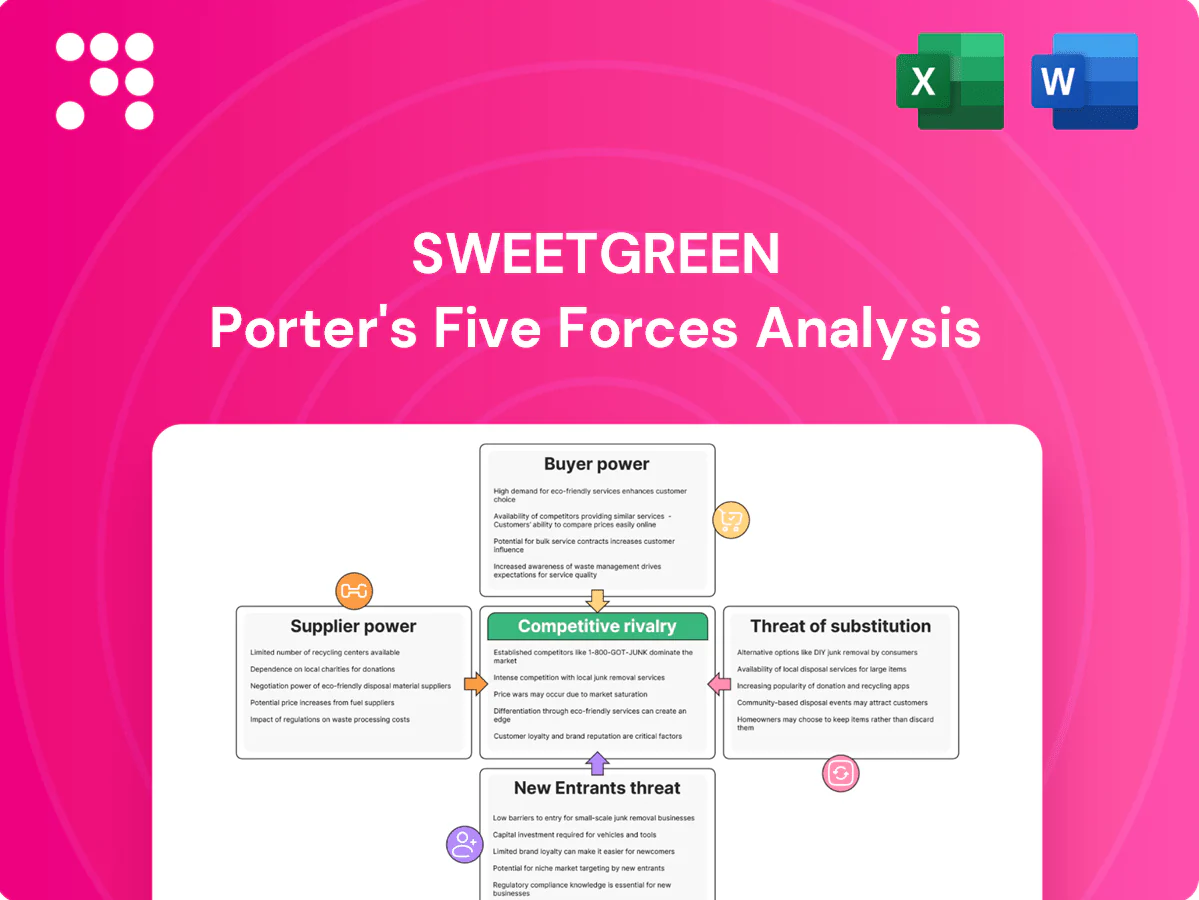
Sweetgreen Porter's Five Forces Analysis

Go Beyond the Preview—Access the Full Strategic Report
Sweetgreen navigates a competitive landscape shaped by moderate buyer power and a significant threat of substitutes, given the widespread availability of healthy food options. The brand's ability to differentiate through its focus on quality ingredients and sustainability influences these forces.
The complete report reveals the real forces shaping Sweetgreen’s industry—from supplier influence to threat of new entrants. Gain actionable insights to drive smarter decision-making.
Suppliers Bargaining Power

Sweetgreen's reliance on fresh, seasonal, and locally sourced ingredients can increase supplier power
Sweetgreen's commitment to fresh, seasonal, and locally sourced ingredients is a cornerstone of its brand, but this focus can significantly bolster the bargaining power of its suppliers. When a company prioritizes unique or niche produce, it often relies on a smaller, specialized group of growers. This can give those suppliers considerable leverage, especially if they possess resources or expertise that are difficult for Sweetgreen to replicate elsewhere.
For instance, if a particular farm is the primary source for a unique heirloom tomato variety that Sweetgreen features prominently in its summer salads, that farm essentially holds a strong hand. They can potentially dictate terms or pricing because Sweetgreen's ability to deliver that specific customer experience is tied to their supply. In 2023, the agricultural sector, particularly for specialty produce, faced challenges including labor shortages and unpredictable weather patterns, which could further amplify supplier power due to reduced availability and increased production costs.
Supply chain disruptions and cost volatility can grant suppliers leverage
Supply chain disruptions and cost volatility can grant suppliers leverage, as recent economic conditions have highlighted vulnerabilities in global and local supply chains. This has led to increased food and packaging costs for restaurants like Sweetgreen.
When faced with such disruptions, suppliers of essential ingredients or packaging materials can leverage these circumstances to negotiate higher prices. This directly impacts a company’s cost of goods sold.
Sweetgreen's Q2 2025 earnings report specifically noted a 40 basis point impact on food and packaging costs due to tariffs and duties. This demonstrates the direct supplier influence on its cost structure and highlights the bargaining power they can wield.

Small, specialized local farmers may have higher individual bargaining power
Small, specialized local farmers can wield significant bargaining power with companies like Sweetgreen. While Sweetgreen aims for scale, its mission often necessitates sourcing from these smaller, unique growers. These farmers, by offering distinct or organic produce, may find themselves with less flexibility to increase supply rapidly or easily find other large-scale buyers, which in turn strengthens their negotiating position with Sweetgreen.

Sweetgreen's large purchasing volume can mitigate supplier power for commodity items
Sweetgreen's significant expansion plans, including at least 40 new restaurant openings in fiscal year 2025, will substantially increase its purchasing volume for commodity ingredients. This amplified scale provides considerable leverage when negotiating with suppliers for widely available items such as grains, common vegetables, and proteins.
- Increased Purchasing Power: As Sweetgreen grows, its collective demand for standardized ingredients strengthens its position to negotiate better pricing and terms.
- Commodity Ingredient Focus: The company's ability to mitigate supplier power is most pronounced for less specialized, high-volume items.
- Ingredient Optimization Strategy: Sweetgreen's efforts in 'ingredient optimization' further support its aim to secure cost efficiencies and favorable pricing throughout its supply chain.
The ability to switch suppliers or develop alternatives can reduce supplier power
Sweetgreen actively works to mitigate supplier power through strategic sourcing and operational flexibility. For instance, their ingredient optimization efforts aim to standardize certain components, making it easier to switch suppliers for those items. This approach reduces the leverage any single vendor holds.
The ability to find alternative growers or distributors is a key tactic. If a supplier dictates unfavorable terms, Sweetgreen can pivot to other sources, particularly for widely available ingredients. This diversification lessens the impact of price hikes or supply disruptions from any one partner.
Furthermore, Sweetgreen's menu innovation plays a role. By developing new dishes or ingredient combinations, they create flexibility. This means they are not solely reliant on a narrow set of suppliers for their core offerings, thereby reducing the bargaining power of individual suppliers.
- Ingredient Optimization: Sweetgreen's focus on standardizing ingredients allows for easier supplier switching, reducing reliance on any single vendor.
- Supplier Diversification: The company actively seeks alternative growers and distributors to mitigate the impact of unfavorable terms from a specific supplier.
- Menu Innovation: Developing new menu items and ingredient combinations provides Sweetgreen with greater flexibility, lessening the leverage of individual suppliers.
- Market Data: While specific supplier cost data for Sweetgreen isn't publicly detailed, the broader restaurant industry in 2024 faced fluctuating commodity prices, with some key ingredients like produce and grains experiencing volatility, underscoring the importance of supplier diversification strategies.
Strategic Growth Amplifies Sweetgreen's Leverage Over Suppliers
While Sweetgreen's emphasis on fresh, local ingredients can empower specialized suppliers, its increasing scale for commodity items in 2025, with plans for at least 40 new openings, significantly boosts its bargaining power. This amplified purchasing volume for common ingredients like grains and proteins allows Sweetgreen to negotiate more favorable pricing and terms, mitigating supplier leverage for these high-volume goods.
Sweetgreen's strategic ingredient optimization and menu innovation further reduce supplier power by enabling easier supplier switching and lessening reliance on any single vendor. This approach is crucial as the broader restaurant industry in 2024 experienced commodity price volatility, particularly for produce and grains, highlighting the importance of diversification.
| Metric | 2024/2025 Data Point | Impact on Supplier Bargaining Power |
|---|---|---|
| New Restaurant Openings (FY2025 Target) | 40+ | Increases purchasing volume, strengthening Sweetgreen's leverage for commodity ingredients. |
| Ingredient Optimization Strategy | Ongoing focus | Reduces reliance on single suppliers, diminishing individual supplier power. |
| Commodity Price Volatility (Industry Trend 2024) | Fluctuating prices for produce, grains | Highlights the need for diversification and negotiation strength to manage costs. |
What is included in the product
 Detailed Word Document
This analysis uncovers key drivers of competition, customer influence, and market entry risks tailored exclusively for Sweetgreen, examining its position within the fast-casual restaurant landscape.

 Customizable Excel Spreadsheet
Instantly understand the competitive landscape and identify potential threats with a clear, visual representation of Sweetgreen's Porter's Five Forces.
Streamline strategic planning by quickly assessing the intensity of rivalry, bargaining power of buyers and suppliers, threat of new entrants, and threat of substitutes.
Customers Bargaining Power

Price sensitivity of health-conscious consumers enhances customer bargaining power
Sweetgreen's core customer base, largely health-conscious millennials and Gen Z, are showing a growing price sensitivity, particularly in the current economic climate. While they appreciate the quality and health benefits Sweetgreen offers, the brand's premium pricing, which can be 7% to 30% higher than many competitors, presents a significant barrier for those seeking more budget-friendly meal options.
This increased price sensitivity directly impacts Sweetgreen's bargaining power with its customers. For example, reports from late 2023 and early 2024 indicated a noticeable slowdown in customer traffic and a decline in same-store sales. This suggests that consumers are actively re-evaluating their spending and are more inclined to choose alternatives that offer better value for their money, thereby strengthening their position in dictating price and product choices.
High availability of substitutes and competitors increases customer choice
The fast-casual dining sector, particularly for healthy options, is incredibly crowded. Sweetgreen faces intense competition from a multitude of players, from other dedicated salad bars to broader fast-casual brands incorporating healthier choices. This saturation means customers have a wide array of alternatives readily available.
This abundance of choice directly translates to increased bargaining power for customers. If Sweetgreen's pricing, product quality, or overall customer experience falters, consumers can readily pivot to a competitor without significant switching costs. For instance, in 2024, the fast-casual market continued its robust growth, with numerous new entrants and established brands expanding their healthy offerings, further intensifying customer options.

Declining same-store sales and traffic indicate customers are exercising their power
Sweetgreen's Q1 and Q2 2025 earnings reports paint a clear picture: same-store sales are down, and customer traffic has seen a significant drop. This isn't just a minor blip; it signals a more cautious consumer mood where people are actively deciding to spend less time and money at Sweetgreen.
The data is stark. Despite Sweetgreen's efforts to raise menu prices, the negative impact from declining traffic and a less favorable sales mix shows customers are pushing back. They're clearly scrutinizing the value they receive and opting for alternatives, demonstrating their considerable bargaining power.

Digital ordering and loyalty programs aim to retain customers but can also highlight alternatives
Sweetgreen's robust digital ordering and loyalty programs are a double-edged sword in managing customer bargaining power. These initiatives, while intended to lock in customers through convenience and rewards, simultaneously make it easier for consumers to survey the competitive landscape. This heightened transparency can empower customers to seek out better value or alternative options if Sweetgreen's offerings become less appealing.
The ease of digital comparison means that even loyal customers can be swayed by a competitor's promotion or a more attractive loyalty tier. For instance, reports in early 2025 indicated that some companies in the fast-casual sector experienced "loyalty program headwinds," suggesting that even well-established programs can face challenges if customer expectations aren't consistently met or surpassed.
Sweetgreen's digital platform, therefore, while a strength for engagement, also serves as a conduit for customer price sensitivity and comparison. This dynamic requires continuous innovation to maintain customer value and prevent them from easily exercising their bargaining power elsewhere.
- Digital Convenience vs. Comparison: Sweetgreen's app and online ordering streamline the customer experience but also facilitate easy price and feature comparisons with competitors.
- Loyalty Program Effectiveness: While designed for retention, loyalty programs can inadvertently highlight alternative offerings if perceived value diminishes.
- Customer Churn Risk: Any perceived decline in digital experience or loyalty benefits, as hinted by Q2 2025 "loyalty program headwinds" in the broader industry, can empower customers to switch.
- Transparency Amplifies Bargaining Power: The digital nature of Sweetgreen's operations inherently increases transparency, giving customers more leverage to negotiate better terms or seek alternatives.
Customers' demand for transparency and sustainability puts pressure on Sweetgreen
Sweetgreen's customers have a strong preference for healthy, sustainable, and transparent food sourcing. This means the company faces significant pressure to consistently meet these evolving consumer demands. For example, in 2023, a significant portion of consumers indicated they would pay more for sustainably sourced products, underscoring this trend.
This focus on values directly impacts Sweetgreen's operations, influencing everything from ingredient selection and menu innovation to pricing strategies. Failure to align with these customer priorities can lead to a loss of business, as consumers actively seek out alternatives that better reflect their ethical and wellness-oriented choices. In 2024, surveys indicated that over 60% of diners consider a restaurant's commitment to sustainability when making dining decisions.
- Customer Demand: Consumers increasingly prioritize health, sustainability, and transparency in their food choices.
- Operational Impact: These preferences necessitate continuous adaptation in menu development, sourcing, and pricing.
- Competitive Threat: A failure to meet these expectations can lead customers to choose competitors who better align with their values.
- Market Data: Studies in 2023 and 2024 show a growing willingness among consumers to support and pay more for brands demonstrating strong ethical and sustainable practices.
Customers Hold the Power in the Competitive Healthy Fast-Casual Market
Sweetgreen customers possess considerable bargaining power due to a highly competitive market and increasing price sensitivity. The availability of numerous healthy fast-casual alternatives means customers can easily switch brands, especially if Sweetgreen's pricing or value proposition falters. This is amplified by digital platforms that facilitate easy comparison shopping.
Consumer demand for health, sustainability, and transparency also strengthens customer leverage. Sweetgreen must consistently meet these evolving expectations, as failure to do so can drive customers to competitors who better align with their values. Data from 2023 and 2024 shows a significant percentage of diners consider sustainability in their choices, indicating a willingness to patronize brands that demonstrate strong ethical practices.
| Factor | Sweetgreen's Position | Customer Bargaining Power |
| Market Competition | High | Increased |
| Price Sensitivity | Growing | Increased |
| Digital Transparency | High | Increased |
| Demand for Sustainability | High | Increased |
Full Version Awaits
Sweetgreen Porter's Five Forces Analysis
This preview showcases the complete Sweetgreen Porter's Five Forces Analysis, detailing the competitive landscape of the fast-casual restaurant industry. You're examining the exact document that will be delivered to you instantly upon purchase, offering a comprehensive breakdown of industry rivalry, the threat of new entrants, the bargaining power of buyers, the bargaining power of suppliers, and the threat of substitute products. This professionally formatted analysis is ready for immediate use, providing valuable insights into Sweetgreen's strategic positioning.

Go Beyond the Preview—Access the Full Strategic Report
Sweetgreen navigates a competitive landscape shaped by moderate buyer power and a significant threat of substitutes, given the widespread availability of healthy food options. The brand's ability to differentiate through its focus on quality ingredients and sustainability influences these forces.
The complete report reveals the real forces shaping Sweetgreen’s industry—from supplier influence to threat of new entrants. Gain actionable insights to drive smarter decision-making.
Suppliers Bargaining Power
Sweetgreen's reliance on fresh, seasonal, and locally sourced ingredients can increase supplier power
Sweetgreen's commitment to fresh, seasonal, and locally sourced ingredients is a cornerstone of its brand, but this focus can significantly bolster the bargaining power of its suppliers. When a company prioritizes unique or niche produce, it often relies on a smaller, specialized group of growers. This can give those suppliers considerable leverage, especially if they possess resources or expertise that are difficult for Sweetgreen to replicate elsewhere.
For instance, if a particular farm is the primary source for a unique heirloom tomato variety that Sweetgreen features prominently in its summer salads, that farm essentially holds a strong hand. They can potentially dictate terms or pricing because Sweetgreen's ability to deliver that specific customer experience is tied to their supply. In 2023, the agricultural sector, particularly for specialty produce, faced challenges including labor shortages and unpredictable weather patterns, which could further amplify supplier power due to reduced availability and increased production costs.
Supply chain disruptions and cost volatility can grant suppliers leverage
Supply chain disruptions and cost volatility can grant suppliers leverage, as recent economic conditions have highlighted vulnerabilities in global and local supply chains. This has led to increased food and packaging costs for restaurants like Sweetgreen.
When faced with such disruptions, suppliers of essential ingredients or packaging materials can leverage these circumstances to negotiate higher prices. This directly impacts a company’s cost of goods sold.
Sweetgreen's Q2 2025 earnings report specifically noted a 40 basis point impact on food and packaging costs due to tariffs and duties. This demonstrates the direct supplier influence on its cost structure and highlights the bargaining power they can wield.
Small, specialized local farmers may have higher individual bargaining power
Small, specialized local farmers can wield significant bargaining power with companies like Sweetgreen. While Sweetgreen aims for scale, its mission often necessitates sourcing from these smaller, unique growers. These farmers, by offering distinct or organic produce, may find themselves with less flexibility to increase supply rapidly or easily find other large-scale buyers, which in turn strengthens their negotiating position with Sweetgreen.
Sweetgreen's large purchasing volume can mitigate supplier power for commodity items
Sweetgreen's significant expansion plans, including at least 40 new restaurant openings in fiscal year 2025, will substantially increase its purchasing volume for commodity ingredients. This amplified scale provides considerable leverage when negotiating with suppliers for widely available items such as grains, common vegetables, and proteins.
- Increased Purchasing Power: As Sweetgreen grows, its collective demand for standardized ingredients strengthens its position to negotiate better pricing and terms.
- Commodity Ingredient Focus: The company's ability to mitigate supplier power is most pronounced for less specialized, high-volume items.
- Ingredient Optimization Strategy: Sweetgreen's efforts in 'ingredient optimization' further support its aim to secure cost efficiencies and favorable pricing throughout its supply chain.
The ability to switch suppliers or develop alternatives can reduce supplier power
Sweetgreen actively works to mitigate supplier power through strategic sourcing and operational flexibility. For instance, their ingredient optimization efforts aim to standardize certain components, making it easier to switch suppliers for those items. This approach reduces the leverage any single vendor holds.
The ability to find alternative growers or distributors is a key tactic. If a supplier dictates unfavorable terms, Sweetgreen can pivot to other sources, particularly for widely available ingredients. This diversification lessens the impact of price hikes or supply disruptions from any one partner.
Furthermore, Sweetgreen's menu innovation plays a role. By developing new dishes or ingredient combinations, they create flexibility. This means they are not solely reliant on a narrow set of suppliers for their core offerings, thereby reducing the bargaining power of individual suppliers.
- Ingredient Optimization: Sweetgreen's focus on standardizing ingredients allows for easier supplier switching, reducing reliance on any single vendor.
- Supplier Diversification: The company actively seeks alternative growers and distributors to mitigate the impact of unfavorable terms from a specific supplier.
- Menu Innovation: Developing new menu items and ingredient combinations provides Sweetgreen with greater flexibility, lessening the leverage of individual suppliers.
- Market Data: While specific supplier cost data for Sweetgreen isn't publicly detailed, the broader restaurant industry in 2024 faced fluctuating commodity prices, with some key ingredients like produce and grains experiencing volatility, underscoring the importance of supplier diversification strategies.
Strategic Growth Amplifies Sweetgreen's Leverage Over Suppliers
While Sweetgreen's emphasis on fresh, local ingredients can empower specialized suppliers, its increasing scale for commodity items in 2025, with plans for at least 40 new openings, significantly boosts its bargaining power. This amplified purchasing volume for common ingredients like grains and proteins allows Sweetgreen to negotiate more favorable pricing and terms, mitigating supplier leverage for these high-volume goods.
Sweetgreen's strategic ingredient optimization and menu innovation further reduce supplier power by enabling easier supplier switching and lessening reliance on any single vendor. This approach is crucial as the broader restaurant industry in 2024 experienced commodity price volatility, particularly for produce and grains, highlighting the importance of diversification.
| Metric | 2024/2025 Data Point | Impact on Supplier Bargaining Power |
|---|---|---|
| New Restaurant Openings (FY2025 Target) | 40+ | Increases purchasing volume, strengthening Sweetgreen's leverage for commodity ingredients. |
| Ingredient Optimization Strategy | Ongoing focus | Reduces reliance on single suppliers, diminishing individual supplier power. |
| Commodity Price Volatility (Industry Trend 2024) | Fluctuating prices for produce, grains | Highlights the need for diversification and negotiation strength to manage costs. |
What is included in the product
Detailed Word Document
This analysis uncovers key drivers of competition, customer influence, and market entry risks tailored exclusively for Sweetgreen, examining its position within the fast-casual restaurant landscape.
Customizable Excel Spreadsheet
Instantly understand the competitive landscape and identify potential threats with a clear, visual representation of Sweetgreen's Porter's Five Forces.
Streamline strategic planning by quickly assessing the intensity of rivalry, bargaining power of buyers and suppliers, threat of new entrants, and threat of substitutes.
Customers Bargaining Power
Price sensitivity of health-conscious consumers enhances customer bargaining power
Sweetgreen's core customer base, largely health-conscious millennials and Gen Z, are showing a growing price sensitivity, particularly in the current economic climate. While they appreciate the quality and health benefits Sweetgreen offers, the brand's premium pricing, which can be 7% to 30% higher than many competitors, presents a significant barrier for those seeking more budget-friendly meal options.
This increased price sensitivity directly impacts Sweetgreen's bargaining power with its customers. For example, reports from late 2023 and early 2024 indicated a noticeable slowdown in customer traffic and a decline in same-store sales. This suggests that consumers are actively re-evaluating their spending and are more inclined to choose alternatives that offer better value for their money, thereby strengthening their position in dictating price and product choices.
High availability of substitutes and competitors increases customer choice
The fast-casual dining sector, particularly for healthy options, is incredibly crowded. Sweetgreen faces intense competition from a multitude of players, from other dedicated salad bars to broader fast-casual brands incorporating healthier choices. This saturation means customers have a wide array of alternatives readily available.
This abundance of choice directly translates to increased bargaining power for customers. If Sweetgreen's pricing, product quality, or overall customer experience falters, consumers can readily pivot to a competitor without significant switching costs. For instance, in 2024, the fast-casual market continued its robust growth, with numerous new entrants and established brands expanding their healthy offerings, further intensifying customer options.
Declining same-store sales and traffic indicate customers are exercising their power
Sweetgreen's Q1 and Q2 2025 earnings reports paint a clear picture: same-store sales are down, and customer traffic has seen a significant drop. This isn't just a minor blip; it signals a more cautious consumer mood where people are actively deciding to spend less time and money at Sweetgreen.
The data is stark. Despite Sweetgreen's efforts to raise menu prices, the negative impact from declining traffic and a less favorable sales mix shows customers are pushing back. They're clearly scrutinizing the value they receive and opting for alternatives, demonstrating their considerable bargaining power.
Digital ordering and loyalty programs aim to retain customers but can also highlight alternatives
Sweetgreen's robust digital ordering and loyalty programs are a double-edged sword in managing customer bargaining power. These initiatives, while intended to lock in customers through convenience and rewards, simultaneously make it easier for consumers to survey the competitive landscape. This heightened transparency can empower customers to seek out better value or alternative options if Sweetgreen's offerings become less appealing.
The ease of digital comparison means that even loyal customers can be swayed by a competitor's promotion or a more attractive loyalty tier. For instance, reports in early 2025 indicated that some companies in the fast-casual sector experienced "loyalty program headwinds," suggesting that even well-established programs can face challenges if customer expectations aren't consistently met or surpassed.
Sweetgreen's digital platform, therefore, while a strength for engagement, also serves as a conduit for customer price sensitivity and comparison. This dynamic requires continuous innovation to maintain customer value and prevent them from easily exercising their bargaining power elsewhere.
- Digital Convenience vs. Comparison: Sweetgreen's app and online ordering streamline the customer experience but also facilitate easy price and feature comparisons with competitors.
- Loyalty Program Effectiveness: While designed for retention, loyalty programs can inadvertently highlight alternative offerings if perceived value diminishes.
- Customer Churn Risk: Any perceived decline in digital experience or loyalty benefits, as hinted by Q2 2025 "loyalty program headwinds" in the broader industry, can empower customers to switch.
- Transparency Amplifies Bargaining Power: The digital nature of Sweetgreen's operations inherently increases transparency, giving customers more leverage to negotiate better terms or seek alternatives.
Customers' demand for transparency and sustainability puts pressure on Sweetgreen
Sweetgreen's customers have a strong preference for healthy, sustainable, and transparent food sourcing. This means the company faces significant pressure to consistently meet these evolving consumer demands. For example, in 2023, a significant portion of consumers indicated they would pay more for sustainably sourced products, underscoring this trend.
This focus on values directly impacts Sweetgreen's operations, influencing everything from ingredient selection and menu innovation to pricing strategies. Failure to align with these customer priorities can lead to a loss of business, as consumers actively seek out alternatives that better reflect their ethical and wellness-oriented choices. In 2024, surveys indicated that over 60% of diners consider a restaurant's commitment to sustainability when making dining decisions.
- Customer Demand: Consumers increasingly prioritize health, sustainability, and transparency in their food choices.
- Operational Impact: These preferences necessitate continuous adaptation in menu development, sourcing, and pricing.
- Competitive Threat: A failure to meet these expectations can lead customers to choose competitors who better align with their values.
- Market Data: Studies in 2023 and 2024 show a growing willingness among consumers to support and pay more for brands demonstrating strong ethical and sustainable practices.
Customers Hold the Power in the Competitive Healthy Fast-Casual Market
Sweetgreen customers possess considerable bargaining power due to a highly competitive market and increasing price sensitivity. The availability of numerous healthy fast-casual alternatives means customers can easily switch brands, especially if Sweetgreen's pricing or value proposition falters. This is amplified by digital platforms that facilitate easy comparison shopping.
Consumer demand for health, sustainability, and transparency also strengthens customer leverage. Sweetgreen must consistently meet these evolving expectations, as failure to do so can drive customers to competitors who better align with their values. Data from 2023 and 2024 shows a significant percentage of diners consider sustainability in their choices, indicating a willingness to patronize brands that demonstrate strong ethical practices.
| Factor | Sweetgreen's Position | Customer Bargaining Power |
| Market Competition | High | Increased |
| Price Sensitivity | Growing | Increased |
| Digital Transparency | High | Increased |
| Demand for Sustainability | High | Increased |
Full Version Awaits
Sweetgreen Porter's Five Forces Analysis
This preview showcases the complete Sweetgreen Porter's Five Forces Analysis, detailing the competitive landscape of the fast-casual restaurant industry. You're examining the exact document that will be delivered to you instantly upon purchase, offering a comprehensive breakdown of industry rivalry, the threat of new entrants, the bargaining power of buyers, the bargaining power of suppliers, and the threat of substitute products. This professionally formatted analysis is ready for immediate use, providing valuable insights into Sweetgreen's strategic positioning.
Description
Go Beyond the Preview—Access the Full Strategic Report
Sweetgreen navigates a competitive landscape shaped by moderate buyer power and a significant threat of substitutes, given the widespread availability of healthy food options. The brand's ability to differentiate through its focus on quality ingredients and sustainability influences these forces.
The complete report reveals the real forces shaping Sweetgreen’s industry—from supplier influence to threat of new entrants. Gain actionable insights to drive smarter decision-making.
Suppliers Bargaining Power
Sweetgreen's reliance on fresh, seasonal, and locally sourced ingredients can increase supplier power
Sweetgreen's commitment to fresh, seasonal, and locally sourced ingredients is a cornerstone of its brand, but this focus can significantly bolster the bargaining power of its suppliers. When a company prioritizes unique or niche produce, it often relies on a smaller, specialized group of growers. This can give those suppliers considerable leverage, especially if they possess resources or expertise that are difficult for Sweetgreen to replicate elsewhere.
For instance, if a particular farm is the primary source for a unique heirloom tomato variety that Sweetgreen features prominently in its summer salads, that farm essentially holds a strong hand. They can potentially dictate terms or pricing because Sweetgreen's ability to deliver that specific customer experience is tied to their supply. In 2023, the agricultural sector, particularly for specialty produce, faced challenges including labor shortages and unpredictable weather patterns, which could further amplify supplier power due to reduced availability and increased production costs.
Supply chain disruptions and cost volatility can grant suppliers leverage
Supply chain disruptions and cost volatility can grant suppliers leverage, as recent economic conditions have highlighted vulnerabilities in global and local supply chains. This has led to increased food and packaging costs for restaurants like Sweetgreen.
When faced with such disruptions, suppliers of essential ingredients or packaging materials can leverage these circumstances to negotiate higher prices. This directly impacts a company’s cost of goods sold.
Sweetgreen's Q2 2025 earnings report specifically noted a 40 basis point impact on food and packaging costs due to tariffs and duties. This demonstrates the direct supplier influence on its cost structure and highlights the bargaining power they can wield.
Small, specialized local farmers may have higher individual bargaining power
Small, specialized local farmers can wield significant bargaining power with companies like Sweetgreen. While Sweetgreen aims for scale, its mission often necessitates sourcing from these smaller, unique growers. These farmers, by offering distinct or organic produce, may find themselves with less flexibility to increase supply rapidly or easily find other large-scale buyers, which in turn strengthens their negotiating position with Sweetgreen.
Sweetgreen's large purchasing volume can mitigate supplier power for commodity items
Sweetgreen's significant expansion plans, including at least 40 new restaurant openings in fiscal year 2025, will substantially increase its purchasing volume for commodity ingredients. This amplified scale provides considerable leverage when negotiating with suppliers for widely available items such as grains, common vegetables, and proteins.
- Increased Purchasing Power: As Sweetgreen grows, its collective demand for standardized ingredients strengthens its position to negotiate better pricing and terms.
- Commodity Ingredient Focus: The company's ability to mitigate supplier power is most pronounced for less specialized, high-volume items.
- Ingredient Optimization Strategy: Sweetgreen's efforts in 'ingredient optimization' further support its aim to secure cost efficiencies and favorable pricing throughout its supply chain.
The ability to switch suppliers or develop alternatives can reduce supplier power
Sweetgreen actively works to mitigate supplier power through strategic sourcing and operational flexibility. For instance, their ingredient optimization efforts aim to standardize certain components, making it easier to switch suppliers for those items. This approach reduces the leverage any single vendor holds.
The ability to find alternative growers or distributors is a key tactic. If a supplier dictates unfavorable terms, Sweetgreen can pivot to other sources, particularly for widely available ingredients. This diversification lessens the impact of price hikes or supply disruptions from any one partner.
Furthermore, Sweetgreen's menu innovation plays a role. By developing new dishes or ingredient combinations, they create flexibility. This means they are not solely reliant on a narrow set of suppliers for their core offerings, thereby reducing the bargaining power of individual suppliers.
- Ingredient Optimization: Sweetgreen's focus on standardizing ingredients allows for easier supplier switching, reducing reliance on any single vendor.
- Supplier Diversification: The company actively seeks alternative growers and distributors to mitigate the impact of unfavorable terms from a specific supplier.
- Menu Innovation: Developing new menu items and ingredient combinations provides Sweetgreen with greater flexibility, lessening the leverage of individual suppliers.
- Market Data: While specific supplier cost data for Sweetgreen isn't publicly detailed, the broader restaurant industry in 2024 faced fluctuating commodity prices, with some key ingredients like produce and grains experiencing volatility, underscoring the importance of supplier diversification strategies.
Strategic Growth Amplifies Sweetgreen's Leverage Over Suppliers
While Sweetgreen's emphasis on fresh, local ingredients can empower specialized suppliers, its increasing scale for commodity items in 2025, with plans for at least 40 new openings, significantly boosts its bargaining power. This amplified purchasing volume for common ingredients like grains and proteins allows Sweetgreen to negotiate more favorable pricing and terms, mitigating supplier leverage for these high-volume goods.
Sweetgreen's strategic ingredient optimization and menu innovation further reduce supplier power by enabling easier supplier switching and lessening reliance on any single vendor. This approach is crucial as the broader restaurant industry in 2024 experienced commodity price volatility, particularly for produce and grains, highlighting the importance of diversification.
| Metric | 2024/2025 Data Point | Impact on Supplier Bargaining Power |
|---|---|---|
| New Restaurant Openings (FY2025 Target) | 40+ | Increases purchasing volume, strengthening Sweetgreen's leverage for commodity ingredients. |
| Ingredient Optimization Strategy | Ongoing focus | Reduces reliance on single suppliers, diminishing individual supplier power. |
| Commodity Price Volatility (Industry Trend 2024) | Fluctuating prices for produce, grains | Highlights the need for diversification and negotiation strength to manage costs. |
What is included in the product
Detailed Word Document
This analysis uncovers key drivers of competition, customer influence, and market entry risks tailored exclusively for Sweetgreen, examining its position within the fast-casual restaurant landscape.
Customizable Excel Spreadsheet
Instantly understand the competitive landscape and identify potential threats with a clear, visual representation of Sweetgreen's Porter's Five Forces.
Streamline strategic planning by quickly assessing the intensity of rivalry, bargaining power of buyers and suppliers, threat of new entrants, and threat of substitutes.
Customers Bargaining Power
Price sensitivity of health-conscious consumers enhances customer bargaining power
Sweetgreen's core customer base, largely health-conscious millennials and Gen Z, are showing a growing price sensitivity, particularly in the current economic climate. While they appreciate the quality and health benefits Sweetgreen offers, the brand's premium pricing, which can be 7% to 30% higher than many competitors, presents a significant barrier for those seeking more budget-friendly meal options.
This increased price sensitivity directly impacts Sweetgreen's bargaining power with its customers. For example, reports from late 2023 and early 2024 indicated a noticeable slowdown in customer traffic and a decline in same-store sales. This suggests that consumers are actively re-evaluating their spending and are more inclined to choose alternatives that offer better value for their money, thereby strengthening their position in dictating price and product choices.
High availability of substitutes and competitors increases customer choice
The fast-casual dining sector, particularly for healthy options, is incredibly crowded. Sweetgreen faces intense competition from a multitude of players, from other dedicated salad bars to broader fast-casual brands incorporating healthier choices. This saturation means customers have a wide array of alternatives readily available.
This abundance of choice directly translates to increased bargaining power for customers. If Sweetgreen's pricing, product quality, or overall customer experience falters, consumers can readily pivot to a competitor without significant switching costs. For instance, in 2024, the fast-casual market continued its robust growth, with numerous new entrants and established brands expanding their healthy offerings, further intensifying customer options.
Declining same-store sales and traffic indicate customers are exercising their power
Sweetgreen's Q1 and Q2 2025 earnings reports paint a clear picture: same-store sales are down, and customer traffic has seen a significant drop. This isn't just a minor blip; it signals a more cautious consumer mood where people are actively deciding to spend less time and money at Sweetgreen.
The data is stark. Despite Sweetgreen's efforts to raise menu prices, the negative impact from declining traffic and a less favorable sales mix shows customers are pushing back. They're clearly scrutinizing the value they receive and opting for alternatives, demonstrating their considerable bargaining power.
Digital ordering and loyalty programs aim to retain customers but can also highlight alternatives
Sweetgreen's robust digital ordering and loyalty programs are a double-edged sword in managing customer bargaining power. These initiatives, while intended to lock in customers through convenience and rewards, simultaneously make it easier for consumers to survey the competitive landscape. This heightened transparency can empower customers to seek out better value or alternative options if Sweetgreen's offerings become less appealing.
The ease of digital comparison means that even loyal customers can be swayed by a competitor's promotion or a more attractive loyalty tier. For instance, reports in early 2025 indicated that some companies in the fast-casual sector experienced "loyalty program headwinds," suggesting that even well-established programs can face challenges if customer expectations aren't consistently met or surpassed.
Sweetgreen's digital platform, therefore, while a strength for engagement, also serves as a conduit for customer price sensitivity and comparison. This dynamic requires continuous innovation to maintain customer value and prevent them from easily exercising their bargaining power elsewhere.
- Digital Convenience vs. Comparison: Sweetgreen's app and online ordering streamline the customer experience but also facilitate easy price and feature comparisons with competitors.
- Loyalty Program Effectiveness: While designed for retention, loyalty programs can inadvertently highlight alternative offerings if perceived value diminishes.
- Customer Churn Risk: Any perceived decline in digital experience or loyalty benefits, as hinted by Q2 2025 "loyalty program headwinds" in the broader industry, can empower customers to switch.
- Transparency Amplifies Bargaining Power: The digital nature of Sweetgreen's operations inherently increases transparency, giving customers more leverage to negotiate better terms or seek alternatives.
Customers' demand for transparency and sustainability puts pressure on Sweetgreen
Sweetgreen's customers have a strong preference for healthy, sustainable, and transparent food sourcing. This means the company faces significant pressure to consistently meet these evolving consumer demands. For example, in 2023, a significant portion of consumers indicated they would pay more for sustainably sourced products, underscoring this trend.
This focus on values directly impacts Sweetgreen's operations, influencing everything from ingredient selection and menu innovation to pricing strategies. Failure to align with these customer priorities can lead to a loss of business, as consumers actively seek out alternatives that better reflect their ethical and wellness-oriented choices. In 2024, surveys indicated that over 60% of diners consider a restaurant's commitment to sustainability when making dining decisions.
- Customer Demand: Consumers increasingly prioritize health, sustainability, and transparency in their food choices.
- Operational Impact: These preferences necessitate continuous adaptation in menu development, sourcing, and pricing.
- Competitive Threat: A failure to meet these expectations can lead customers to choose competitors who better align with their values.
- Market Data: Studies in 2023 and 2024 show a growing willingness among consumers to support and pay more for brands demonstrating strong ethical and sustainable practices.
Customers Hold the Power in the Competitive Healthy Fast-Casual Market
Sweetgreen customers possess considerable bargaining power due to a highly competitive market and increasing price sensitivity. The availability of numerous healthy fast-casual alternatives means customers can easily switch brands, especially if Sweetgreen's pricing or value proposition falters. This is amplified by digital platforms that facilitate easy comparison shopping.
Consumer demand for health, sustainability, and transparency also strengthens customer leverage. Sweetgreen must consistently meet these evolving expectations, as failure to do so can drive customers to competitors who better align with their values. Data from 2023 and 2024 shows a significant percentage of diners consider sustainability in their choices, indicating a willingness to patronize brands that demonstrate strong ethical practices.
| Factor | Sweetgreen's Position | Customer Bargaining Power |
| Market Competition | High | Increased |
| Price Sensitivity | Growing | Increased |
| Digital Transparency | High | Increased |
| Demand for Sustainability | High | Increased |
Full Version Awaits
Sweetgreen Porter's Five Forces Analysis
This preview showcases the complete Sweetgreen Porter's Five Forces Analysis, detailing the competitive landscape of the fast-casual restaurant industry. You're examining the exact document that will be delivered to you instantly upon purchase, offering a comprehensive breakdown of industry rivalry, the threat of new entrants, the bargaining power of buyers, the bargaining power of suppliers, and the threat of substitute products. This professionally formatted analysis is ready for immediate use, providing valuable insights into Sweetgreen's strategic positioning.











