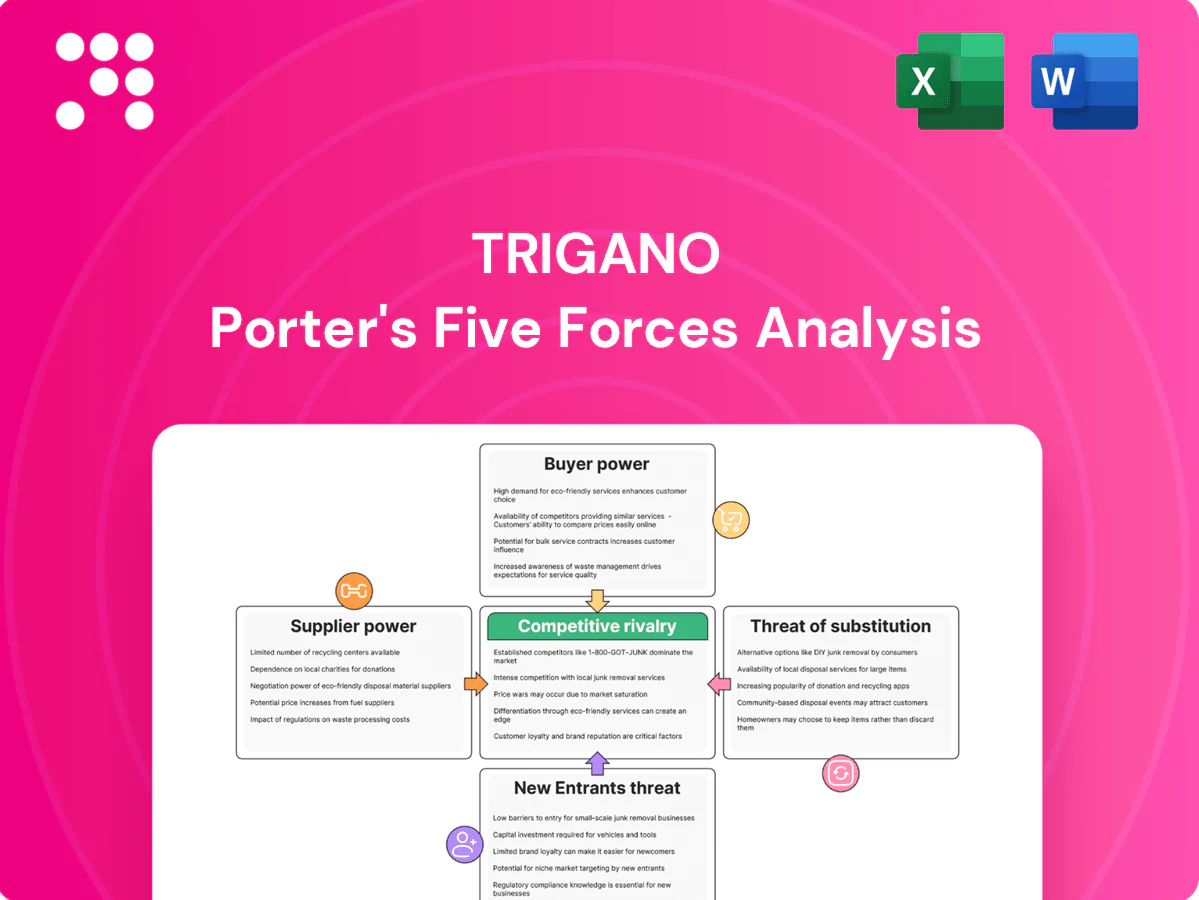
Trigano Porter's Five Forces Analysis

Don't Miss the Bigger Picture
Trigano operates in a high-capital, niche RV and leisure vehicle market where supplier relationships, brand strength, and distribution scale shape margins while buyer bargaining and substitute leisure options exert pressure; cyclicality and regulatory trends add complexity. This brief snapshot only scratches the surface. Unlock the full Porter's Five Forces Analysis to explore Trigano’s competitive dynamics, market pressures, and strategic advantages in detail.
Suppliers Bargaining Power

Concentrated chassis and appliance sources
Core inputs like chassis, HVAC and refrigerators come from a few global OEMs and specialist suppliers, increasing leverage on pricing and delivery terms; as of 2024 Stellantis and Ford sit among the top 10 global OEMs, contributing to a concentrated supplier base where the largest 10 OEMs account for roughly 80% of vehicle output. Dependence on these brands concentrates risk; consolidation can squeeze margins, while long-term contracts and co-development partially offset supplier power.
Specialized components, limited substitutes
Custom windows, lightweight panels and safety-certified parts for recreational vehicles have few interchangeable alternatives, and qualification/testing typically takes 3–6 months, hindering rapid supplier switching. This raises switching costs and grants suppliers bargaining room, especially for safety-critical items. Implementing dual-sourcing across all components is difficult and often infeasible operationally and financially.

Input cost volatility
Steel, aluminum, resins and electronics have shown cyclical/geopolitical price swings of roughly 20–35% across 2021–24, exposing Trigano to input cost volatility. Suppliers typically pass through increases faster than OEMs can reprice finished vehicles, creating a 6–12 month repricing lag that compresses margins in the short term. Hedging and indexed contracts (used industry-wide) reduce but do not eliminate this exposure.

Logistics and lead-time dependencies
Long, complex supply chains and Just-in-Time practices leave Trigano highly sensitive to lead-time disruptions; 2024 shipping slowdowns and customs changes amplified supplier leverage and translated into delayed deliveries and higher expedited freight costs.
- 2024: increased supplier pressure from freight/regulatory shifts
- Buffer stocks raise working capital intensity for Trigano
- Collaborative planning reduces but does not eliminate delay risk
Scale offsets and preferred buyer status
Trigano’s scale—with 2024 group sales around €4.3bn—and multi-brand portfolio give it negotiating heft for volume discounts and preferential allocations; being a key account often secures priority during shortages and long-term framework agreements lock in lower prices and stable supply. Benefits vary: commodity suppliers offer clearer margin gains from scale, while specialty suppliers retain higher bargaining power and premium pricing.
- Scale: high-volume leverage
- Key-account: priority in shortages
- Frameworks: locked terms
- Variation: commodity vs specialty
High supplier concentration and volatile commodity costs squeeze RV margins amid long lead times
Core inputs concentrated among few OEMs (top 10 ~80% vehicle output) and specialist RV suppliers raise supplier leverage; Trigano sales ~€4.3bn in 2024 give scale but do not neutralize specialty pricing. Commodity inputs (steel, aluminum, resins, electronics) swung 20–35% 2021–24, with a 6–12 month repricing lag compressing margins. Long lead times and JIT increase switching costs and disruption risk.
| Metric | Value |
|---|---|
| 2024 sales | €4.3bn |
| Top-10 OEM output | ~80% |
| Input price swings (2021–24) | 20–35% |
| Repricing lag | 6–12 months |
What is included in the product
 Detailed Word Document
Tailored Porter’s Five Forces analysis for Trigano that uncovers competitive drivers, supplier and buyer power, threats from substitutes and new entrants, and disruptive market forces affecting pricing and profitability; includes strategic commentary to inform investor materials, internal strategy decks, or academic projects.

 Customizable Excel Spreadsheet
Clear, one-sheet Porter's Five Forces for Trigano—instantly visualize competitive pressure with a spider chart, tweak force levels for market shifts, and drop the clean summary straight into pitch decks.
Customers Bargaining Power

Dealer networks negotiate hard
Dealers aggregate demand and steer end-customer choice, enabling significant discount pressure on Trigano—critical given group revenue of about €5.4bn in 2023 and continued volume reliance into 2024. They routinely extract marketing support, floorplan financing and buyback guarantees, raising working-capital exposure for manufacturers. High brand-switching ability among dealers increases their leverage; exclusive arrangements mitigate but do not eliminate this bargaining power.
Price-sensitive retail customers
Motorhomes and caravans are high-ticket discretionary purchases (average new motorhome in Western Europe about €60,000 in 2023), making buyers value-conscious; over 80% consult online reviews and transparent pricing accelerates comparison shopping. Financing terms—used in more than half of purchases—materially sway timing and model choice, while promotions and bundled accessories are commonly expected by retail customers.

Moderate switching costs for end-users
Brands in the RV sector are differentiated but rarely indispensable, so customer switching power is moderate; Trigano, Europe's largest RV manufacturer, faces buyers willing to change for better value. Switching usually requires limited learning but involves emotional attachment and service expectations, while warranty terms and Trigano’s extensive aftersales network tend to lock in preferences. Increasing RV rental trials reduce perceived risk of switching by letting buyers test alternatives.

Product information parity
Digital configurators, forums and influencer content in 2024 have substantially reduced information asymmetry for Trigano customers, enabling easy benchmarking of layouts, weights and energy systems and eroding pricing power on mainstream motorhome models. Niche unique floorplans or true off-grid systems remain the main levers to restore differentiation and margin.
- info-parity: configurators + forums
- benchmarking: layouts, weights, energy
- price-pressure: mainstream models
- differentiation: unique floorplans/off-grid
Aftermarket influence
Buyers often defer OEM options and buy accessories aftermarket, shifting value away from factory optional equipment and constraining margins; Trigano reported group revenue €4.88bn (FY 2023/24), making aftermarket margin recovery material for profits. Integrated factory installs with stronger warranties and fit support upsell, while superior dealer service quality can pull buyers back to Trigano brands.
Dealers drive discounts as >80% of buyers use online reviews and many finance
Dealers concentrate demand and exert strong discount and support pull on Trigano; group revenue €4.88bn (FY 2023/24) makes dealer demands material. Buyers are price-sensitive (avg new motorhome ≈ €60,000 in 2023), >50% use financing and >80% consult online reviews, raising switching and comparison power. Digital configurators and rentals lower info asymmetry, limiting Trigano’s pricing power except for niche, off-grid differentiation.
| Metric | Value |
|---|---|
| Trigano revenue | €4.88bn (FY 2023/24) |
| Avg new motorhome | €60,000 (2023) |
| Financing | >50% of purchases |
| Online review usage | >80% |
Full Version Awaits
Trigano Porter's Five Forces Analysis
This preview shows the exact Trigano Porter's Five Forces Analysis you'll receive immediately after purchase—no surprises, no placeholders. The document displayed here is the fully formatted, professionally written analysis, ready for download and use the moment you buy. You're looking at the actual file; instant access is granted upon payment.

Don't Miss the Bigger Picture
Trigano operates in a high-capital, niche RV and leisure vehicle market where supplier relationships, brand strength, and distribution scale shape margins while buyer bargaining and substitute leisure options exert pressure; cyclicality and regulatory trends add complexity. This brief snapshot only scratches the surface. Unlock the full Porter's Five Forces Analysis to explore Trigano’s competitive dynamics, market pressures, and strategic advantages in detail.
Suppliers Bargaining Power
Concentrated chassis and appliance sources
Core inputs like chassis, HVAC and refrigerators come from a few global OEMs and specialist suppliers, increasing leverage on pricing and delivery terms; as of 2024 Stellantis and Ford sit among the top 10 global OEMs, contributing to a concentrated supplier base where the largest 10 OEMs account for roughly 80% of vehicle output. Dependence on these brands concentrates risk; consolidation can squeeze margins, while long-term contracts and co-development partially offset supplier power.
Specialized components, limited substitutes
Custom windows, lightweight panels and safety-certified parts for recreational vehicles have few interchangeable alternatives, and qualification/testing typically takes 3–6 months, hindering rapid supplier switching. This raises switching costs and grants suppliers bargaining room, especially for safety-critical items. Implementing dual-sourcing across all components is difficult and often infeasible operationally and financially.
Input cost volatility
Steel, aluminum, resins and electronics have shown cyclical/geopolitical price swings of roughly 20–35% across 2021–24, exposing Trigano to input cost volatility. Suppliers typically pass through increases faster than OEMs can reprice finished vehicles, creating a 6–12 month repricing lag that compresses margins in the short term. Hedging and indexed contracts (used industry-wide) reduce but do not eliminate this exposure.
Logistics and lead-time dependencies
Long, complex supply chains and Just-in-Time practices leave Trigano highly sensitive to lead-time disruptions; 2024 shipping slowdowns and customs changes amplified supplier leverage and translated into delayed deliveries and higher expedited freight costs.
- 2024: increased supplier pressure from freight/regulatory shifts
- Buffer stocks raise working capital intensity for Trigano
- Collaborative planning reduces but does not eliminate delay risk
Scale offsets and preferred buyer status
Trigano’s scale—with 2024 group sales around €4.3bn—and multi-brand portfolio give it negotiating heft for volume discounts and preferential allocations; being a key account often secures priority during shortages and long-term framework agreements lock in lower prices and stable supply. Benefits vary: commodity suppliers offer clearer margin gains from scale, while specialty suppliers retain higher bargaining power and premium pricing.
- Scale: high-volume leverage
- Key-account: priority in shortages
- Frameworks: locked terms
- Variation: commodity vs specialty
High supplier concentration and volatile commodity costs squeeze RV margins amid long lead times
Core inputs concentrated among few OEMs (top 10 ~80% vehicle output) and specialist RV suppliers raise supplier leverage; Trigano sales ~€4.3bn in 2024 give scale but do not neutralize specialty pricing. Commodity inputs (steel, aluminum, resins, electronics) swung 20–35% 2021–24, with a 6–12 month repricing lag compressing margins. Long lead times and JIT increase switching costs and disruption risk.
| Metric | Value |
|---|---|
| 2024 sales | €4.3bn |
| Top-10 OEM output | ~80% |
| Input price swings (2021–24) | 20–35% |
| Repricing lag | 6–12 months |
What is included in the product
Detailed Word Document
Tailored Porter’s Five Forces analysis for Trigano that uncovers competitive drivers, supplier and buyer power, threats from substitutes and new entrants, and disruptive market forces affecting pricing and profitability; includes strategic commentary to inform investor materials, internal strategy decks, or academic projects.
Customizable Excel Spreadsheet
Clear, one-sheet Porter's Five Forces for Trigano—instantly visualize competitive pressure with a spider chart, tweak force levels for market shifts, and drop the clean summary straight into pitch decks.
Customers Bargaining Power
Dealer networks negotiate hard
Dealers aggregate demand and steer end-customer choice, enabling significant discount pressure on Trigano—critical given group revenue of about €5.4bn in 2023 and continued volume reliance into 2024. They routinely extract marketing support, floorplan financing and buyback guarantees, raising working-capital exposure for manufacturers. High brand-switching ability among dealers increases their leverage; exclusive arrangements mitigate but do not eliminate this bargaining power.
Price-sensitive retail customers
Motorhomes and caravans are high-ticket discretionary purchases (average new motorhome in Western Europe about €60,000 in 2023), making buyers value-conscious; over 80% consult online reviews and transparent pricing accelerates comparison shopping. Financing terms—used in more than half of purchases—materially sway timing and model choice, while promotions and bundled accessories are commonly expected by retail customers.
Moderate switching costs for end-users
Brands in the RV sector are differentiated but rarely indispensable, so customer switching power is moderate; Trigano, Europe's largest RV manufacturer, faces buyers willing to change for better value. Switching usually requires limited learning but involves emotional attachment and service expectations, while warranty terms and Trigano’s extensive aftersales network tend to lock in preferences. Increasing RV rental trials reduce perceived risk of switching by letting buyers test alternatives.
Product information parity
Digital configurators, forums and influencer content in 2024 have substantially reduced information asymmetry for Trigano customers, enabling easy benchmarking of layouts, weights and energy systems and eroding pricing power on mainstream motorhome models. Niche unique floorplans or true off-grid systems remain the main levers to restore differentiation and margin.
- info-parity: configurators + forums
- benchmarking: layouts, weights, energy
- price-pressure: mainstream models
- differentiation: unique floorplans/off-grid
Aftermarket influence
Buyers often defer OEM options and buy accessories aftermarket, shifting value away from factory optional equipment and constraining margins; Trigano reported group revenue €4.88bn (FY 2023/24), making aftermarket margin recovery material for profits. Integrated factory installs with stronger warranties and fit support upsell, while superior dealer service quality can pull buyers back to Trigano brands.
Dealers drive discounts as >80% of buyers use online reviews and many finance
Dealers concentrate demand and exert strong discount and support pull on Trigano; group revenue €4.88bn (FY 2023/24) makes dealer demands material. Buyers are price-sensitive (avg new motorhome ≈ €60,000 in 2023), >50% use financing and >80% consult online reviews, raising switching and comparison power. Digital configurators and rentals lower info asymmetry, limiting Trigano’s pricing power except for niche, off-grid differentiation.
| Metric | Value |
|---|---|
| Trigano revenue | €4.88bn (FY 2023/24) |
| Avg new motorhome | €60,000 (2023) |
| Financing | >50% of purchases |
| Online review usage | >80% |
Full Version Awaits
Trigano Porter's Five Forces Analysis
This preview shows the exact Trigano Porter's Five Forces Analysis you'll receive immediately after purchase—no surprises, no placeholders. The document displayed here is the fully formatted, professionally written analysis, ready for download and use the moment you buy. You're looking at the actual file; instant access is granted upon payment.
Original: $10.00
-65%$10.00
$3.50Description
Don't Miss the Bigger Picture
Trigano operates in a high-capital, niche RV and leisure vehicle market where supplier relationships, brand strength, and distribution scale shape margins while buyer bargaining and substitute leisure options exert pressure; cyclicality and regulatory trends add complexity. This brief snapshot only scratches the surface. Unlock the full Porter's Five Forces Analysis to explore Trigano’s competitive dynamics, market pressures, and strategic advantages in detail.
Suppliers Bargaining Power
Concentrated chassis and appliance sources
Core inputs like chassis, HVAC and refrigerators come from a few global OEMs and specialist suppliers, increasing leverage on pricing and delivery terms; as of 2024 Stellantis and Ford sit among the top 10 global OEMs, contributing to a concentrated supplier base where the largest 10 OEMs account for roughly 80% of vehicle output. Dependence on these brands concentrates risk; consolidation can squeeze margins, while long-term contracts and co-development partially offset supplier power.
Specialized components, limited substitutes
Custom windows, lightweight panels and safety-certified parts for recreational vehicles have few interchangeable alternatives, and qualification/testing typically takes 3–6 months, hindering rapid supplier switching. This raises switching costs and grants suppliers bargaining room, especially for safety-critical items. Implementing dual-sourcing across all components is difficult and often infeasible operationally and financially.
Input cost volatility
Steel, aluminum, resins and electronics have shown cyclical/geopolitical price swings of roughly 20–35% across 2021–24, exposing Trigano to input cost volatility. Suppliers typically pass through increases faster than OEMs can reprice finished vehicles, creating a 6–12 month repricing lag that compresses margins in the short term. Hedging and indexed contracts (used industry-wide) reduce but do not eliminate this exposure.
Logistics and lead-time dependencies
Long, complex supply chains and Just-in-Time practices leave Trigano highly sensitive to lead-time disruptions; 2024 shipping slowdowns and customs changes amplified supplier leverage and translated into delayed deliveries and higher expedited freight costs.
- 2024: increased supplier pressure from freight/regulatory shifts
- Buffer stocks raise working capital intensity for Trigano
- Collaborative planning reduces but does not eliminate delay risk
Scale offsets and preferred buyer status
Trigano’s scale—with 2024 group sales around €4.3bn—and multi-brand portfolio give it negotiating heft for volume discounts and preferential allocations; being a key account often secures priority during shortages and long-term framework agreements lock in lower prices and stable supply. Benefits vary: commodity suppliers offer clearer margin gains from scale, while specialty suppliers retain higher bargaining power and premium pricing.
- Scale: high-volume leverage
- Key-account: priority in shortages
- Frameworks: locked terms
- Variation: commodity vs specialty
High supplier concentration and volatile commodity costs squeeze RV margins amid long lead times
Core inputs concentrated among few OEMs (top 10 ~80% vehicle output) and specialist RV suppliers raise supplier leverage; Trigano sales ~€4.3bn in 2024 give scale but do not neutralize specialty pricing. Commodity inputs (steel, aluminum, resins, electronics) swung 20–35% 2021–24, with a 6–12 month repricing lag compressing margins. Long lead times and JIT increase switching costs and disruption risk.
| Metric | Value |
|---|---|
| 2024 sales | €4.3bn |
| Top-10 OEM output | ~80% |
| Input price swings (2021–24) | 20–35% |
| Repricing lag | 6–12 months |
What is included in the product
Detailed Word Document
Tailored Porter’s Five Forces analysis for Trigano that uncovers competitive drivers, supplier and buyer power, threats from substitutes and new entrants, and disruptive market forces affecting pricing and profitability; includes strategic commentary to inform investor materials, internal strategy decks, or academic projects.
Customizable Excel Spreadsheet
Clear, one-sheet Porter's Five Forces for Trigano—instantly visualize competitive pressure with a spider chart, tweak force levels for market shifts, and drop the clean summary straight into pitch decks.
Customers Bargaining Power
Dealer networks negotiate hard
Dealers aggregate demand and steer end-customer choice, enabling significant discount pressure on Trigano—critical given group revenue of about €5.4bn in 2023 and continued volume reliance into 2024. They routinely extract marketing support, floorplan financing and buyback guarantees, raising working-capital exposure for manufacturers. High brand-switching ability among dealers increases their leverage; exclusive arrangements mitigate but do not eliminate this bargaining power.
Price-sensitive retail customers
Motorhomes and caravans are high-ticket discretionary purchases (average new motorhome in Western Europe about €60,000 in 2023), making buyers value-conscious; over 80% consult online reviews and transparent pricing accelerates comparison shopping. Financing terms—used in more than half of purchases—materially sway timing and model choice, while promotions and bundled accessories are commonly expected by retail customers.
Moderate switching costs for end-users
Brands in the RV sector are differentiated but rarely indispensable, so customer switching power is moderate; Trigano, Europe's largest RV manufacturer, faces buyers willing to change for better value. Switching usually requires limited learning but involves emotional attachment and service expectations, while warranty terms and Trigano’s extensive aftersales network tend to lock in preferences. Increasing RV rental trials reduce perceived risk of switching by letting buyers test alternatives.
Product information parity
Digital configurators, forums and influencer content in 2024 have substantially reduced information asymmetry for Trigano customers, enabling easy benchmarking of layouts, weights and energy systems and eroding pricing power on mainstream motorhome models. Niche unique floorplans or true off-grid systems remain the main levers to restore differentiation and margin.
- info-parity: configurators + forums
- benchmarking: layouts, weights, energy
- price-pressure: mainstream models
- differentiation: unique floorplans/off-grid
Aftermarket influence
Buyers often defer OEM options and buy accessories aftermarket, shifting value away from factory optional equipment and constraining margins; Trigano reported group revenue €4.88bn (FY 2023/24), making aftermarket margin recovery material for profits. Integrated factory installs with stronger warranties and fit support upsell, while superior dealer service quality can pull buyers back to Trigano brands.
Dealers drive discounts as >80% of buyers use online reviews and many finance
Dealers concentrate demand and exert strong discount and support pull on Trigano; group revenue €4.88bn (FY 2023/24) makes dealer demands material. Buyers are price-sensitive (avg new motorhome ≈ €60,000 in 2023), >50% use financing and >80% consult online reviews, raising switching and comparison power. Digital configurators and rentals lower info asymmetry, limiting Trigano’s pricing power except for niche, off-grid differentiation.
| Metric | Value |
|---|---|
| Trigano revenue | €4.88bn (FY 2023/24) |
| Avg new motorhome | €60,000 (2023) |
| Financing | >50% of purchases |
| Online review usage | >80% |
Full Version Awaits
Trigano Porter's Five Forces Analysis
This preview shows the exact Trigano Porter's Five Forces Analysis you'll receive immediately after purchase—no surprises, no placeholders. The document displayed here is the fully formatted, professionally written analysis, ready for download and use the moment you buy. You're looking at the actual file; instant access is granted upon payment.











